
Last updated November 2, 2026
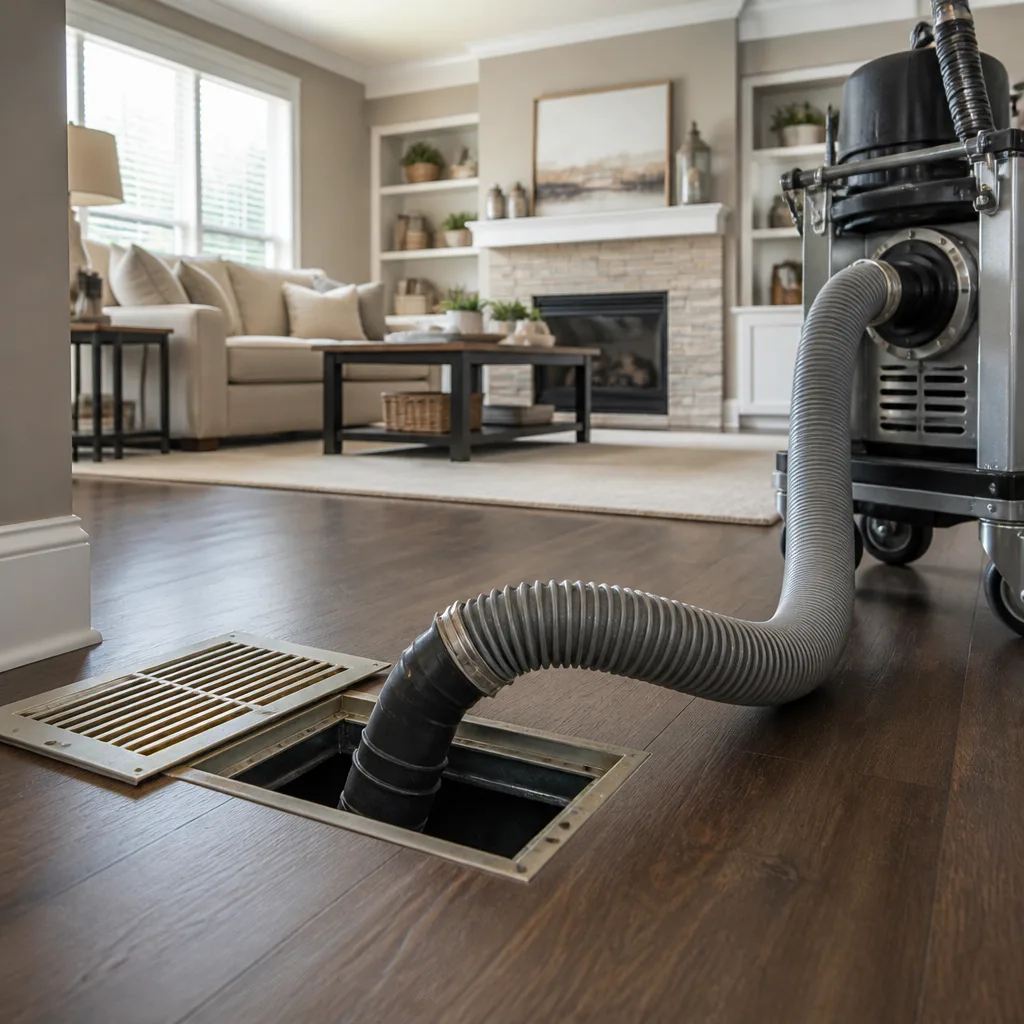 Whole-home duct cleaning
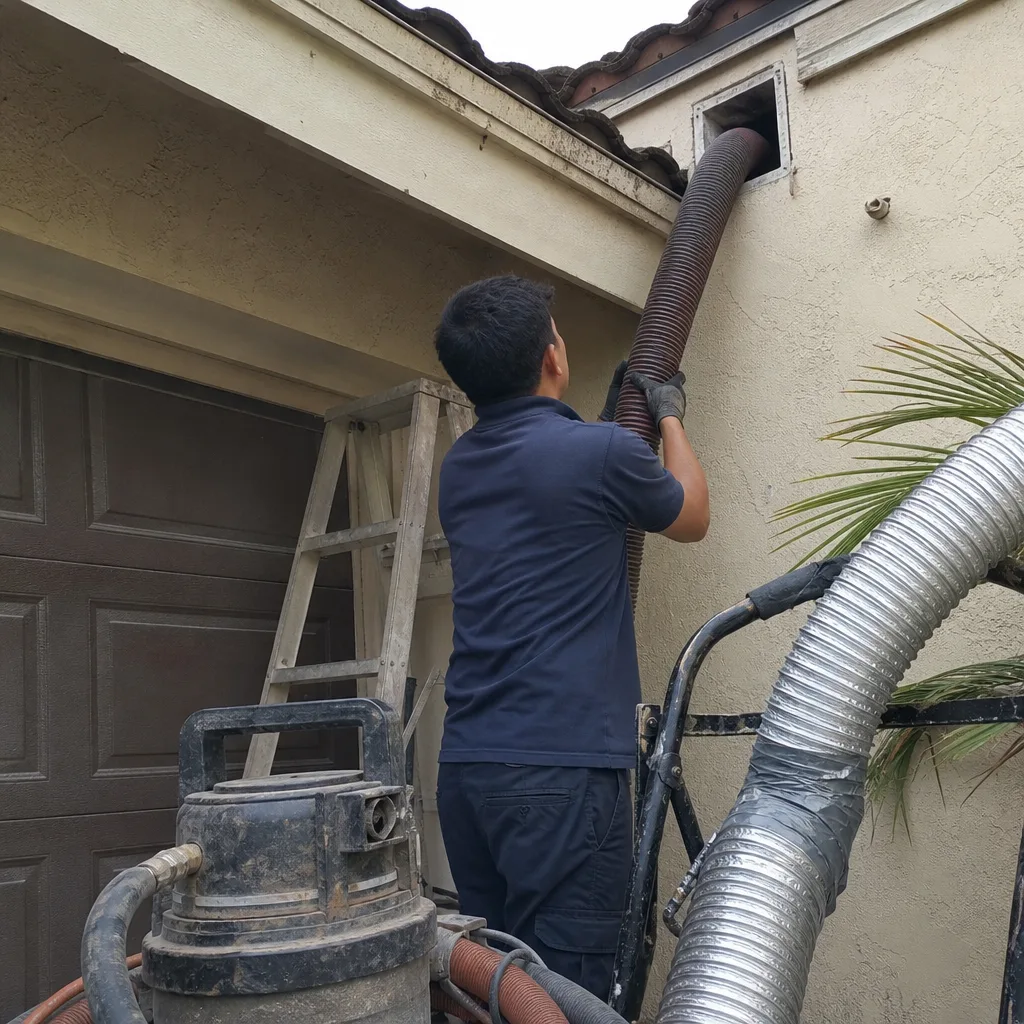
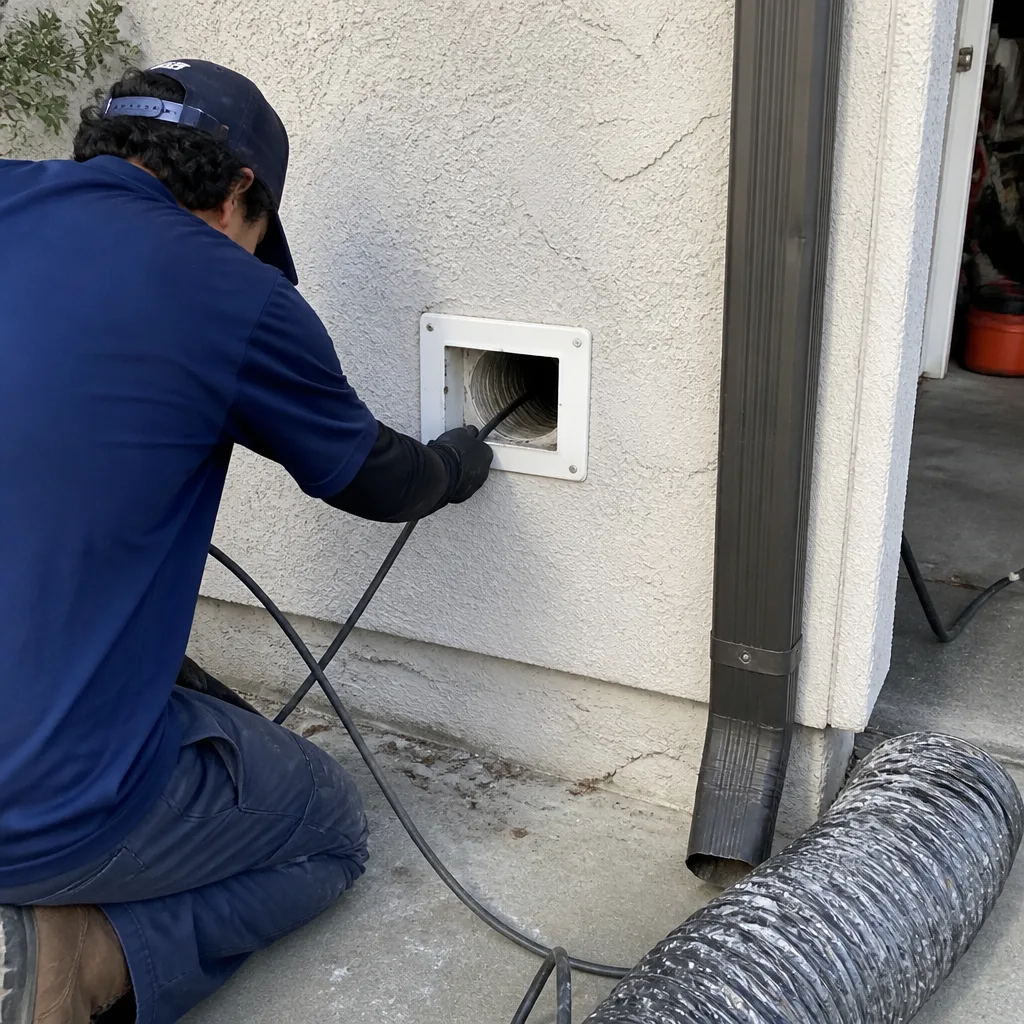
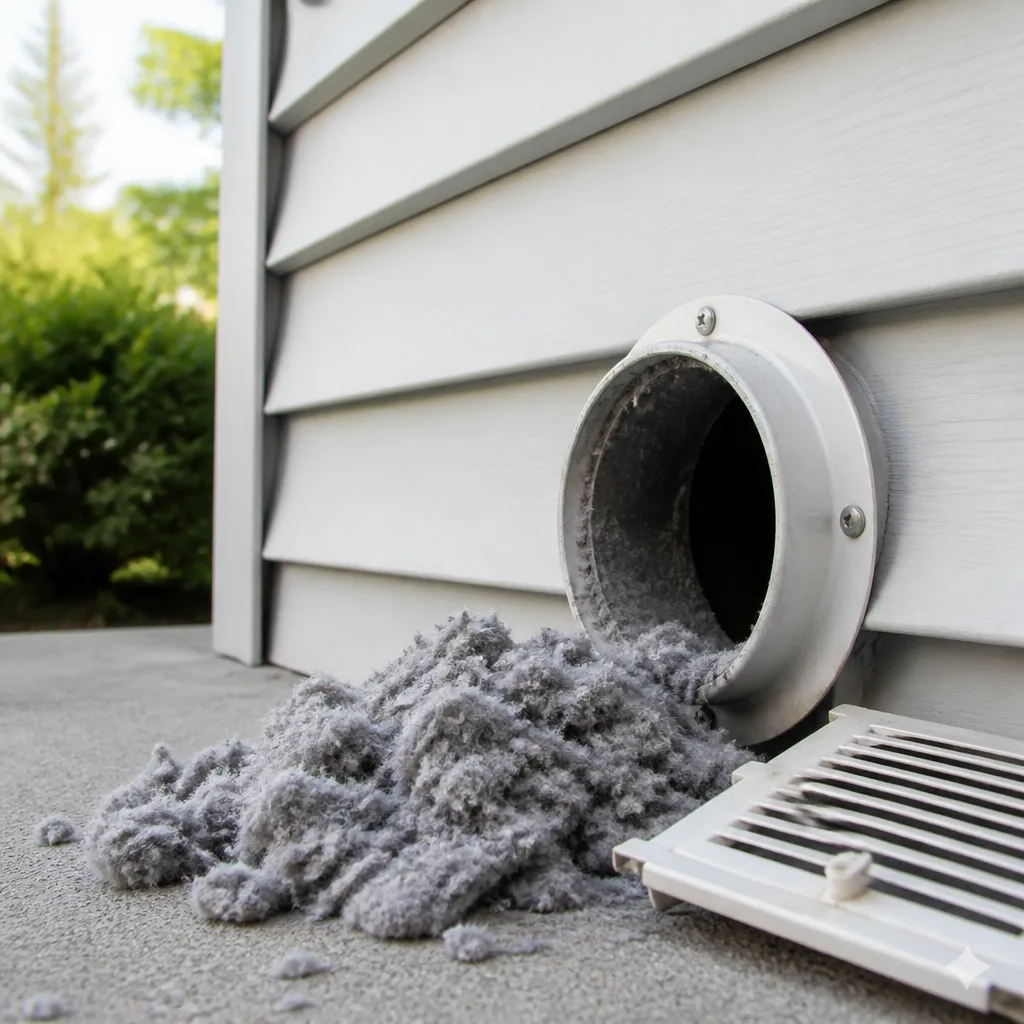 Dryer vent cleaning
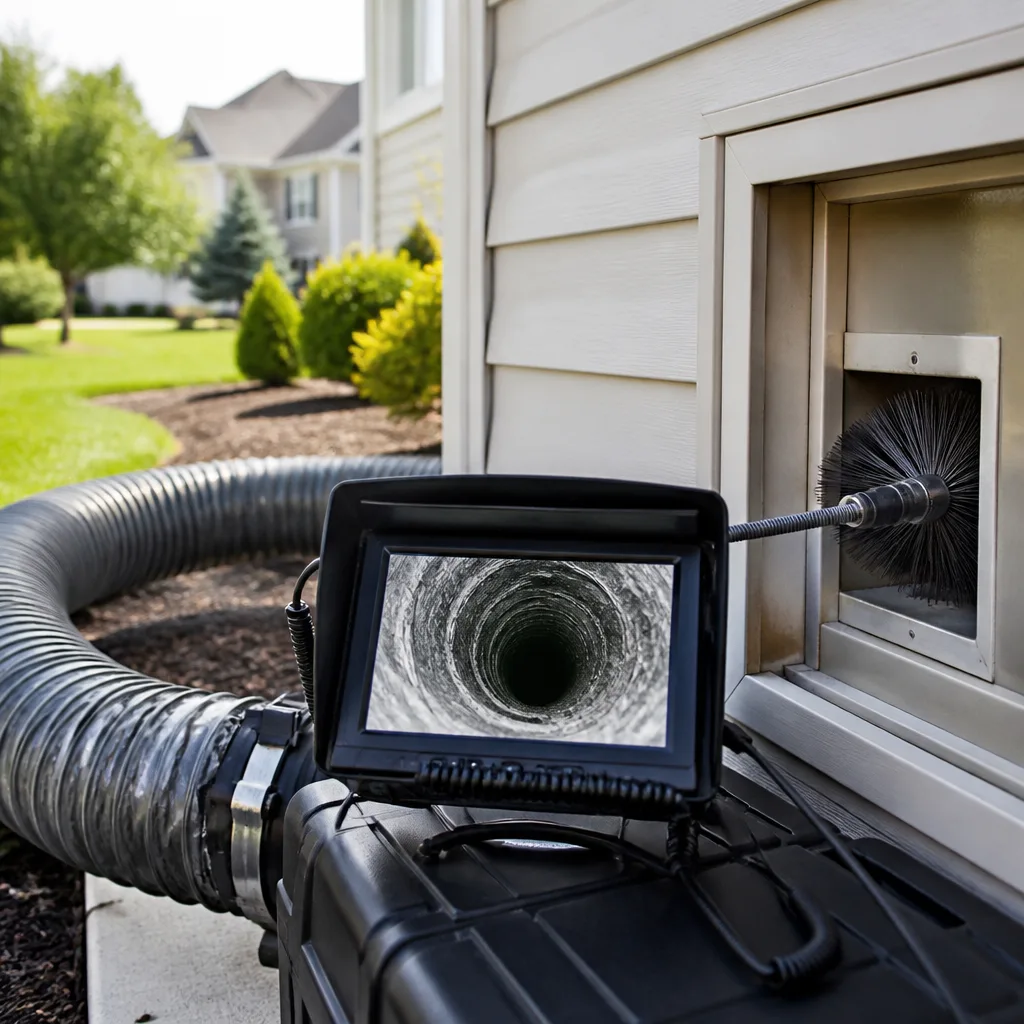 Camera inspection
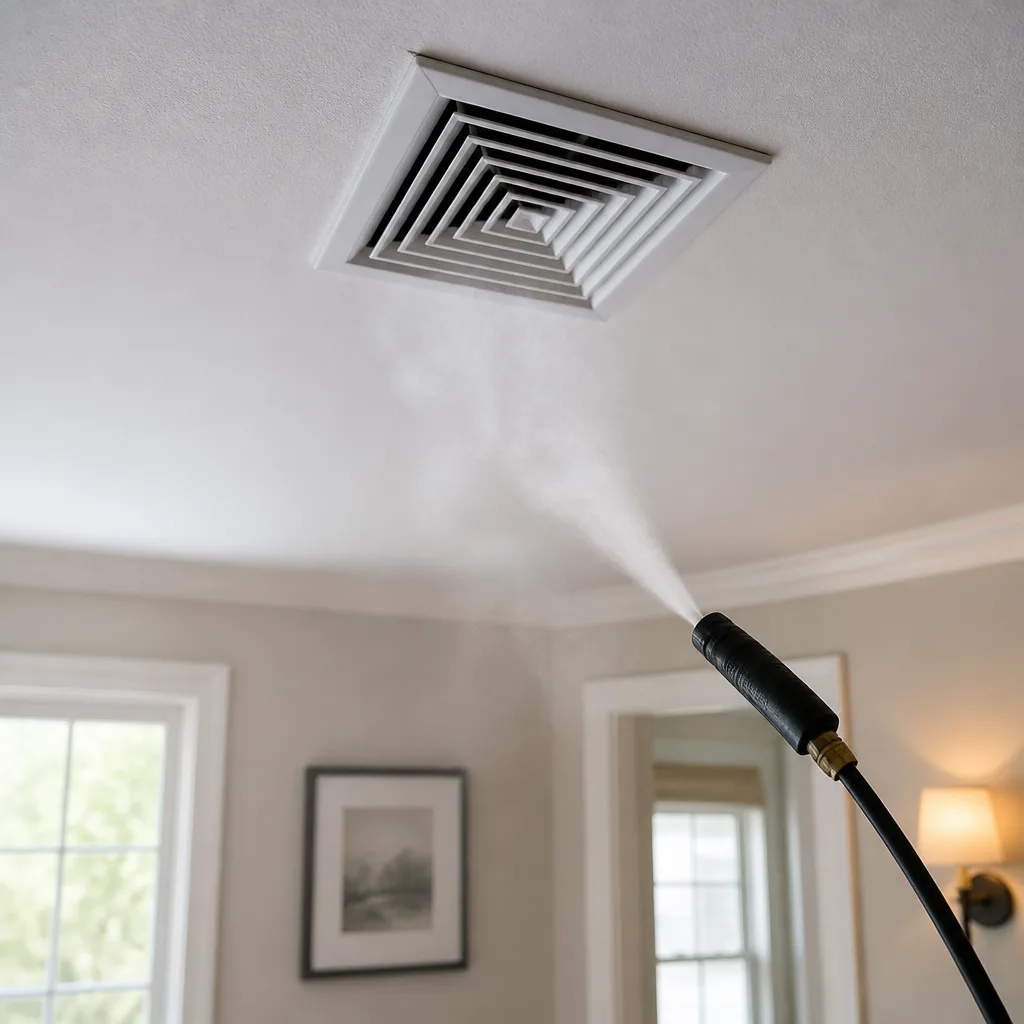 Sanitizing & deodorizing
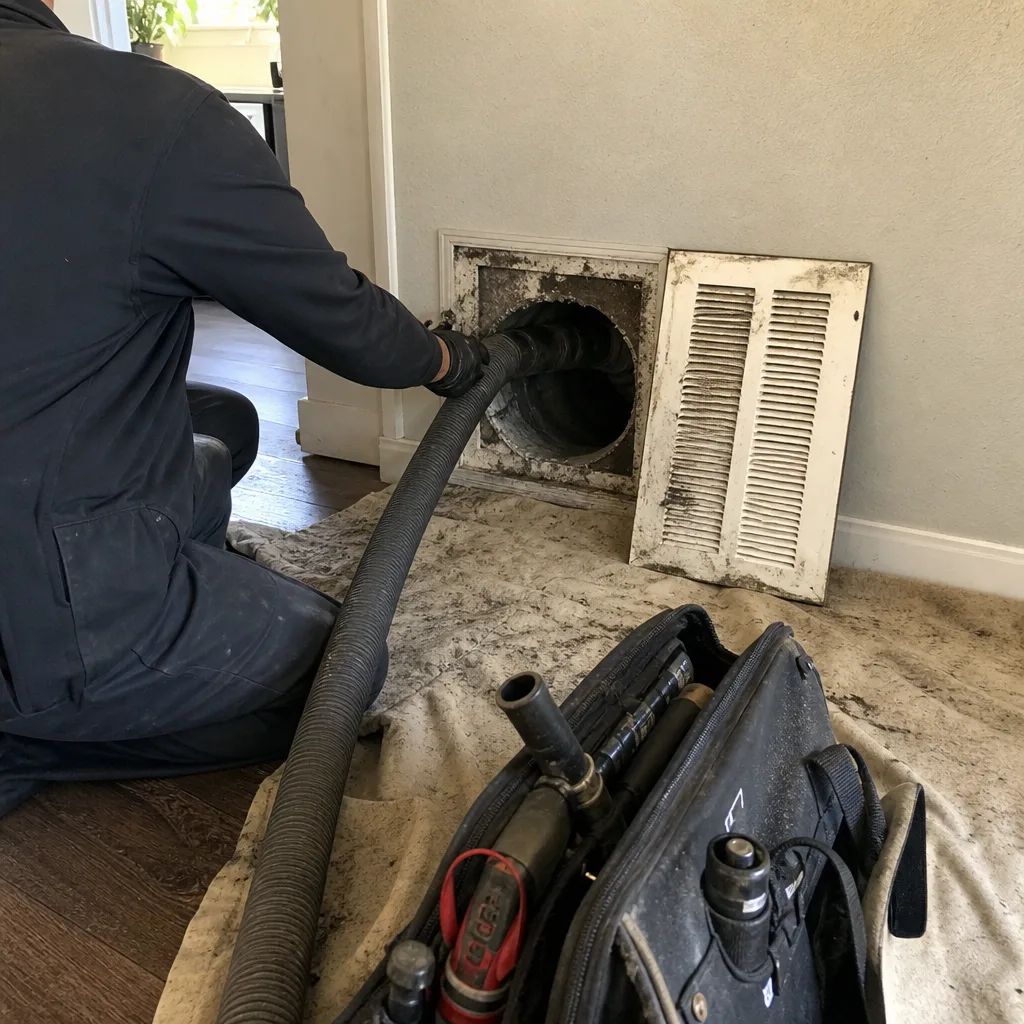
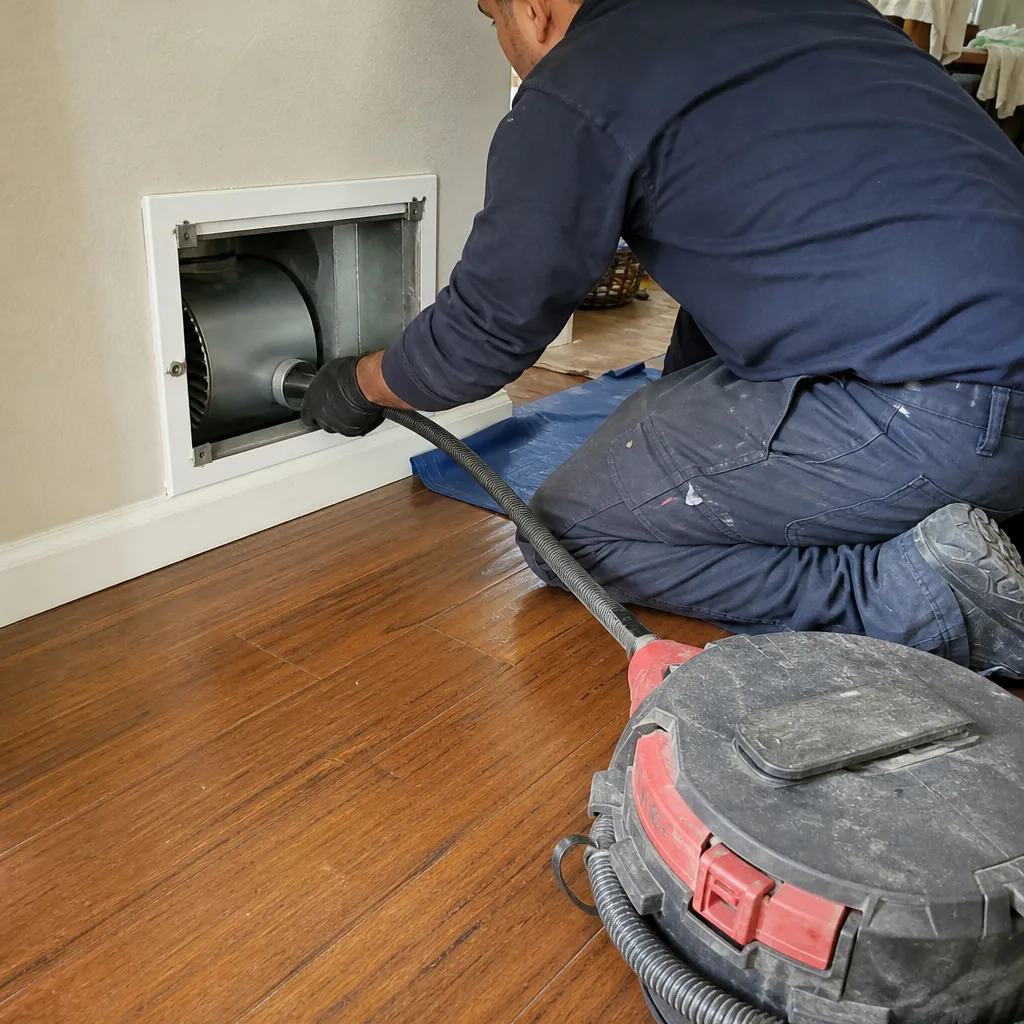
Whole-system duct and dryer vent check with before-and-after photos - you see exactly what came out of your vents
That "$99 whole-house special" is a bait ad - the real number appears once they are in your hallway, or the "clean" is a shop-vac at the register. We photograph the inside of your ducts before and after instead.
DIY vs Professional Air Duct Cleaning: The Mission Viejo Homeowner’s Decision Guide
A shop vac generates roughly 100 to 150 cubic feet per minute of suction. A professional truck-mounted duct cleaning system generates 5,000 to 15,000 CFM while maintaining negative pressure that keeps dislodged debris from entering your living space. That gap is not a matter of degree; it’s the difference between cleaning a register cover and cleaning a duct system. This guide breaks down what DIY equipment actually reaches, what it leaves behind, and how Mission Viejo homeowners can decide which approach fits their situation.
Styles & brands we work with
- Whole-home duct cleaning
- Dryer vent cleaning
- Camera inspection
- Sanitizing & deodorizing
Quick Answer
DIY duct cleaning with a shop vac and brush kit removes light dust from register covers and the first few inches of visible ductwork, but it cannot access the main trunk lines, plenums, or air handler cabinet where most contamination accumulates. Professional Air Duct Cleaning in Mission Viejo uses negative-pressure systems with 50 to 100 times the airflow of a shop vac, and it reaches every zone of the system. If your goal is cosmetic freshening of visible vents, limited DIY work is fine. If your goal is removing allergens, construction debris, or years of accumulated buildup from the system that moves air through your home, professional equipment is the only method engineered to do that.
Table of Contents
- The Airflow Physics Problem: Why Negative Pressure Matters
- The Three Zones of a Duct System: What DIY Can and Cannot Reach
- When Limited DIY Maintenance Is Genuinely Useful
- The Specific Risk Profile of Older Mission Viejo Homes
- The Four-Variable Decision Framework
- What Each Approach Actually Costs
- Common Mistakes to Avoid
- When to Call a Professional
- Frequently Asked Questions
- The Bottom Line
The Airflow Physics Problem: Why Negative Pressure Matters
Picture what happens when you vacuum a carpet. The debris has nowhere to go but into the hose, because it’s sitting on a solid surface. Now picture a duct: a sealed metal or fiberglass tube with debris coating the interior walls. When you insert a shop vac hose and apply suction, you create localized airflow at the hose opening. But the duct is not a solid surface. The air you’re pulling comes from the room itself, through the register opening, and it takes the path of least resistance. Debris that is not directly at the hose opening simply stays put.
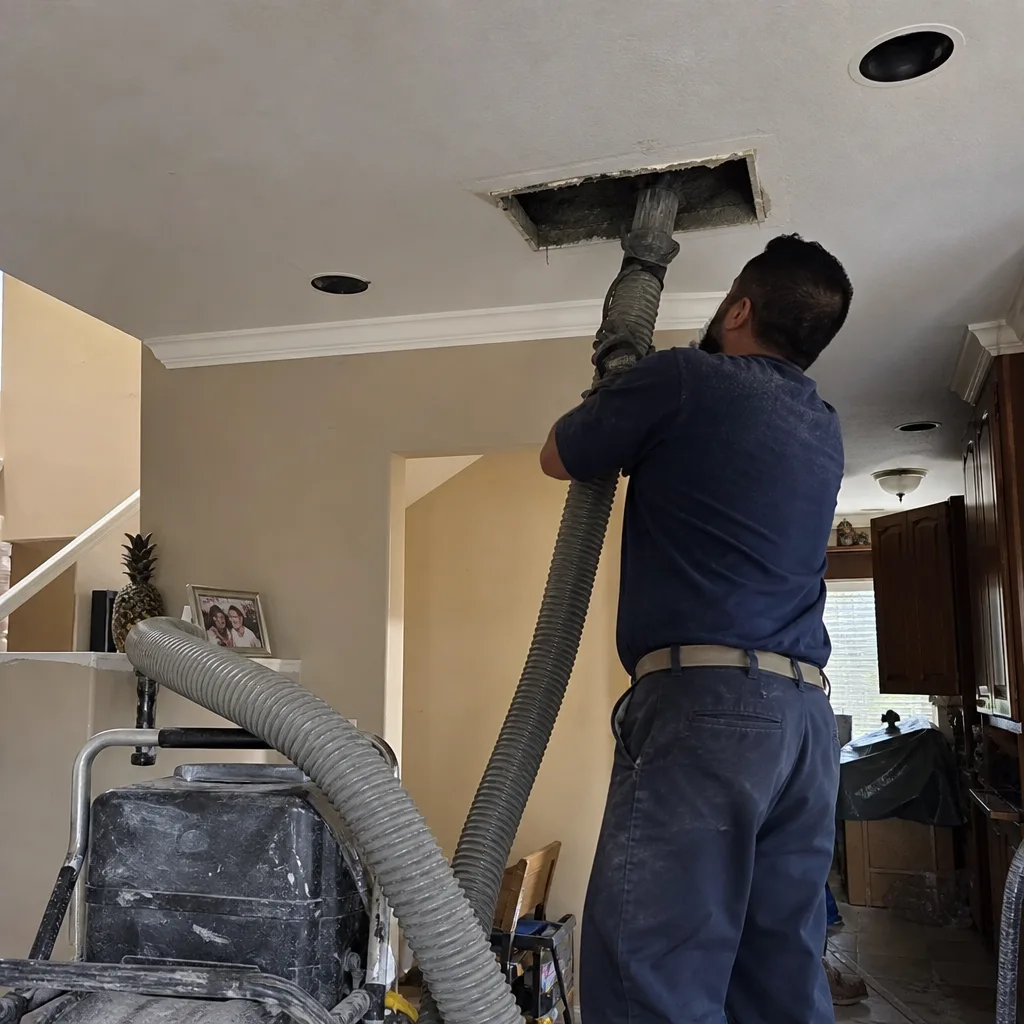
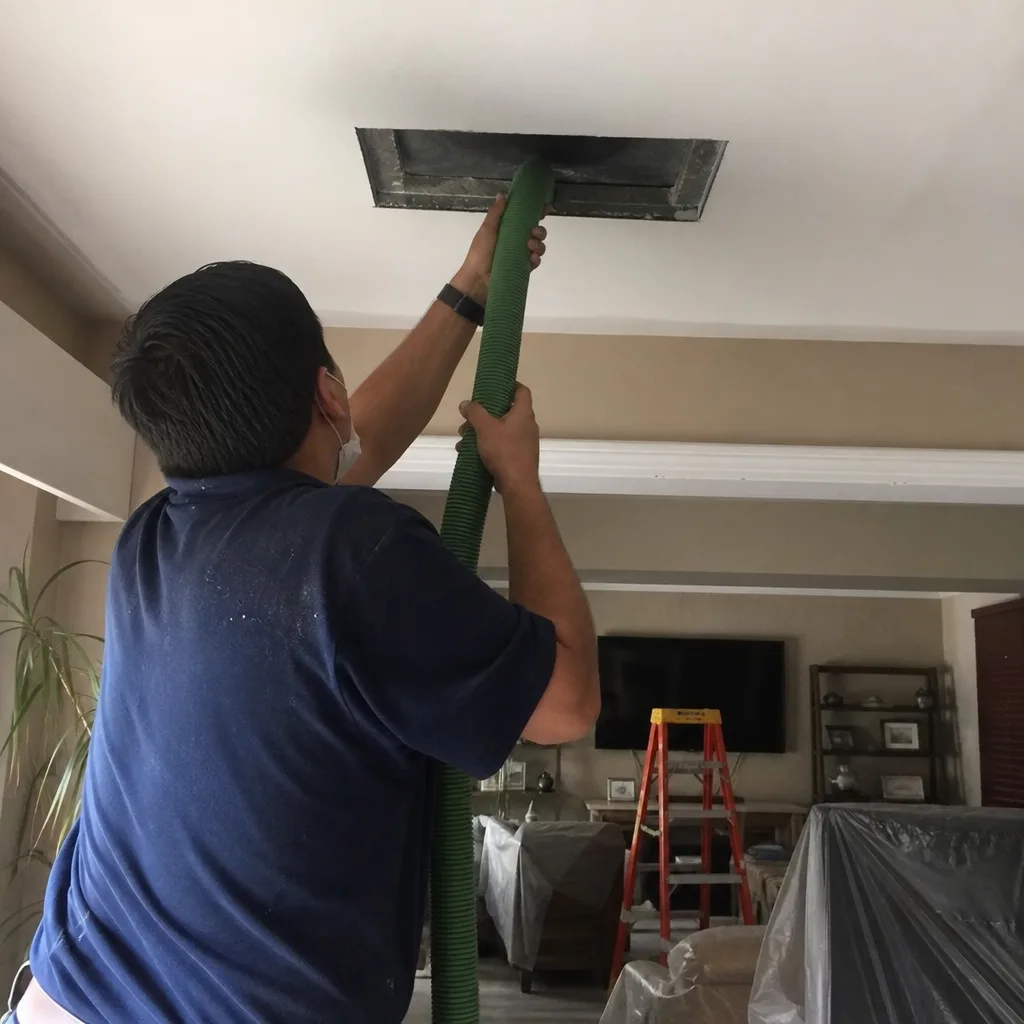
Professional systems solve this with negative pressure containment. A truck-mounted unit connects to the main trunk line at the air handler or a cut-in access point, creating a vacuum throughout the entire duct system. The whole system becomes a low-pressure zone, so when agitation tools dislodge debris from the duct walls, that debris has only one direction to travel: toward the collection unit outside. The home’s registers become intake points, not output points. Nothing becomes airborne in your living space because air is moving into the system, not out of it.
A shop vac cannot create system-wide negative pressure. It creates a point vacuum. When a homeowner brushes duct walls near a register and vacuums simultaneously, much of the disturbed particulate escapes into the room before the shop vac can capture it. This is not a less thorough version of professional cleaning. It’s a different process with a different failure mode: it can make indoor air quality temporarily worse, not better.
We see this pattern in Mission Viejo homes throughout the Saddleback Valley. Homeowners call us after a weekend DIY attempt because their allergies flared up the following week, or because they noticed a fine dust settling on furniture near the registers they worked on. The shop vac did what a shop vac does. It just doesn’t do what a duct system requires.
The Three Zones of a Duct System: What DIY Can and Cannot Reach
A residential duct system has three distinct zones, and understanding them clarifies why DIY reach is so limited. Zone one is what you can see: register covers and the first six to twelve inches of duct visible behind them. Zone two is the main trunk line and branch runs. Zone three is the air handler cabinet, evaporator coil, and plenum. Here’s what each zone holds and what DIY equipment can do about it.
Zone 1: Register Collars and Visible Duct Openings
This is the only zone DIY tools can meaningfully address. Removing a register cover, wiping it down, and vacuuming the opening removes surface dust and loose debris. It’s quick, it’s free, and it genuinely improves the appearance of your vents. A brush kit can reach a few feet into a straight duct run from the register opening. What it cannot do is turn a corner. Duct runs in Mission Viejo homes typically include at least one 90-degree elbow within a few feet of the register, and that’s where DIY reach ends.
Zone 2: Main Trunk Lines and Branch Runs
The main trunk line runs through your attic, crawlspace, or between floors. Access points are sealed, and in most Mission Viejo homes built before 2000, the only access is through the register boots or a small service panel near the air handler. Professional duct cleaning equipment uses flexible agitation tools that travel 25 feet or more into the trunk line, breaking loose caked-on dust, pet dander, and construction debris. Rotobrush and Nikro systems, the two platforms we run, are engineered specifically for this Duct Cleaning Mission Viejo home challenge: spinning brush heads that scour duct walls while the vacuum system extracts what they dislodge. A shop vac hose is six to eight feet long and has a fraction of the reach, with no agitation mechanism at the head.
Zone 3: Air Handler Cabinet, Coil, and Plenum
This zone is where the most consequential buildup occurs. The evaporator coil sits in a dark, damp environment during cooling season. Condensation collects on the coil, and anything airborne in the system sticks to it. Over years, the coil develops a biofilm layer that restricts airflow and becomes a breeding surface for mold. The plenum, the box where the trunk line meets the air handler, collects whatever the filter missed. Accessing this zone requires removing the air handler access panel or cutting an access point into the plenum. It requires understanding how the system is sealed, where the coil sits, and how to avoid damaging refrigerant lines. This is not a DIY job in any sense. The risk of breaking a refrigerant line or damaging the coil far outweighs any money saved.
When Limited DIY Maintenance Is Genuinely Useful
That said, we’re not telling you that every DIY action is pointless. Some homeowner maintenance is genuinely worthwhile, and we encourage it – see our more guides & resources for related topics. The key is understanding what these tasks accomplish and what they don’t. Here are the DIY tasks that earn their keep:
- Cleaning and wiping register covers. Remove them, wash with warm soapy water, dry thoroughly, and reinstall. This removes visible grime and improves airflow at the register. Do this twice a year.
- Replacing your HVAC filter on schedule. In Mission Viejo’s climate, with cooling season running from May through October, a 1-inch filter should be replaced every 60 to 90 days, more often if you have pets. A clean filter does more for ongoing air quality than any one-time duct cleaning.
- Inspecting accessible flex duct connections. Go into your attic with a flashlight and look at the flex duct runs visible from the access point. Are the connections at the register boots still attached and sealed? Are there kinks or sags? Spotting a disconnected flex duct early prevents decades of dust and unfiltered attic air entering your living space.
- Checking for visible mold or moisture staining around registers. If you see dark spots or discoloration, or smell a musty odor when the system runs, note the register location and call for a professional assessment.
These tasks keep the visible surfaces clean and catch obvious problems. But they do not replace professional cleaning. They complement it. A homeowner who changes filters and wipes registers will still have buildup in the trunk line and air handler cabinet after five to ten years. That’s not negligence. It’s physics and time.
The Specific Risk Profile of Older Mission Viejo Homes
Mission Viejo’s housing stock is a particular concern when it comes to DIY duct cleaning, and the reason is fiberglass duct liner. Homes built in the 1970s through the early 1990s in neighborhoods like Lake Mission Viejo, Aegean Hills, and Pacific Hills often have metal ducts lined with fiberglass insulation board on the interior. That liner was installed for thermal efficiency and noise reduction. It also degrades over time.
Aged fiberglass liner becomes friable, meaning it can crumble and release fibers when disturbed. When a homeowner runs a stiff-bristled brush down the interior of a fiberglass-lined duct, the brush can tear the liner surface and release fiberglass particulates into the airstream. Not all of those particulates get captured by the shop vac. Some enter the living space on the next system cycle. Fiberglass particles are respiratory irritants. For a household with allergy or asthma sufferers, that’s a bad trade.
Professional cleaning of fiberglass-lined ducts requires a different technique. The agitation must be gentle enough to remove surface dust without damaging the liner. Our Rotobrush heads use softer bristles appropriate for lined ducts, and the Nikro system’s agitation is paired with continuous negative-pressure extraction, so particulates are removed before they can become airborne in the home. If the liner is already significantly degraded, the correct professional response may include Air Duct Repair in San Juan Capistrano or liner replacement, not just cleaning.
The other Mission Viejo-specific factor is construction debris. This city has seen continuous remodeling activity since the 1970s, and many homes that changed hands in the past decade underwent renovation before sale. Drywall dust, sawdust, and insulation fragments settle into the duct system during construction and stay there. That debris is heavy and compacted. Removing it requires professional airflow, not a retail brush kit.
The Four-Variable Decision Framework
If you’re deciding whether DIY or professional service is right for your home, read our How to Hire an Air Duct Cleaning Contractor in Mission Viejo: A Step-by-Step Guide or run through these four variables. They’re the same ones we use when a Mission Viejo homeowner calls and asks whether they actually need professional cleaning.
- Home age. If your home was built before 1995 and has never had the ducts cleaned, assume the system contains 20 to 50 years of accumulated dust, dander, and debris. That’s beyond any DIY approach. If your home was built in the last five to seven years and you’ve maintained filters consistently, the system may not need professional cleaning yet.
- Duct material type. Flexible ductwork is relatively forgiving and less likely to have deep buildup if filters were maintained. Fiberglass-lined metal ducts in older Mission Viejo homes require professional-grade care because of the friability risk described above. Bare metal ducts accumulate less dust than lined ducts but still collect debris in the trunk line and air handler.
- Contamination trigger. Was this a routine maintenance question, or did something specific happen? Post-renovation dust, a rodent infestation in the attic or crawlspace, visible mold on registers, or a persistent musty odor are triggers that demand professional assessment. In these cases, contamination is not surface-level, and the source usually sits in the trunk line or air handler cabinet. Our Abatement Technologies equipment is set up for exactly these high-concern scenarios, including allergen and mold-related contamination.
- Health sensitivities. If anyone in the home has asthma, allergies, COPD, or an autoimmune condition, the stakes rise. A DIY attempt that disturbs dust and fails to capture it fully makes their air worse for days. Where health sensitivity exists, professional negative-pressure cleaning is the only approach that doesn’t risk worsening the problem it’s meant to solve.
If you can answer all four variables honestly and the answers point toward DIY, then by all means clean your register covers and replace your filter. If any variable points toward professional service, call for an estimate before you spend money on tools that won’t reach the problem.
What Each Approach Actually Costs
The honest cost comparison is less flattering to DIY than most guides admit. Here’s the breakdown for a typical Mission Viejo home with 10 to 15 registers:
- DIY shop vac approach: If you already own a shop vac, a brush kit and extension hoses run $30 to $80. If you don’t own a shop vac, add $60 to $120. Total upfront cost: $30 to $200. What you get: clean register covers, perhaps 5 to 8 feet of partially cleaner duct from each register, and zero improvement in the trunk line or air handler. Recurring time cost: 3 to 5 hours.
- Professional whole-system cleaning: In the Mission Viejo and broader South Orange County market, professional air duct cleaning for an average single-family home typically runs $400 to $800, depending on system size, number of returns, accessibility, and whether the home has multiple zones or rooftop air handlers. What you get: system-wide negative-pressure extraction, agitation of all duct interiors, air handler and coil cleaning, sanitizing if needed, and a visual record of what came out.
- Partial DIY plus professional spot service: Some homeowners clean registers themselves and hire professionals for the trunk and air handler. This is more affordable than full professional cleaning, but most companies, including us, price whole-system cleaning as the standard because partial cleanings leave contamination that re-contaminates cleaned sections quickly.
- Using a stiff-bristle brush on fiberglass-lined ducts. In Mission Viejo homes built before 1995, this can tear friable liner and release fiberglass particulates into your living space. If your ducts are fiberglass-lined, leave the interior brushing to professionals with appropriate equipment.
- Assuming a clean register cover means clean ducts. The register cover is the visible endpoint. The trunk line and air handler cabinet are what move the air you breathe, and they’re invisible from any register. Cleaning what you can see does nothing for what you can’t.
- Paying a coupon price without understanding what it includes. A $79 whole-house duct cleaning offer cannot pay for the equipment, labor, and time a legitimate cleaning requires. Read the fine print and ask directly whether the quoted price covers the air handler, coil, trunk line, and all branch runs.
- Attempting to access the air handler cabinet without training. The evaporator coil, refrigerant lines, and electrical connections live behind that panel. A homeowner can cause thousands of dollars in damage with a well-intentioned cleaning attempt. This zone is strictly professional territory.
- Ignoring the dryer vent while we’re on the subject of airflow. A clogged dryer vent is a fire hazard, and Mission Viejo homes with long vertical vent runs are particularly prone to lint buildup. Dryer Vent Cleaning in San Juan Capistrano is a separate service from duct cleaning and worth scheduling on its own schedule annually for most households.
- Running the HVAC system during a DIY attempt. If you’re vacuuming at a register while the blower runs, you’re actively circulating whatever you dislodge. Turn the system off, and if you decide to attempt limited DIY cleaning, do it with the blower off.
- Skipping the post-cleaning filter replacement. Whether you DIY or hire professionals, put a fresh filter in immediately after any duct work. The cleaning process disturbs dust, and a clean filter captures what remains airborne.
The per-vent pricing you see in coupon mailers is not a reliable comparison point. That pricing model is built to get a technician in the door with a low-ball quote, then escalate once the system is inspected. We don’t quote per vent. Our quotes are one flat price for the whole system, agreed before work starts. It’s the only pricing model that doesn’t reward bait-and-switch behavior, and it’s worth asking any company you evaluate whether their quoted price covers the full system or just selected vents.
There’s also a hidden cost to skipping professional cleaning for too long: restricted airflow. When the trunk line and air handler cabinet are heavily loaded, your system works harder to move the same volume of air. That shows up in your SCE bill during Mission Viejo’s long cooling season. A badly loaded system can also push your blower motor into premature wear. The Duct Cleaning Mission Viejo team has pulled enough compacted debris out of Mission Viejo systems to know that the energy-cost argument for cleaning is real, not theoretical.
Common Mistakes to Avoid
When to Call a Professional
Call a professional when any of these conditions apply: your home has never had its ducts cleaned and is more than ten years old; you recently completed a renovation and drywall dust settled in the system; you see mold or dark staining around register openings; your home smells musty when the HVAC runs; someone in your household has a respiratory condition; or your energy bills have climbed without an obvious explanation. The Air Duct Cleaning in San Juan Capistrano approach is also our approach in Mission Viejo: one flat price per system, professional-grade Rotobrush and Nikro equipment, and the ability to repair damaged ducts during the same visit rather than referring you elsewhere. Duct Cleaning Mission Viejo offers free estimates in Mission Viejo. Call (833) 593-4407 to schedule one.
Frequently Asked Questions
DIY air duct cleaning is worth it only as a surface-level maintenance task: cleaning register covers, vacuuming visible openings, and replacing filters. It cannot reach the trunk line, plenum, or air handler cabinet where meaningful contamination accumulates. In older Mission Viejo homes with fiberglass-lined ducts, aggressive DIY brushing can release fiber particulates into your living space, making the job counterproductive. If your system has not been professionally cleaned in more than ten years, DIY work should be considered preparation, not a substitute. Call (833) 593-4407 for an honest assessment of whether your system needs professional attention.
Professional whole-system air duct cleaning in Mission Viejo typically costs between $400 and $800 for an average single-family home, depending on system size, number of returns, accessibility, and whether the home has multiple zones or a rooftop air handler. This range reflects whole-system cleaning including the air handler and coil, not per-vent pricing. Per-vent pricing models are designed to escalate once a technician inspects the system. Our quotes are one flat price per system, agreed before work starts. Call (833) 593-4407 for an exact quote. Estimates are free.
A shop vac can remove loose dust from the first few feet of duct visible behind a register, but it cannot clean the main trunk line, branch runs, plenum, or air handler cabinet. A shop vac generates 100 to 150 CFM and creates a point vacuum, while professional systems generate 5,000 to 15,000 CFM and create negative pressure across the entire duct system. This means a shop vac leaves the vast majority of the system untouched and may actually increase airborne dust if you agitate duct walls while vacuuming.
For most Mission Viejo homes, professional air duct cleaning every 3 to 5 years is a reasonable interval, with several modifiers – our Seasonal Air Duct Cleaning Care for Mission Viejo: Year-Round Homeowner’s Guide covers timing in more detail. Homes with pets, smokers, recent renovations, or residents with allergies may benefit from cleaning every 2 to 3 years. Homes with newer construction, no pets, and consistent filter replacement may go 5 to 7 years. The most reliable indicator is visual inspection: if you see dust buildup on register covers within weeks of wiping them, or visible dust inside the duct opening, the system is due. Call (833) 593-4407 and we’ll help you determine whether your system’s buildup matches the interval you’re using.
Cheap duct cleaning quotes usually reflect a partial-service model: a per-vent price or a low entry fee that covers only register-level cleaning, with upcharges for the trunk line, air handler, coil, or sanitizing added after the technician arrives. This creates an incentive structure where the technician’s on-site upsell is the business model. A flat-rate whole-system price eliminates that incentive. Ask any company you evaluate directly: does this price cover the full trunk line, all branch runs, the air handler cabinet, the evaporator coil, and the plenum? If the answer is vague, that’s your answer.
Ask for before-and-after photos of the interior of your ducts, specifically the trunk line and air handler cabinet. Any legitimate professional duct cleaning company will document these areas with camera inspection before and after the work. You should also see the debris collection system at work: a professional truck-mounted unit collects visible debris in a containment vessel or filter bag that you can look at when the work is complete. If a company cannot show you either, they haven’t demonstrated that they did what they claimed. Our Rotobrush and Nikro systems are paired with camera documentation so Mission Viejo homeowners see the before and after with their own eyes.
The Bottom Line
The DIY versus professional question is not really about cost. It’s about reach. A shop vac and brush kit reach the first few feet of visible duct and the surface of your register covers. A professional negative-pressure system reaches the trunk line, branch runs, plenum, and air handler cabinet, and it extracts what it dislodges without releasing it into your living space. In older Mission Viejo homes, the stakes are higher: fiberglass duct liner demands professional technique, and post-renovation debris demands professional airflow. Clean your registers, change your filters, and inspect what you can see. When the problem lives past the visible, call (833) 593-4407 and let us show you what’s actually in there.
Written by the team at Duct Cleaning Mission Viejo, serving Mission Viejo since 2017.
See the difference
 Before
 After
 Before
 After
 Before
 After