
Last updated November 2, 2026
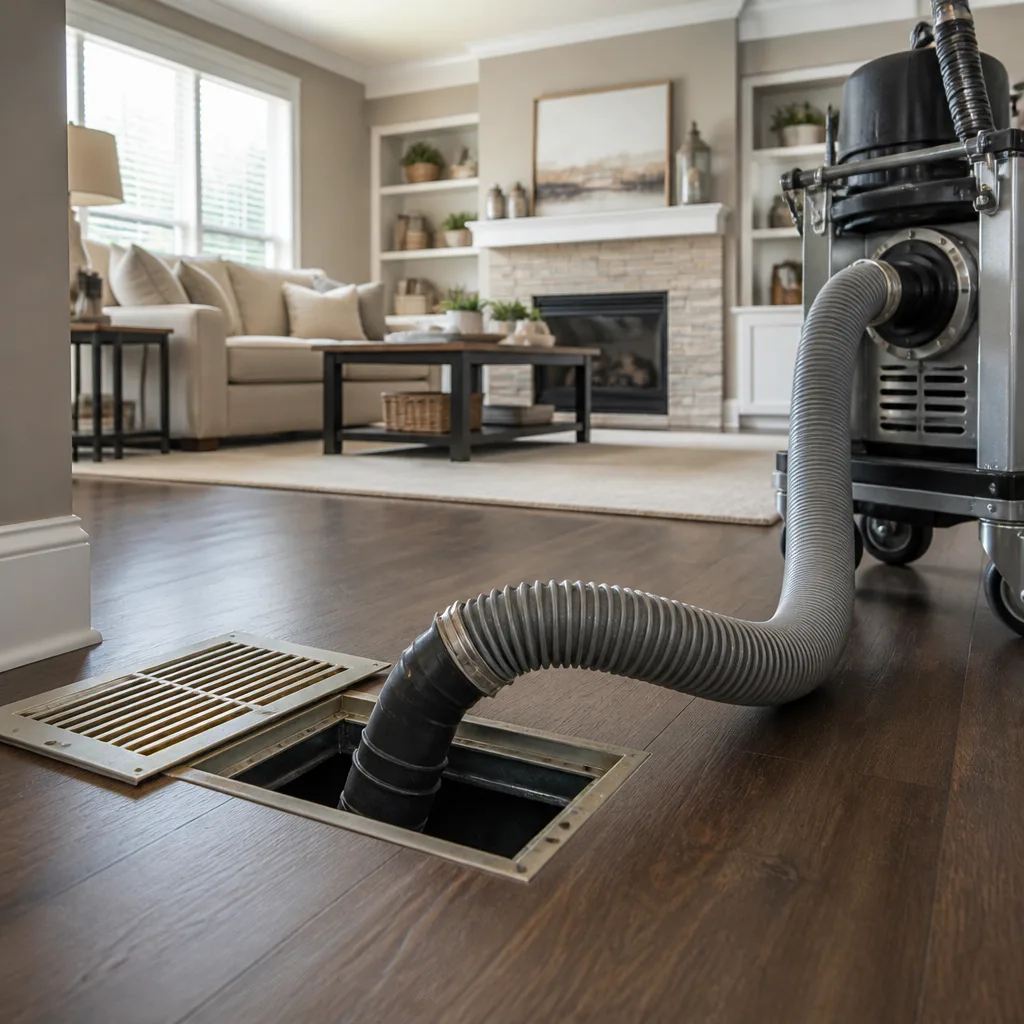 Whole-home duct cleaning
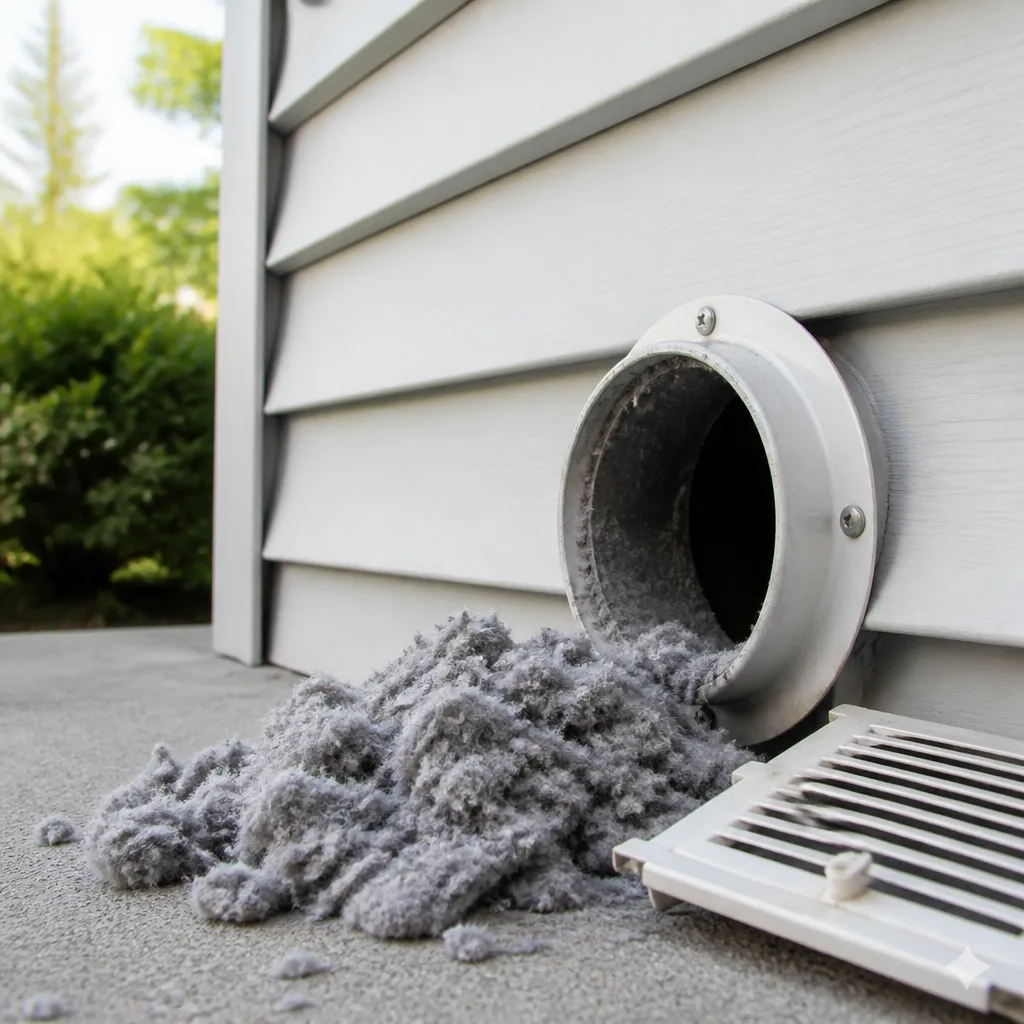 Dryer vent cleaning
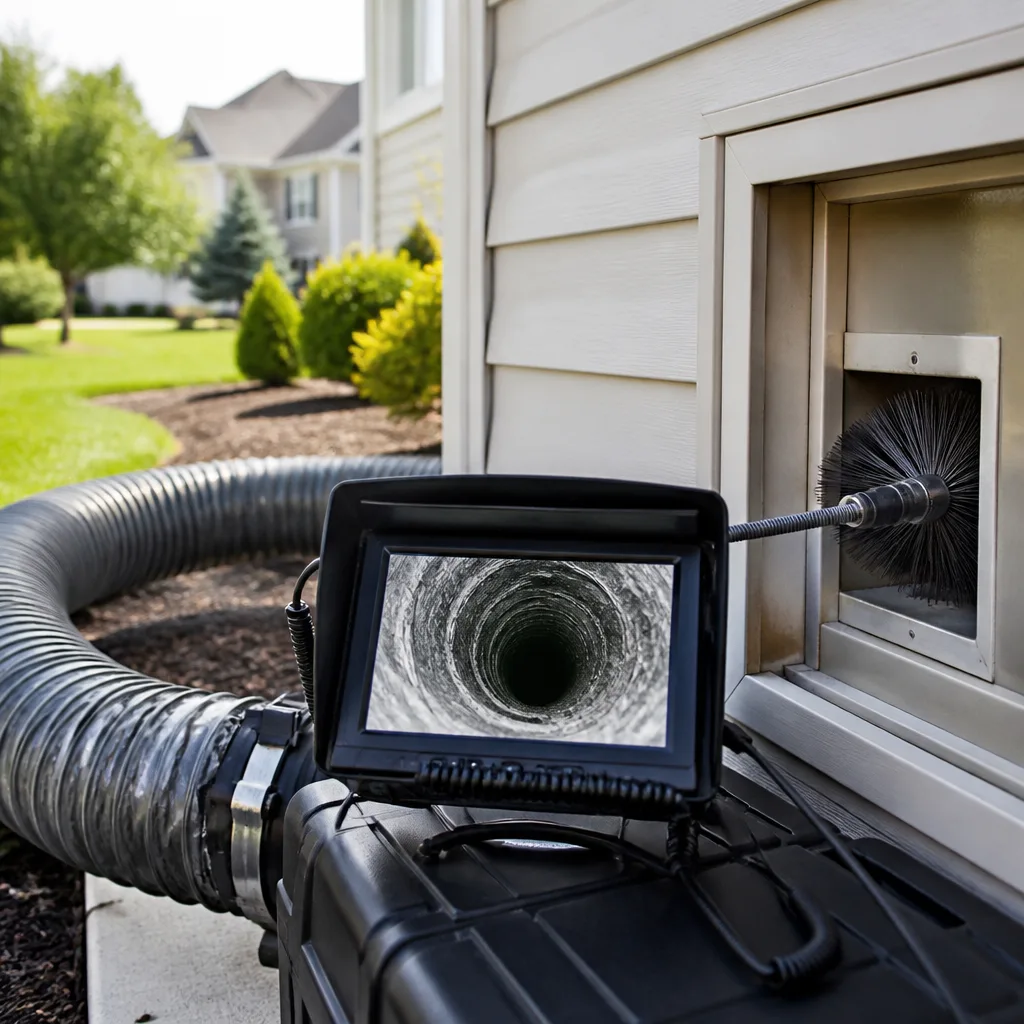 Camera inspection
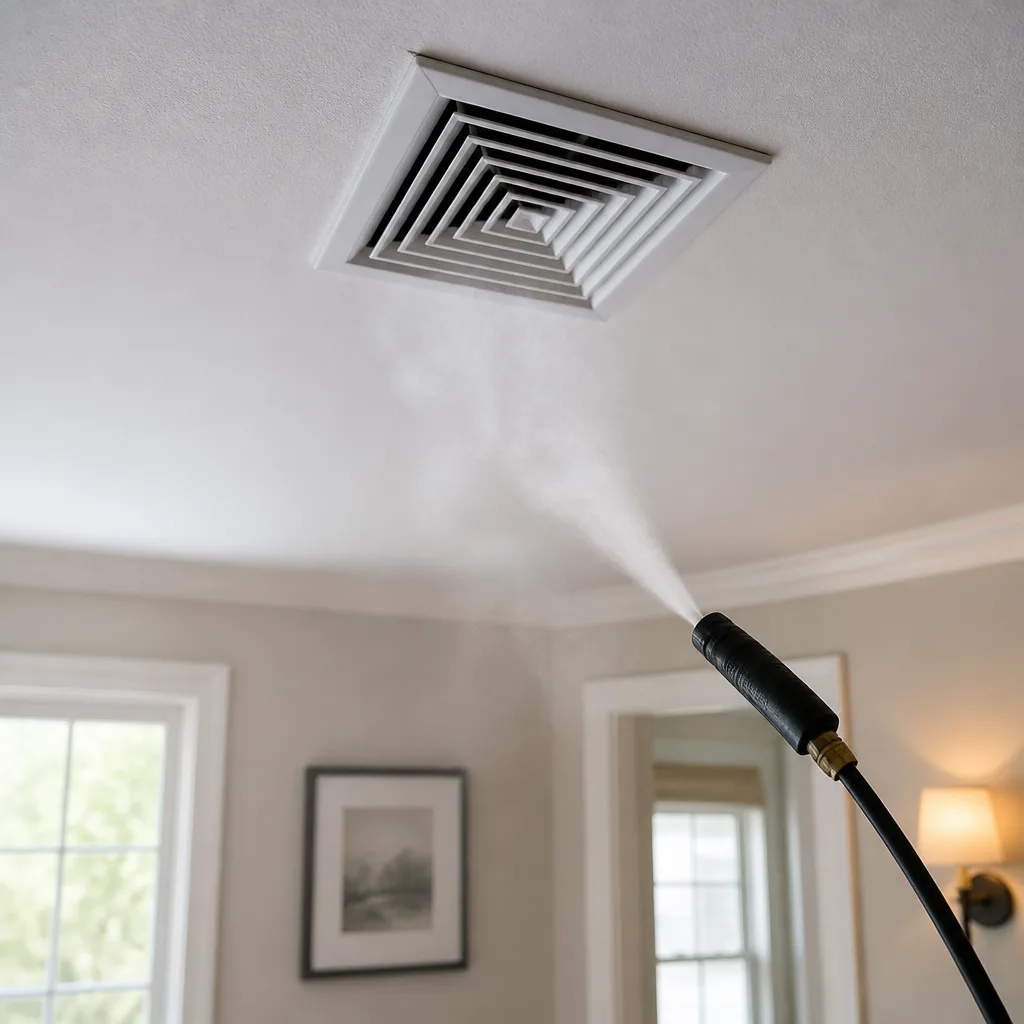 Sanitizing & deodorizing
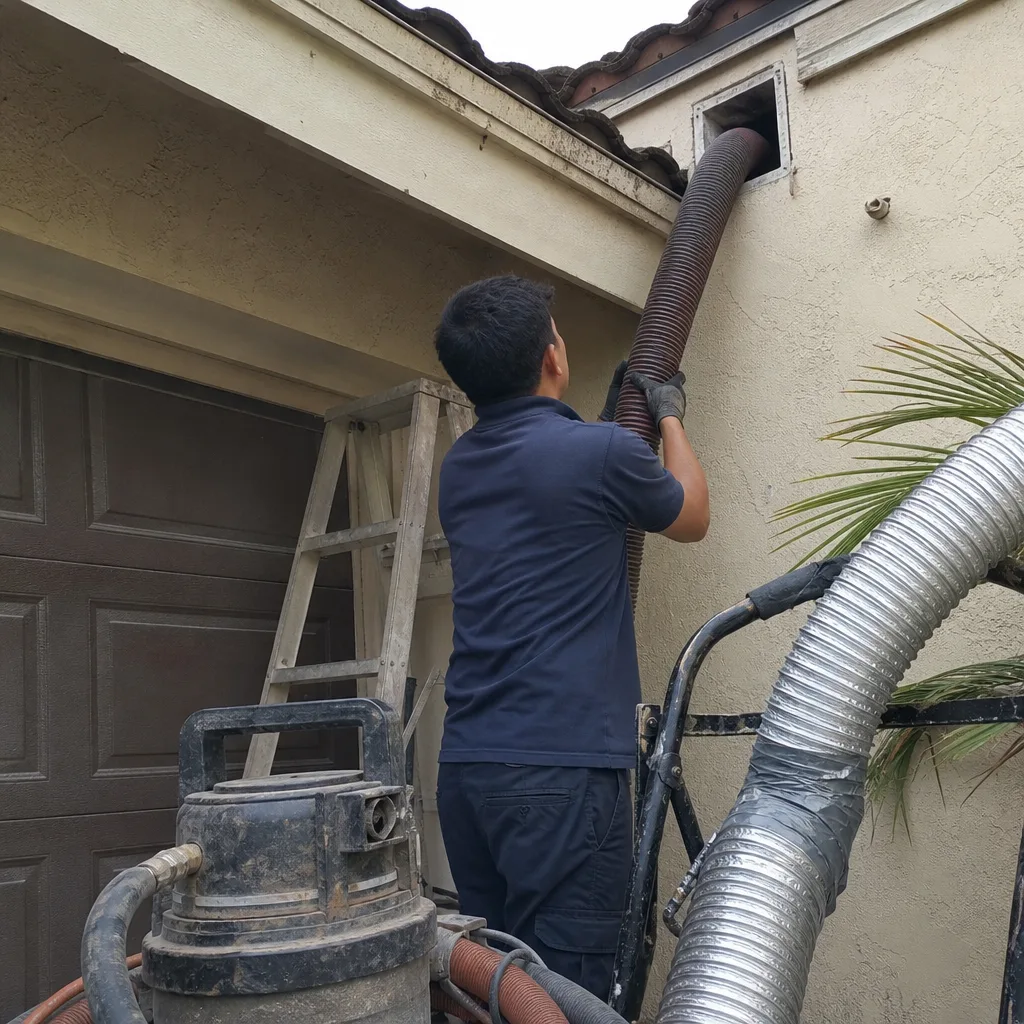
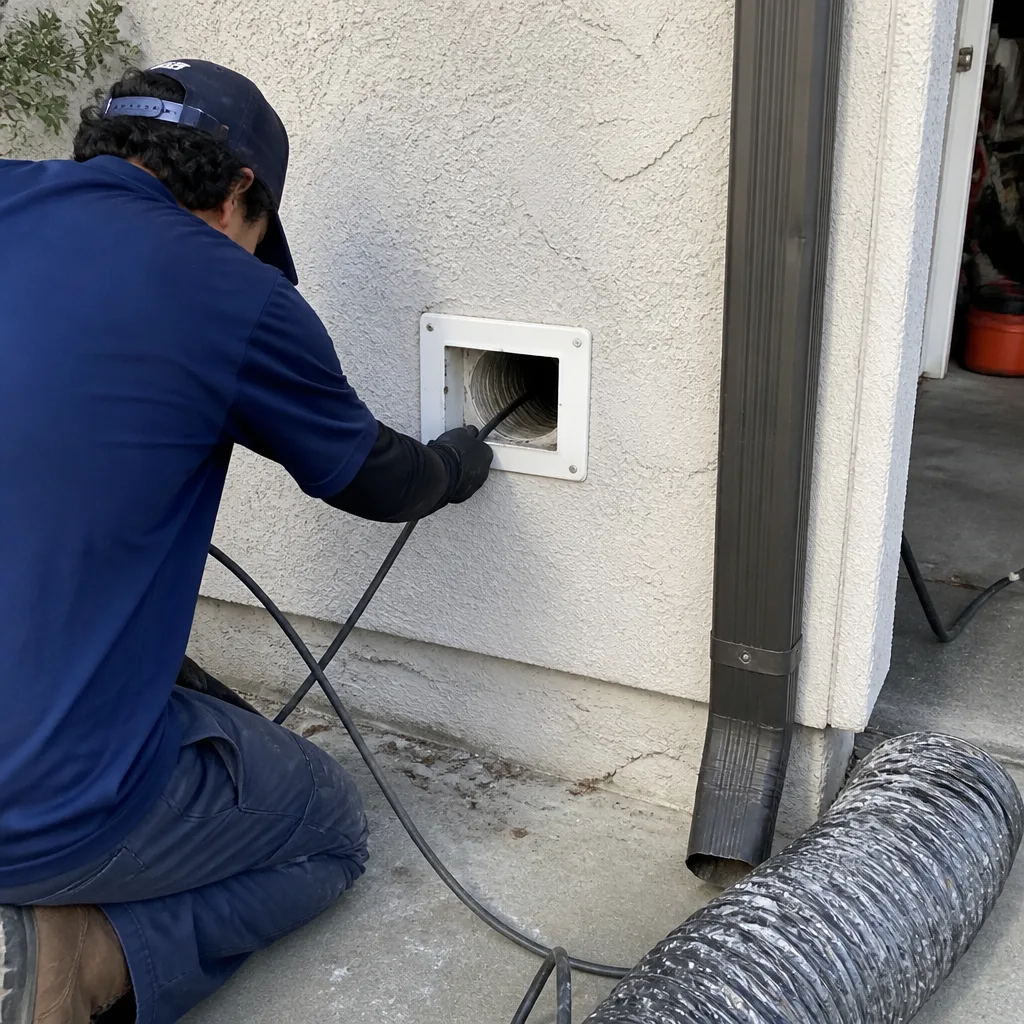
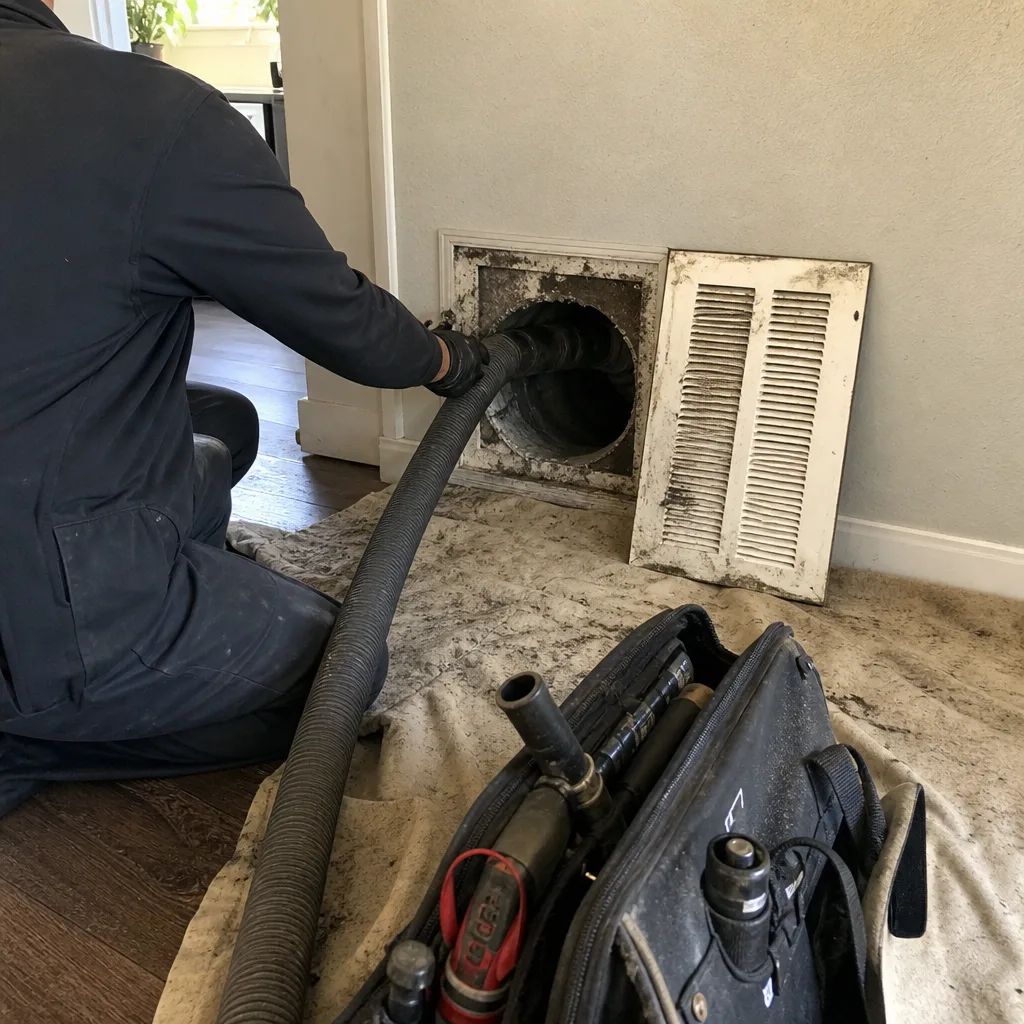
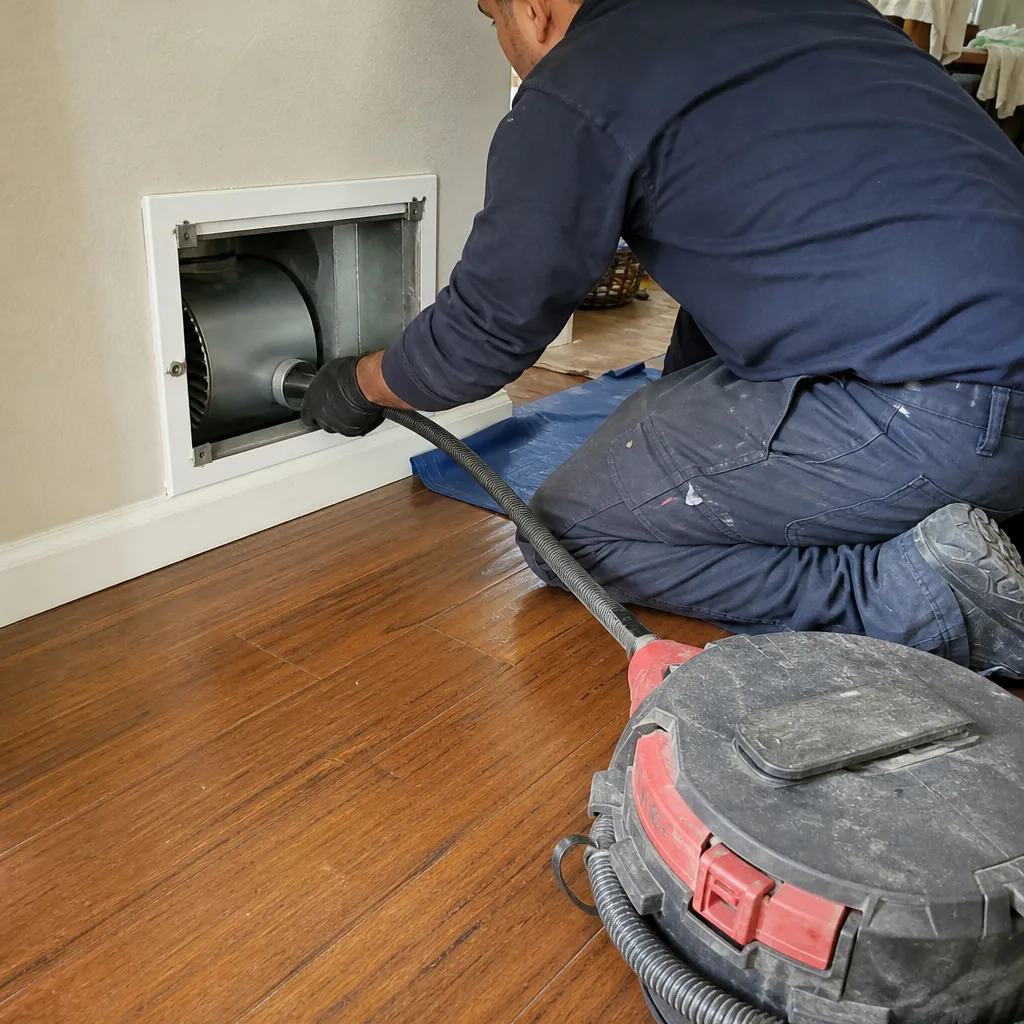
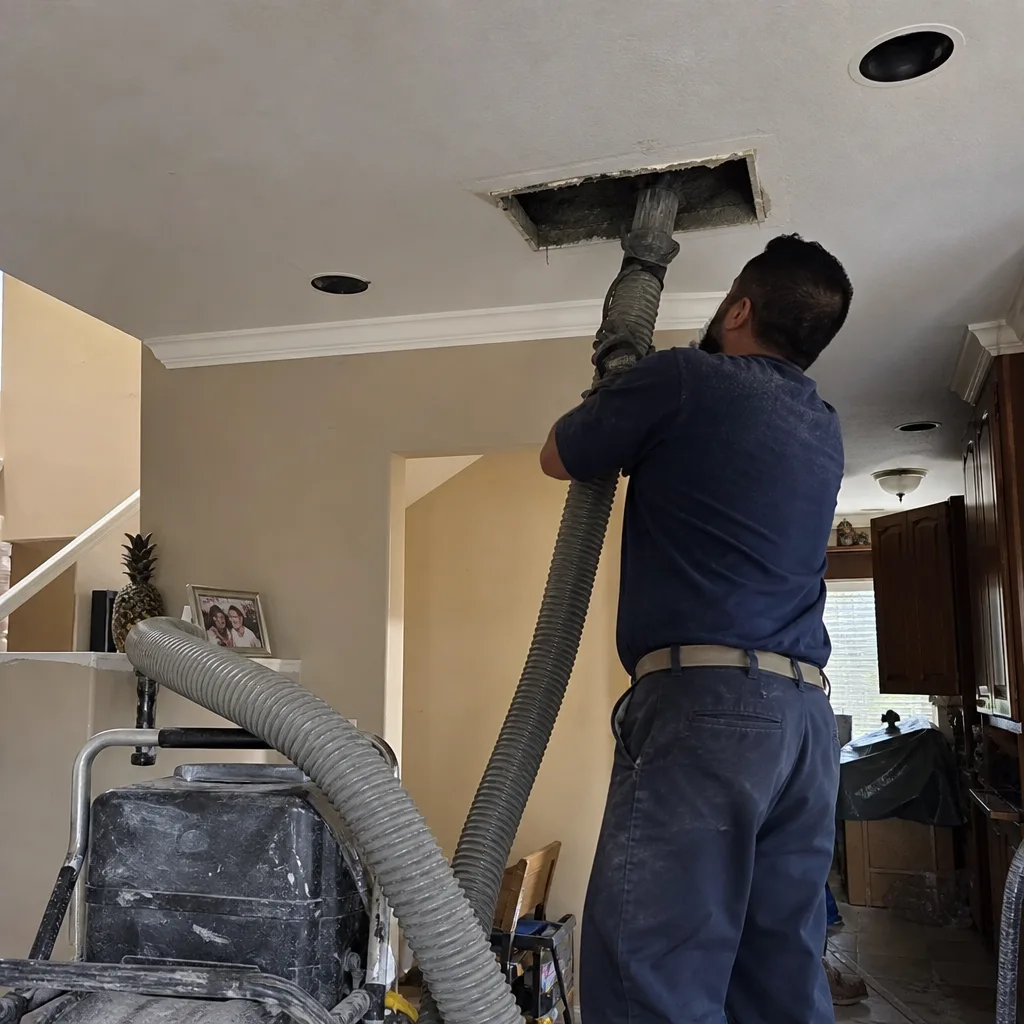
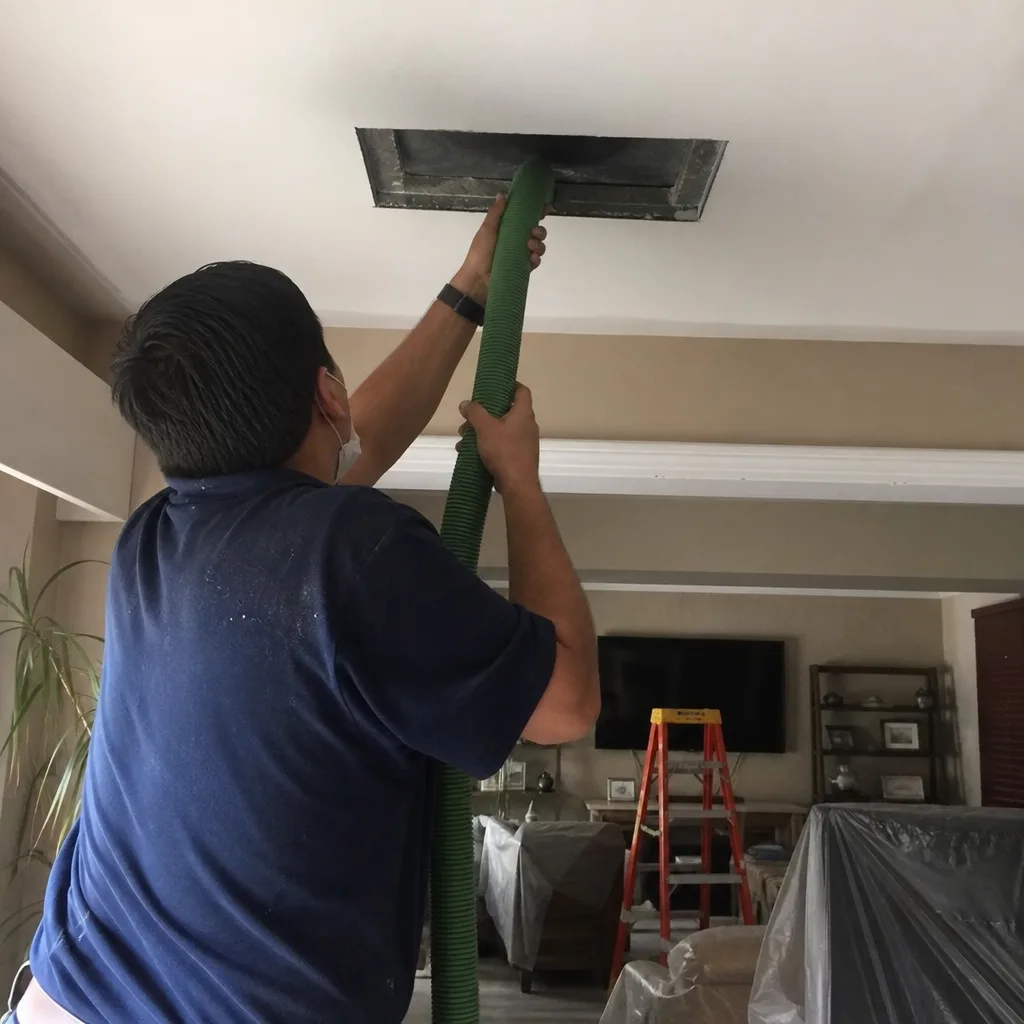
Whole-system duct and dryer vent check with before-and-after photos - you see exactly what came out of your vents
That "$99 whole-house special" is a bait ad - the real number appears once they are in your hallway, or the "clean" is a shop-vac at the register. We photograph the inside of your ducts before and after instead.
How to Hire an Air Duct Cleaning Contractor in Mission Viejo: A Step-by-Step Guide
California’s Contractors State License Board does not issue a specific “duct cleaning” license. That single regulatory gap explains why the person quoting you $79 for a whole-home cleaning and the specialist charging $400 are operating under the same legal framework. The difference between a thorough job that improves your indoor air and a rushed pass-through that leaves debris in your supply lines is entirely on you to identify before anyone shows up at your door. This guide – along with our more guides & resources – gives you the exact vetting script, the red-flag checklist, and the technical questions that separate dedicated duct specialists in Mission Viejo from upsell-driven generalists who treat duct cleaning as a footnote to a furnace tune-up.
Styles & brands we work with
- Whole-home duct cleaning
- Dryer vent cleaning
- Camera inspection
- Sanitizing & deodorizing
Quick Answer
To hire a legitimate air duct cleaning contractor in Mission Viejo, verify they follow the NADCA ACR standard, ask what vacuum CFM their equipment pulls and whether they use truck-mounted or portable systems, demand a written scope of work that names the supply lines, return plenum, and air handler cabinet, and reject any quote structured around a teaser per-vent or whole-house price that cannot cover professional labor. Then cross-check their CSLB status, read Orange County complaint patterns related to duct-cleaning upsells, and confirm they can document the work with before-and-after photos of your actual ducts.
Table of Contents
- Why the Licensing Gap Puts the Burden on You
- The NADCA ACR Standard: Your Pass/Fail Screen
- Equipment Verification: CFM, Truck-Mount vs. Portable, and Why It Matters for Mission Viejo Homes
- Why ‘Whole House for $99’ Is Mathematically Impossible
- The Written Scope of Work: What Must Be Listed Before You Sign
- Cross-Checking CSLB, Reviews, and Orange County Complaint Patterns
- The 10-Question Vetting Script for the Quote Call
- Common Mistakes to Avoid
- When to Call a Professional
- Frequently Asked Questions
- The Bottom Line
Why the Licensing Gap Puts the Burden on You
In most trades, the state does the first round of filtering for you. Plumbers, electricians, HVAC contractors, and roofers all need specific C-license classifications from the CSLB. Duct cleaning in California has no equivalent. A company holding a C-20 warm-air heating license, a general B license, or in some cases no contractor’s license at all can legally advertise and perform duct cleaning services in Mission Viejo. That means the regulatory floor is essentially flat, and the ceiling is set by whatever standard a given company chooses to meet or ignore.
The practical consequence is that price becomes a terrible filter. A heavily discounted quote doesn’t signal efficiency; it signals either inexperience or a deliberate bait-and-switch model where the initial number is a loss leader for a much larger invoice once the tech is in your home. Conversely, a higher quote doesn’t automatically mean competence. You need a structural way to evaluate what’s behind the number, and that starts with a single industry standard.
Mission Viejo’s housing stock makes this particularly relevant. The city’s tract developments built from the 1970s through the 1990s, stretching across neighborhoods like La Paz, Alicia, and along Marguerite Parkway, tend to have long horizontal duct runs and multiple return paths. Homes in the Aegean Hills and Canyon Crest areas often have furnace platforms in hall closets rather than basements or attics, which changes access points. A cleaner who doesn’t understand those layouts will miss sections of the system entirely. None of this is governed by license law, so it becomes your job, as the homeowner, to ask questions that expose whether the person quoting actually knows your house type.
Before we go further, it’s worth grounding this in what our company is and isn’t. We’re a dedicated Air Duct Cleaning services, dryer vent cleaning, and air duct repair company. We don’t do general HVAC service, we don’t sell furnaces, and we don’t treat duct cleaning as a door-opener for other work. That narrow focus shapes how we evaluate the questions in this guide, because we’ve built our process specifically around the failure points we describe below. If you’re comparing companies, compare them against the same checklist we’d want a family member to use.
The NADCA ACR Standard: Your Pass/Fail Screen
The National Air Duct Cleaners Association publishes something called the ACR Standard, the Assessment, Cleaning, and Restoration of HVAC Systems. It’s the closest thing this industry has to a technical rulebook, and it gives you a simple pass/fail screen: ask the person on the phone, “Do you clean to the NADCA ACR standard?” If they hesitate, answer vaguely, or say something like “we clean more than NADCA requires,” that’s a fail. A legitimate provider will be able to name the standard and describe what it requires without pausing.
Here’s what the standard actually demands in plain language. A compliant cleaning must mechanically agitate debris from the interior surfaces of the ductwork using brushes, compressed air, or a combination. It must simultaneously collect that debris with a vacuum system connected to the ductwork so particulates don’t get blown into the living space. It must cover the supply side, the return side, the air handler housing, coils if present, blower compartment, and all registers and grilles from the face of the register back to the trunk line. The cleaning is considered complete when the interior surfaces are visibly free of significant debris, and the contractor must be able to show you that condition, typically with photos or video of the actual interior.
What the standard does not require is equally important. It does not set a minimum price. It does not require truck-mounted equipment. It does not mandate chemical sanitizers or fogging, which means anyone pushing a “sanitizing treatment” as a mandatory upsell is padding the bill, not following the standard. It also does not allow the job to be declared done simply because a vacuum was run through the registers. Agitation plus simultaneous collection is the core, and if a quote doesn’t describe that mechanical process, the company isn’t cleaning to the ACR standard no matter what they claim.
In our experience cleaning homes across Mission Viejo, the most common pattern we find in systems that were “cleaned” by a discount provider is a clean-looking register face with debris still matted inside the branch lines ten feet back from the vent. That happens when someone inserts a vacuum hose without a rotating brush or agitation tool. The visible inch looks fine. The hidden ten feet don’t. The ACR standard exists specifically to close that gap, and asking about it on the phone is the quickest single question that separates professionals from pass-through operators.
Equipment Verification: CFM, Truck-Mount vs. Portable, and Why It Matters for Mission Viejo Homes
After the NADCA question, the next screen is equipment. You don’t need to become a technician to ask two questions: “What equipment do you use?” and “What CFM does your vacuum pull?” CFM means cubic feet per minute of airflow, and it’s the single most useful number for evaluating whether a cleaning system can actually move debris through long duct runs rather than just stirring it up.
A credible professional-grade duct cleaning system pulls between 2,000 and 7,000 CFM at the point of contact with the ductwork. The lowest-end portable units used by some discount operators struggle to pull 800 to 1,200 CFM. That may sound like an abstract difference, but here’s the physical reality: in a two-story Mission Viejo home with a supply trunk running from a first-floor closet up through a chase to second-floor registers, the vacuum has to overcome friction across 30 to 50 feet of duct. A low-CFM portable unit cannot maintain suction velocity over that distance, which means it dislodges debris at the register end and leaves it to settle back as soon as the system turns on. It creates a before-and-after that looks identical once the dust resettles.
Truck-mounted systems pull their vacuum power from a motor in the service vehicle, typically diesel or gasoline, and connect to the home through a large-diameter hose. They pull high CFM and maintain it across long runs. Portable systems, including purpose-built professional portables like the Rotobrush and Nikro platforms we operate, can absolutely do the job correctly when paired with proper agitation tools and run at their designed CFM range, but the quality bar is higher. The equipment has to be matched to the house. A two-story tract home in Mission Viejo with long horizontal runs and multiple returns benefits from either a truck-mounted unit or a professional portable configured with a high-output vacuum and rotating brush heads. A one-story condo near Lake Mission Viejo with short lines is a different job, and a pro-grade portable handles it fine.
The distinction between portables matters too. There is a meaningful difference between a $1,200 rental-grade carpet vac with a duct attachment and a purpose-built platform engineered specifically for duct interiors. The latter uses forward and reverse rotating brushes, integrated HEPA or high-efficiency filtration, and an extraction hose sized for duct dimensions. That’s what separates a dedicated specialist from a handyman who added “duct cleaning” to a long list of services. When you ask for the equipment brand and model, a specialist will say Rotobrush, Nikro, or a truck-mount manufacturer without hesitation. A generalist will say “industrial equipment” and change the subject.
One more Mission Viejo-specific factor: many homes here sit in landscaped lots with mature eucalyptus, sycamore, and pine trees that shed fine particulate matter. Combined with the marine layer that pushes moisture inland during late spring and early summer, that creates a gritty, occasionally sticky residue inside return lines. Low-CFM equipment simply cannot extract that kind of material effectively from a 40-foot run. This isn’t theoretical, it’s the pattern we see every season – a reality covered in our Seasonal Air Duct Cleaning Care for Mission Viejo: Year-Round Homeowner’s Guide – when we follow behind a previous cleaning that didn’t take.
Why ‘Whole House for $99’ Is Mathematically Impossible
The most destructive number in duct cleaning is $99. It appears on postcard mailers, in social media ads, and on Google local service listings across Southern California. Here is the math that makes it impossible. A proper cleaning of a typical 2,000 to 2,800 square foot Mission Viejo home takes two people between three and five hours when done to the NADCA ACR standard. That includes setup, sealing, agitation on both supply and return sides, cleaning the air handler cabinet, and documentation. At even a modest Southern California labor burden rate of $50 to $70 per hour per person fully loaded, labor alone is $300 to $700. Equipment amortization, insurance, fuel, and the vehicle add more. And that’s before the company makes a dime of profit.
So what actually happens when you book the $99 job? One of two things. The operator shows up, spends 45 to 60 minutes running a low-CFM hose through the visible registers, skips the return side and the air handler entirely, and calls it done. You’ve paid for a visual touch-up, not a cleaning, and within weeks the dust in your home returns to baseline because the source was never removed. Or, more commonly, the $99 quote is a door opener. The tech arrives, performs a quick inspection, and delivers a scripted pitch: you need coil cleaning, you need sanitizing, you need a new filter housing, you need this and this and this. The final invoice lands between $800 and $1,500. If you decline, the “cleaning” performed is minimal and the company moves on to the next lead.
The honest pricing structure is a flat, whole-system quote agreed before work starts. That’s how we operate, and it’s how any reputable duct cleaner in Mission Viejo should operate. You should know the total before the first tool comes off the truck. The price reflects the number of systems in the home (some larger half-acre lots off Alicia Parkway have dual systems), the number of returns, and the accessibility of the air handler. A fair whole-system cleaning in Orange County typically lands in the $300 to $600 range depending on home size and number of furnaces, as detailed in our Air Duct Cleaning Cost Breakdown: The Mission Viejo Homeowner’s Reference for 2026. That may not be the cheapest number you hear, but it’s the only number that’s mathematically attached to a real cleaning.
The takeaway is simple: reject any quote where the price is the headline and the scope is the fine print. Demand the reverse. If the company can’t explain what the money covers in specific terms, the number means nothing.
The Written Scope of Work: What Must Be Listed Before You Sign
A legitimate cleaning company will provide a written scope of work that names the system components being cleaned. If you receive a quote that says “duct cleaning” and a price, that’s not a scope. That’s a placeholder. Here’s what a real scope lists, component by component, and why each item matters for a Mission Viejo home.
- Supply branch lines and trunks: Every run from the main trunk to each register must be agitated and extracted. If the scope doesn’t say “all supply runs from trunk to register face,” you cannot verify that the far second-floor bedrooms were touched.
- Return pathways: Returns are where the bulk of household dust and pet hair accumulates because they pull unfiltered air from living spaces. In many Mission Viejo homes, returns run through wall cavities or floor joist spaces rather than dedicated metal ducts, and a scope must explicitly include them. A cleaner who only does the supply side is missing half the system.
- Air handler cabinet, blower housing, and evaporator coil if accessible: The air handler is the heart of the system and the place where moisture, dust, and organic material combine. If the scope excludes the cabinet, the job is incomplete no matter how clean the branches are.
- Registers and grilles: Every register face should be removed, cleaned, and reattached. This also lets the tech access the branch line opening directly for agitation.
- Inspection of flex duct condition: Homes built in Mission Viejo from the 1980s onward frequently use flexible duct in attic sections. Flex duct can tear, sag, or separate at connections. A scope should note that any visible damage will be documented and, if the company offers air duct repair, addressed. Companies that don’t repair will simply flag it and leave, which means you pay a second company later. We clean it, and if it’s damaged, we fix it.
- Sanitizing or deodorizing, only if discussed and priced separately: The ACR standard does not require chemical treatments. If a company includes one, it should be itemized, optional, and priced as an add-on. Anyone folding “sanitizing” into the base quote and claiming it’s mandatory is adding margin, not value. There’s a legitimate place for it when there’s a specific issue like mold odor or post-construction dust, and for those situations, using proper contamination-control equipment like Abatement Technologies systems is what separates careful work from masking.
Beyond the scope, ask who will be doing the work. Some companies subcontract their cleanings to independent operators. Others send a single tech for what is genuinely a two-person job. Neither is automatically disqualifying, but the answers should be clear and consistent. The scope, the equipment, and the crew should all be describable in two sentences. If they aren’t, keep looking.
Cross-Checking CSLB, Reviews, and Orange County Complaint Patterns
With the technical screens in place, the next layer is due diligence on the company itself. Start with the CSLB website. Look up the company name and the owner’s name. What you’re checking for is not a duct cleaning license, because as we’ve covered, that doesn’t exist. You’re checking whether the company holds any contractor’s license at all, whether it’s current, and whether the workers’ compensation insurance status is active. If a company has employees and no workers’ comp, that’s a significant liability red flag for anyone working on your property. If they hold no license whatsoever, that’s a straight disqualifier.
Then move to reviews, but read them the way a skeptic would. Look for the specific complaint pattern that characterizes duct-cleaning bait-and-switch operators: reviews that mention a low initial quote, a sudden “discovery” of a problem during the appointment, and a final price several times higher than the quote. In Orange County, these complaints typically cluster around companies running heavy local-search advertising with eye-catching price points. A five-star average is not enough. Read the one- and two-star reviews specifically and look for recurring themes. A company with 200 reviews and an 85% five-star rate but a consistent thread in the negative reviews of “the price doubled when they got here” is more dangerous than a company with a 4.6 average and complaints about scheduling.
The BBB is a secondary check, and it’s worth a quick search. The value isn’t the letter grade, which has its own limitations, but the complaint detail. If a company has multiple complaints alleging upsell pressure or incomplete work, and the company responded by pointing to a signed contract, that pattern tells you something. Also search for the company name plus “complaint” plus “Orange County” and “duct cleaning” to surface issues that never made it to the BBB.
One pattern specific to this region: companies that register a string of similar-sounding business names and rotate their local listings as complaints accumulate. If you find a company with multiple Google Business Profiles under slightly different names at the same address, or an owner whose name appears attached to four different duct-cleaning entities over the last eight years, that’s a deliberate review-washing strategy. Cross-reference the owner’s name on the CSLB site and in secretary of state business filings. A stable, single-name company that has been operating visibly in Mission Viejo is a much stronger signal than a churn operation.
Finally, ask for references from homes in your area. Not from several years ago, but from the last 90 days. A specialist who regularly works in Mission Viejo can name a neighborhood, not just a city. If the person on the phone can say, “we did a home off La Paz last week with double returns and a horizontal attic unit,” that’s someone who knows this housing stock. If the reference is generic or the company hesitates, treat that as information.
The 10-Question Vetting Script for the Quote Call
Here’s the consolidated script. Use it on the phone or via email before you let anyone into your home. You don’t need to ask every question verbatim, but each one maps to a specific failure mode we’ve described above.
- “Do you clean to the NADCA ACR standard?” Answer should be an immediate yes with a brief explanation of what that involves. Vague or defensive answers are fails.
- “What equipment do you use, and what CFM does your vacuum pull?” Look for named brands like Rotobrush or Nikro, or a truck-mount system. CFM should be 2,000 or above for a two-story home.
- “Will the scope of work include the return side, the air handler cabinet, and every supply run, not just the registers?” If the answer is anything other than yes with specifics, move on.
- “Do you use agitation tools, or just vacuum suction?” Cleaning requires mechanical agitation. Vacuum-only is a fail.
- “Is the price a flat, whole-system number agreed before work starts?” If there’s any per-vent pricing or “starting from” language, that’s a red flag.
- “What air filtration or air quality products do you offer, and are they optional or included in the base price?” A specialist may offer products like Aprilaire or Honeywell filtration upgrades. Those should be optional line items, not mandatory upsells. The ability to offer them signals real air-quality expertise; bundling them into the base quote signals pressure selling.
- “Will you show me before-and-after photos of my actual ducts, not stock images?” Photo documentation is standard practice. Refusal is a fail.
- “Who is doing the work, your employees or a subcontractor?” Either answer can be acceptable, but the company should be able to tell you clearly.
- “If you find damaged duct sections during the cleaning, what happens?” A repair-capable company will document the damage, quote the repair, and handle it. A clean-only company will refer you out. Neither is wrong, but know the difference before you commit. We clean it, and if it’s damaged, we fix it.
- “What’s your CSLB license number and workers’ comp status?” No license number is a hard stop. No workers’ comp with employees is a hard stop.
Common Mistakes to Avoid
- Hiring on price alone. The $79 and $99 mailer numbers in Mission Viejo are lead generators, not honest quotes. You will pay more either in the upsell or in the incomplete job, and often both.
- Not asking about the return side. A shocking number of so-called cleanings ignore the return pathways entirely. The returns are where most household debris accumulates, and skipping them means the system re-contaminates the supply side within weeks.
- Accepting register-only cleaning as “done.” Running a vacuum hose through each vent without agitation tools is a visual touch-up. Insist on the NADCA standard: agitation plus simultaneous extraction through the full length of every run.
- Signing a quote with no written scope. A one-line quote with a price and no component breakdown is not a contract, it’s an invitation to negotiate a bigger invoice on site.
- Falling for mandatory sanitizing upsells. Chemical fogging and “sanitizing treatments” are optional add-ons unless there’s a specific contamination issue. Anyone who presents them as required is padding the job.
- Not checking for license and workers’ comp. Because duct cleaning isn’t separately licensed, some operators have no coverage at all. If a worker is injured in your Mission Viejo home and there’s no workers’ comp, your homeowner’s policy is on the hook.
- Choosing a generalist over a specialist. Companies that do HVAC repair, plumbing, pest control, and duct cleaning in one van are rarely good at all of them. Duct cleaning uses dedicated equipment and a specific process. A company that does one trade deeply is a safer bet than one that does five trades passably.
When to Call a Professional
Call a professional when the signs point to a system-wide issue, not a single-room annoyance: visible dust blowing from registers when the system runs, a musty smell that persists after filter changes, allergy symptoms that spike primarily at home, or a recent renovation that produced drywall dust or sawdust you can’t seem to fully vacuum from the living space. Also call if you’ve just moved into a resale home in Mission Viejo and have no record of when the ducts were last touched, because the previous owners’ cleaning history went with them. A dryer vent that takes more than one cycle to dry clothes or shows visible lint at the exterior vent is a fire-safety issue, not just an efficiency concern, and deserves the same seriousness. Duct Cleaning Mission Viejo offers free estimates in Mission Viejo, call (833) 593-4407 and we’ll walk through what your system actually needs.
Frequently Asked Questions
A legitimate whole-system cleaning in Mission Viejo typically runs between $300 and $600 for a single-system home, depending on square footage, number of returns, and air handler accessibility. Any quote dramatically below that range is a loss leader designed to generate an on-site upsell, and any quote far above it without a clear scope should be questioned. For an exact quote on your home, call (833) 593-4407, estimates are free.
Because the cheap quotes aren’t for the same job. A $99 quote cannot cover the labor, equipment, and time required to clean supply lines, returns, and the air handler to the NADCA ACR standard, so the operator either skips most of the work or uses the visit to upsell you into a $900 invoice. The price difference is not efficiency, it’s a different scope dressed in the same words.
Demand before-and-after photos of your actual ducts, not stock images. A legitimate provider documents every section: supply branches, return lines, and the air handler cabinet. If the company cannot show you the inside of your own ductwork, you have no way to verify that anything beyond the register faces was touched. Call (833) 593-4407 and ask us what full documentation looks like before you book anyone.
For most Mission Viejo homes, every three to five years is a reasonable interval, adjusted upward if you have multiple pets, have completed renovations, or live near heavy landscaping that sheds fine particulate. Much of the “annual cleaning” marketing in this industry exists to sell repeat appointments, not to serve indoor air quality.
A filter only protects the air handler and supply side from large particles entering the return stream. It does nothing for debris already inside the ductwork, and it does nothing for the return side itself, which sees unfiltered air from your living spaces. Filtration upgrades like Aprilaire or Honeywell products can improve ongoing air quality, but they’re complements to a clean system, not substitutes for one. Better air starts inside the ducts.
It can be, especially in newer construction where drywall dust and construction debris are often left inside the ducts during the build. Several Mission Viejo communities developed in the last 15 years, including some of the newer sections near the Kaleidoscope area, have the same post-construction debris problem as older homes that have simply accumulated years of dust. Newer doesn’t mean clean.
The Bottom Line
Hiring a duct cleaner in Mission Viejo is a process of elimination. Eliminate the companies that can’t name the NADCA ACR standard, that can’t tell you their equipment’s CFM, that quote a teaser price with no written scope, and that can’t produce a current CSLB number. What remains is a short list of dedicated specialists who clean ductwork as their primary trade, document the work, and stand behind the job with a clear understanding of local housing stock and the specific contamination patterns we see in this part of Orange County. The best contractor is the one who survives that filter, not the one who showed up first in your search results.
Written by the team at Duct Cleaning Mission Viejo, serving Mission Viejo since 2017. For more on our air duct services, visit our Duct Cleaning Mission Viejo home page, or see our specific service pages for air duct cleaning and dryer vent cleaning in San Juan Capistrano.
See the difference
 Before
 After
 Before
 After
 Before
 After