
Last updated November 2, 2026
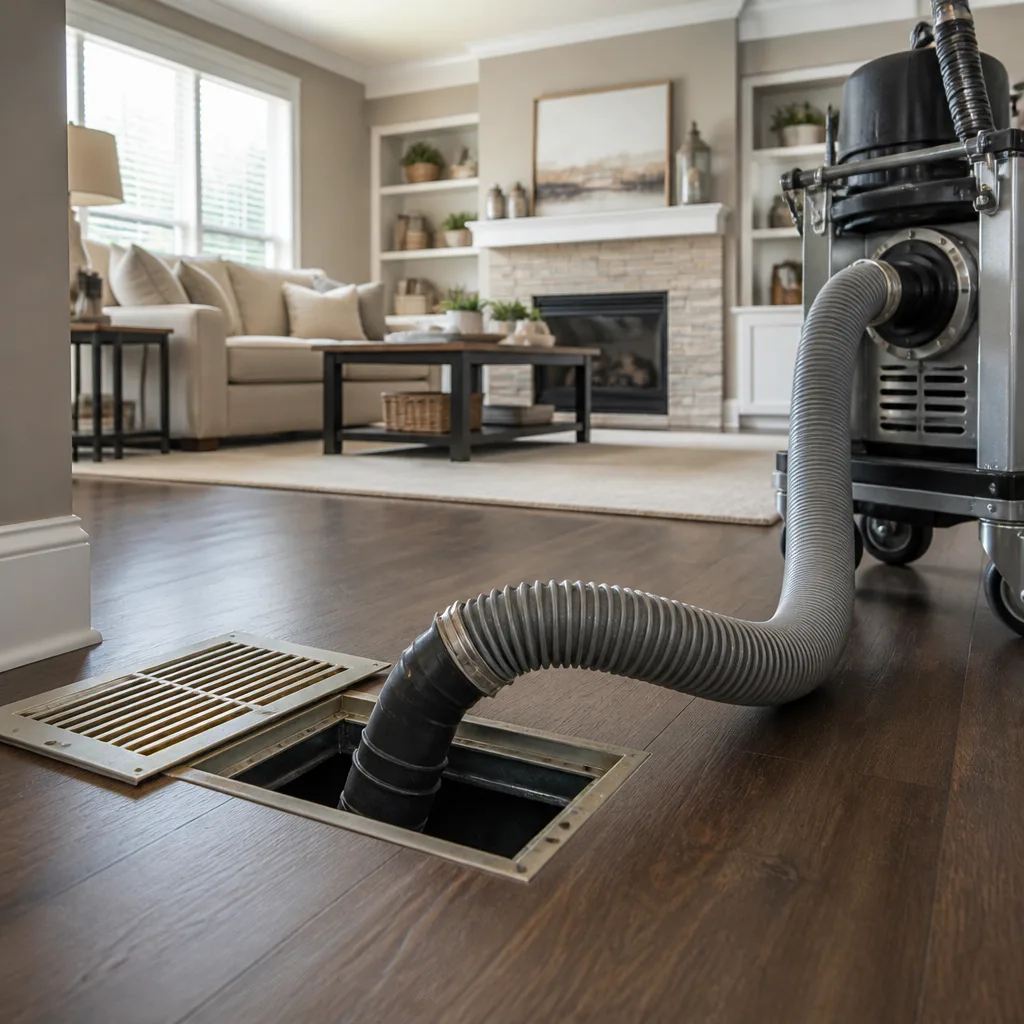 Whole-home duct cleaning
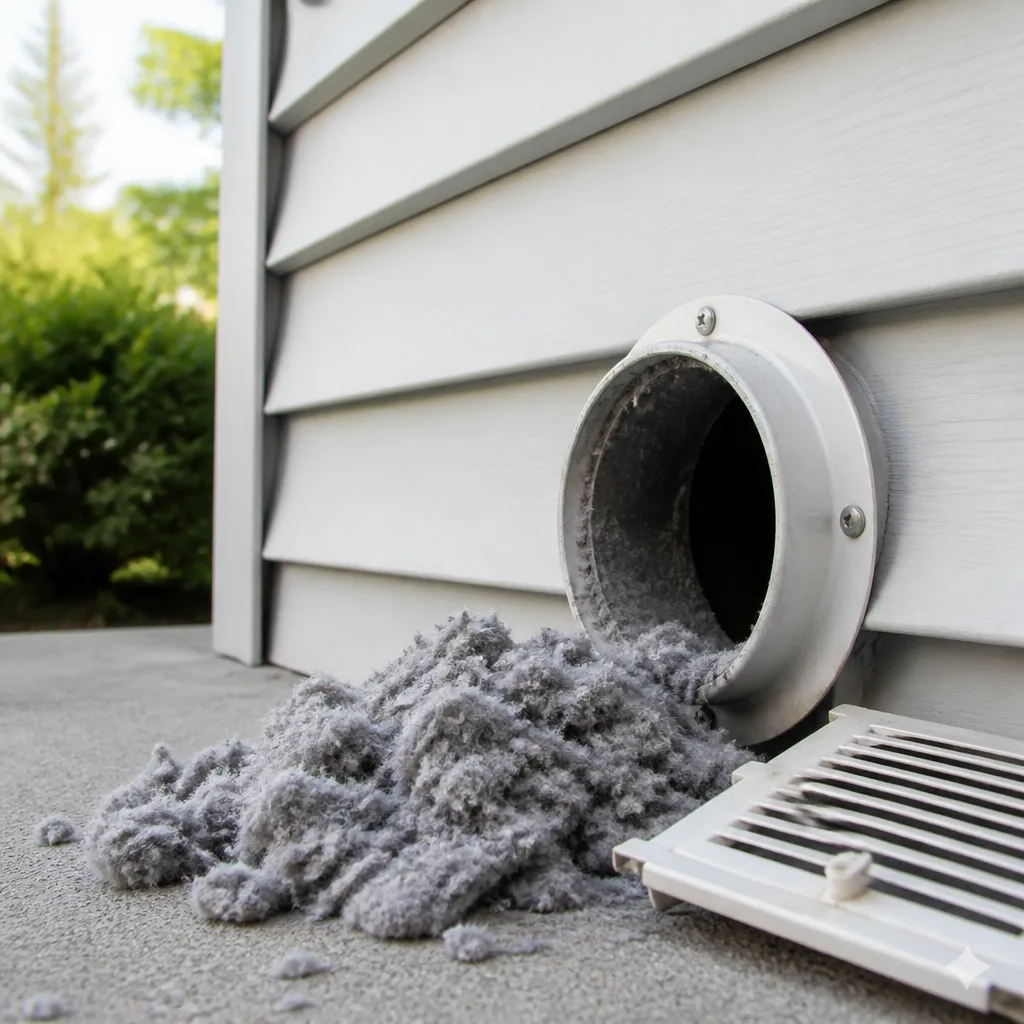 Dryer vent cleaning
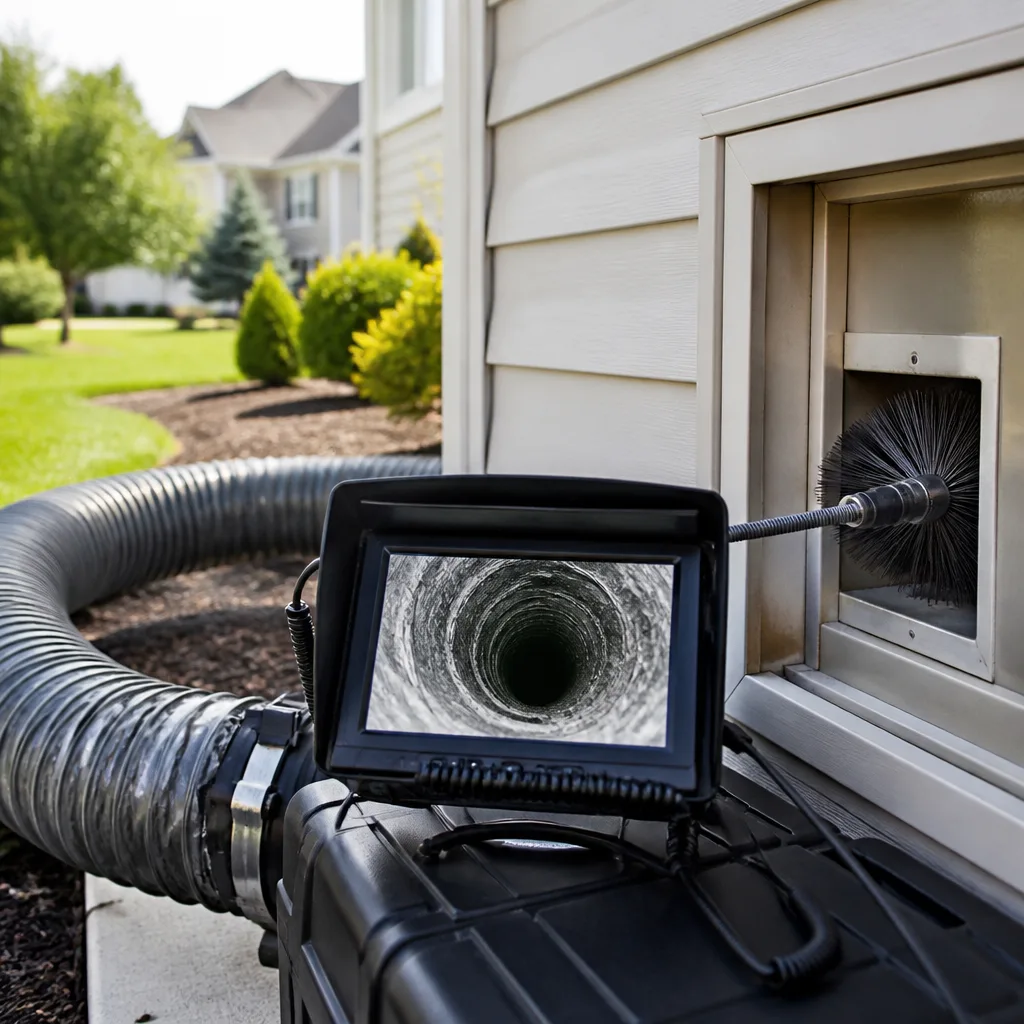 Camera inspection
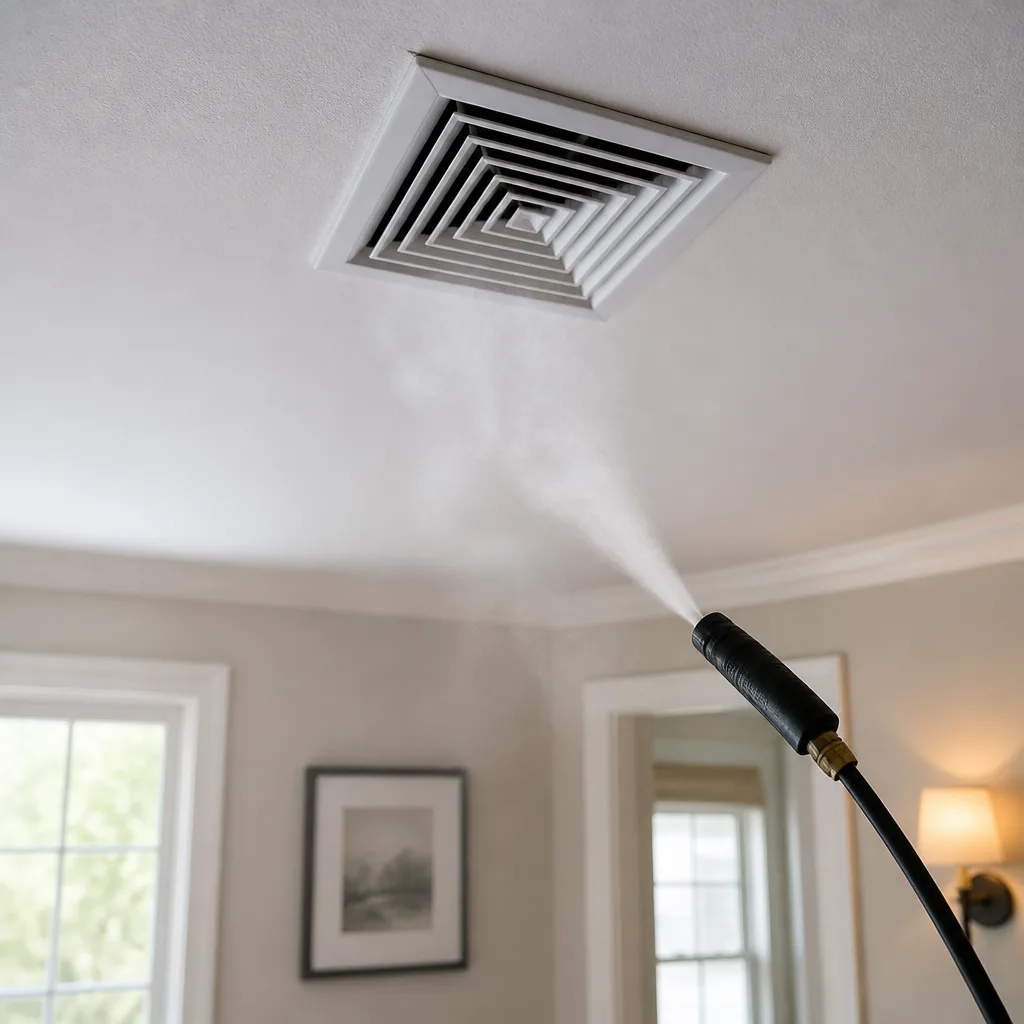 Sanitizing & deodorizing
Whole-system duct and dryer vent check with before-and-after photos - you see exactly what came out of your vents
That "$99 whole-house special" is a bait ad - the real number appears once they are in your hallway, or the "clean" is a shop-vac at the register. We photograph the inside of your ducts before and after instead.
Air Duct Cleaning Warning Signs: A Mission Viejo Homeowner’s Reference Guide
Visible dust at a supply register is one of the last warning signs, not the first. By the time debris is blowing out of your vents and onto the furniture, the interior duct surfaces have been coated for months. The air handler in your Mission Viejo attic has been working harder than it should, and your family has been breathing the smallest fraction of whatever is built up inside. What most homeowners don’t realize is that a duct system gives off observable signals weeks or months earlier. A trained eye can read them without opening a single register panel. This Complete Air Duct Cleaning Guide for Mission Viejo Homeowners teaches you how to spot those signals yourself, understand what they mean, and know when the situation calls for a specialist with professional-grade equipment rather than a generalist with a shop vac.
Quick Answer
The earliest warning signs of contaminated or restricted air ducts in a Mission Viejo home are: black-edged or spotty residue on the air filter, musty or metallic odors at HVAC startup, rooms that heat or cool unevenly despite a balanced system, and visible debris or discoloration inside the first few inches of a supply register. Any one of these deserves an inspection. Two or more means the duct interiors have been accumulating contamination for months, and the problem will keep compounding until the system is professionally cleaned.
Styles & brands we work with
- Whole-home duct cleaning
- Dryer vent cleaning
- Camera inspection
- Sanitizing & deodorizing
Table of Contents
- Reading Your Air Filter Like a Diagnostic Report
- Uneven Room Temperatures: A Blockage Signal Most People Miss
- Odor Signatures: What Your Nose Can Tell You Before Your Eyes Catch Up
- Attic Flex Duct: The Inspection You Can Do This Weekend
- Register Self-Inspection: Flashlight and Camera Method
- Mission Viejo Contamination Types: What Actually Accumulates Here
- How to Verify the Work Was Actually Done
Reading Your Air Filter Like a Diagnostic Report
Most homeowners look at a dirty filter and think, “Time to swap it.” That’s a missed diagnostic opportunity. The pattern of loading on a used filter tells you what’s happening inside the duct system upstream of it. And in a Mission Viejo home, where HVAC systems run more months of the year than almost anywhere east of the coastal zone, that pattern develops quickly.
Uniform Gray Loading: Normal (Mostly)
A filter that comes out an even, light-to-medium gray across its entire face is doing exactly what it should. That gray is household dust – skin cells, fabric fibers, a little pollen if windows are open. It’s boring, and boring is fine. Swap the filter and move on.
Black-Edged or Spotty Loading: Pay Attention
If the residue on the filter is concentrated at the edges, in spots, or has a dark, sooty character, something upstream is wrong. Black-edged patterns frequently indicate moisture inside the return-side ductwork. When return ducts pull air, they pull whatever humidity is in the surroundings too. In Mission Viejo, that often means air from an unconditioned attic crawlspace where flex duct connections have loosened. The moisture condenses inside the duct, dust sticks to wet surfaces, and the result is a dark, gummy residue that eventually works loose and loads the filter unevenly.
Spotty loading, especially with a tan or brown tint, points to a return leak near dusty, unfiltered air sources – an unsealed chase, a gap at a boot connection, or a return register pulling from a dusty garage. The fix is not just a new filter. The fix is finding and sealing the leak. We’ve pulled thousands of return grilles in Mission Viejo; the homes where filters load unevenly month after month are almost always the ones with unsealed return paths pulling attic or wall-cavity air.
What to Log
Before you toss the next used filter, take a phone picture of it. Do it three months in a row. If the pattern changes, you’ve got a developing problem. If it’s stable and gray, you have normal household dust. Documentation beats memory, and if you eventually call a professional, those filter photos are genuinely useful diagnostic data.
Uneven Room Temperatures: A Blockage Signal Most People Miss
When one bedroom in a Mission Viejo house runs consistently five or more degrees warmer than the rest, the default assumption is usually an HVAC balancing issue or a bad damper. Sometimes that’s true. But partial duct blockage produces the exact same symptom, and it’s far more common than most homeowners realize – especially in houses where ducts haven’t been professionally cleaned in years.
Here’s the mechanism. Dust, pet hair, construction debris, and sometimes biological growth accumulate inside a duct gradually, not evenly. The first places to build up are turns, junctions, and the inside of long flex-duct runs that sag in the middle. As that material thickens, it narrows the effective opening of the duct. Less air reaches the room at the end of that run. The thermostat is usually in a hallway or living room, so it keeps the system running longer to satisfy the temp setting there – meanwhile the blocked room gets further and further behind.
How to Distinguish Blockage From a Damper Problem
- Feel the airflow at the register. Hold a tissue or piece of paper near the problem room’s register, then near a register in a comfortable room. If the problem room barely moves the paper, you have restricted airflow. Check that the register damper is fully open first – but if it is, the restriction is likely upstream in the duct.
- Check other registers on the same trunk line. If two or three rooms fed by the same branch all show weak airflow, the blockage is probably at the branch takeoff or in the shared section of trunk – not at a single room’s damper.
- Run the fan-only mode for 10 minutes. In fan-only, dampers and temperature sensors don’t cycle. If airflow at the weak register remains low while others blow strong, you’ve ruled out the furnace cycling pattern and confirmed a physical restriction.
- Look for the telltale dust shadow. On the wall or ceiling around a restricted register, you’ll often see a faint darker shadow of dust that has settled in the slow-moving air pattern. It’s a visual sign that this room has been under-ventilated for a while.
Mission Viejo’s housing stock makes this worth taking seriously. Many homes here were built in the 1970s and 1980s, and a large share still run original or decades-old flex duct in the attic. Flex duct degrades – the inner liner can separate, insulation can slouch, and the duct can kink or collapse under its own weight. A collapsed flex duct in an attic is a physical blockage that no amount of filter changing or thermostat fiddling will fix. And when it’s combined with years of accumulated debris, the result is exactly what you’re experiencing: a hot room no matter what the thermostat says. That’s a situation where Air Duct Repair in San Juan Capistrano and the surrounding communities often turns out to be the real fix, not just cleaning.
Odor Signatures: What Your Nose Can Tell You Before Your Eyes Catch Up
Smells are the earliest warning system most homeowners ignore because they fade. You smell something at the first heat cycle of the season, the odor dissipates after a few minutes, and six months later you’ve forgotten it ever happened. But each of those startup smells is a message about what’s sitting inside the duct system.
Musty / Damp-Earth Smell
This is the signature of moisture and, very often, active microbial growth on interior duct surfaces. In Mission Viejo, the moisture source is typically condensation from temperature differentials across attic ductwork, a leaking evaporator coil pan, or years of humid coastal air drawn in through a return leak. The smell is strongest at startup because the condenser pulls air across the damp surfaces first. If you smell musty air only when the system first kicks on, the reservoir of dampness is inside the system, not in the room. Cleaning addresses the contamination. Finding and fixing the moisture source addresses the cause.
Metallic / Ozone Smell
A hot-metal or ozone smell usually comes from the blower motor or the heat strips themselves. In an older Mission Viejo system that has been running for years with dirty coils and a loaded filter, the motor works harder, runs hotter, and emits a sharper odor that travels through the ducts. If the smell is persistent and sharp, turn the system off and have it checked. If it’s faint and only at seasonal startup, it may be dust burning off the heat exchanger – but don’t gamble on that guess for more than a cycle or two.
Burning Dust Smell at First Heat Cycle
This one is so common that many homeowners accept it as normal. It is not normal. That “burning dust” smell is the accumulated debris on the heat exchanger – the dust, skin cells, and fiber particles that have been pulled through the ducts all cooling season and baked onto the heating elements. When the heat kicks on for the first autumn cycle, that layer literally smokes. The smell goes away because the layer burns off. But every season, it comes back thicker, because the ducts keep delivering more raw material. A duct system that’s clean delivers less dust to the heat exchanger, and the first-cycle burn-off shrinks dramatically.
None of these smells should be treated as an inconvenience you learn to live with. In our experience serving Mission Viejo homes, the homeowners who call us with musty startup odors are almost always the ones who have been ignoring a slower-building problem for two or three seasons.
Attic Flex Duct: The Inspection You Can Do This Weekend
In most Mission Viejo homes, the ductwork lives in the attic. That’s both a curse – attic heat degrades materials faster – and a gift, because you can see the ducts without opening walls. A 20-minute attic inspection with a flashlight will tell you more about the state of your duct system than a year of listening to odd sounds.
Safety note first: attics in Mission Viejo reach 130°F and higher during summer. Do this inspection early in the morning, wear long sleeves and a dust mask or respirator, and walk only on the trusses or joists. If you’re not sure about foot placement, don’t go up. Call someone who does this regularly.
What to Look For, In Priority Order
- Sagging flex duct runs. Flex duct should run fairly straight between supports. If a run sags in the middle like a hammock, debris, moisture, and even biological material can pool in the low point. A sagging duct is an accumulation chamber. It is also a sign the inner liner has likely separated from the outer insulation jacket, meaning you’re losing conditioned air into the attic and pulling attic air back in.
- Kinked or crushed ducts. A duct that bends sharply at 90 degrees or is pinned under a truss or a stored box is physically restricting airflow. That restriction shows up as uneven temperatures and weak register airflow – the same symptoms as blockage from debris. No amount of cleaning will fix a crushed duct; it has to be repaired or replaced.
- Deteriorating outer jacket. The outer plastic or foil jacket is the duct’s protective skin. Tears, cracks, or sections where the jacket has worn through expose the insulation. Once the jacket is compromised, insulation fibers can enter the airstream, and thermal loss accelerates. In older Mission Viejo attics we routinely see flex duct with jacket deterioration from 15-plus summers of heat cycling.
- Disconnected or loose collars. Where flex duct meets a metal boot or trunk line, there should be a tight band or zip-tie connection. If you can wiggle the connection or see gaps, the system is pulling attic air. That’s unfiltered air carrying insulation fibers, dust, and whatever insects and rodents have left behind.
What you’re looking at in the attic tells you whether the problem is inside the duct, the duct itself, or both. The difference matters because cleaning alone won’t fix a collapsed run. That’s the whole reason we do repair alongside cleaning. Duct Cleaning Mission Viejo home is grounded in the idea that finding debris is only half the job – the other half is making sure the duct system actually functions after we leave.
Register Self-Inspection: Flashlight and Camera Method
You don’t need a borescope or any specialty tool to get a useful look at your duct interiors. A flashlight and a phone camera are enough to identify most contamination visible in the first 12 to 18 inches of a supply register – and that first foot of duct is usually a representative sample of what’s coating the rest of the system.
Step 1: Choose the Right Register
Pick a register in a bedroom or hallway that’s been in regular use. Floor registers are best for this because debris settles there naturally. Remove the register grille – usually two screws or just a lift-out panel – and set it aside.
Step 2: Light It and Shoot
Shine the flashlight into the duct at a shallow angle, not straight down. A shallow angle creates shadows that reveal texture and depth. Take three phone photos: one of the duct floor, one of the duct wall about 8 inches in, and one straight down showing the overall condition. The lens will often pick up what your eye glosses over.
Step 3: Read the Photos
- A thin, even coat of gray dust is normal. If you can see metal through it, leave it alone.
- A thick, textured, carpet-like layer that hides the metal means the system has been accumulating for years. It’s not dangerous on its own, but it’s a reservoir that keeps feeding the air you breathe.
- Dark discoloration, especially black or green patches, can indicate moisture and biological growth. Don’t disturb it further – you don’t want to aerosolize spores through the house. Close the register and call for a professional assessment.
- Construction debris, drywall chunks, or sawdust tells you the ducts were never cleaned after a remodel or the original build. In a city where so many homes have been renovated, this is far more common than homeowners expect.
- Rodent droppings or nesting material are a clear sign of pests in the duct system. This is a health issue that requires more than cleaning – the entry point must be found and sealed too.
If what you see is mild and uniform, note it and check again in a few months. If any of the heavier findings show up, that’s your prompt to act. We’ve used this exact inspection method with hundreds of Mission Viejo homeowners, and photographs from a phone make it simple to compare “before” and “after” once the work is done.
Mission Viejo Contamination Types: What Actually Accumulates Here
The duct contamination profile of a city matters more than most sources admit. What accumulates in a Phoenix attic is not what accumulates in a Mission Viejo attic. Our climate, our housing stock, and our local environment create a specific mix.
What We Find Most Often in Mission Viejo Ducts
- Fine particulate dust from HVAC runtime. Mission Viejo sits in a valley climate where summers are hot and shoulder seasons are long. Systems run a lot. More runtime means more air cycled through the ducts, which means more fine dust deposits on interior surfaces over time. This is the baseline contamination in most homes we inspect.
- Pet dander and hair. Pet ownership is high in suburban neighborhoods like Lake Mission Viejo, Pacific Hills, and Aegean Hills. Dander is sticky, attaches to duct surfaces, and bonds with dust into a material that vacuum-only cleaning struggles to remove.
- Construction and renovation debris. A large share of Mission Viejo homes are 30 to 50 years old and have been through at least one major remodel. Drywall dust, sawdust, and insulation fragments from those projects remain in ducts decades later if the system was never professionally cleaned after construction. This is also a routine scenario for homes near ongoing areas of renovation and new construction, where ambient particulate settles and gets drawn in.
- Attic insulation fibers. Older Mission Viejo homes often have blown-in fiberglass or cellulose attic insulation. When return-side ducts have small leaks or loose connections, that insulation gets pulled directly into the airstream and deposited throughout the duct system.
- Biological growth from moisture. Coastal humidity in the air plus hot attics creates condensation risk in ducts, especially during early mornings and winter shoulder months. Where condensation persists, microbial growth follows. The rotobrush and Nikro systems we run are built for this exact scenario – mechanical agitation plus high-powered negative-air collection that removes the growth instead of just stirring it around.
Understanding the contamination profile matters because a homeowner in Mission Viejo shouldn’t compare their quote to a cousin in Phoenix or a friend in Seattle. Different regions have different duct problems, and the cleaning approach that works in one doesn’t automatically suit the other.
How to Verify the Work Was Actually Done
If you’ve read this far, you’re probably considering having your ducts cleaned. Good. But the air duct cleaning industry has a reputation problem, and it’s earned: low-ball quotes that balloon on-site, fake before-and-after photos, and “cleanings” that are really just a long hose run through the main trunk. Our buyer’s guide for choosing the right air duct cleaning brand in Mission Viejo shows how a cautious homeowner verifies that the service they paid for actually happened.
Before the Work: Set the Expectation
- Ask what equipment will be used. Professional duct cleaning is not a shop-vac exercise. Ask the technician what system they run. If the company cleans with professional-grade platforms like Rotobrush or Nikro, you’re dealing with a specialist. If the answer is vague – “we have a vacuum truck” – be skeptical.
- Ask for a one-flat-price-per-system quote. The classic bait-and-switch is a tiny per-vent price that becomes a large total once the “required add-ons” appear. Professional companies quote the whole system, one price, before work begins. If you can’t get a fixed price over the phone, that’s a red flag.
- Ask whether the company does repair. A company that only cleans will sometimes ignore a damaged duct section or a disconnected collar because they can’t fix it and don’t want to admit it. A company that does repair as part of its service will flag the problem and give you the option to fix it on the spot. In our practice, the ability to say we clean it, and if it’s damaged, we fix it changes the whole conversation.
After the Work: The Proof
- Demand before-and-after photos of your own ducts. Not stock photos. Not a video from a different job. Your register interiors, photographed before and after. We take these on every job and provide them automatically – homeowners who have been burned before appreciate knowing the proof is built in.
- Do the same flashlight inspection you did before. The first 12 inches of the registers you inspected earlier should look visibly different. Not perfect – no duct system is – but the carpeted layer of dust should be gone, and you should see metal again.
- Run the fan for 10 minutes and check the air. If the system was heavily contaminated, you’ll notice the difference in the air quality within the first few days. Allergies don’t vanish overnight, but the musty startup smell should be gone, and the fine dust that settled on furniture should stop accumulating as fast.
Common Mistakes to Avoid
- Waiting until you see dust blowing out of the registers. By that point, the register interiors have been loaded for months and the problem has moved from maintenance to remediation. Visible dust at the register is the final warning, not the first.
- Assuming the air filter is catching everything. The filter only sees air that passes through it. Any leak in the return path pulls unfiltered air directly into the system. If your filter looks clean but the registers are dusty, you likely have a return-side leak.
- Treating the smell problem with air fresheners. Plug-in deodorizers and duct “fresheners” don’t remove the source of the odor. They mask it. And in some cases they add volatile compounds to air that’s already compromised.
- Hiring the lowest bidder without asking what equipment they run. Duct cleaning conducted with a portable vacuum or a rented machine does not clean duct interiors. It moves debris around. There is a reason the lowest quote is often half the professional price – the work is half the job.
- Cleaning the ducts without finding the moisture source. If musty smell is present and you clean the ducts without addressing the condensation source or leak, the problem returns within a season. Cleaning is the reset; the moisture source is the root cause.
- Assuming a newer home has clean ducts. Even new construction in Mission Viejo can have damaged flex duct from the build process, drywall dust in boots, and disconnected collars. Newer does not mean clean.
See the difference
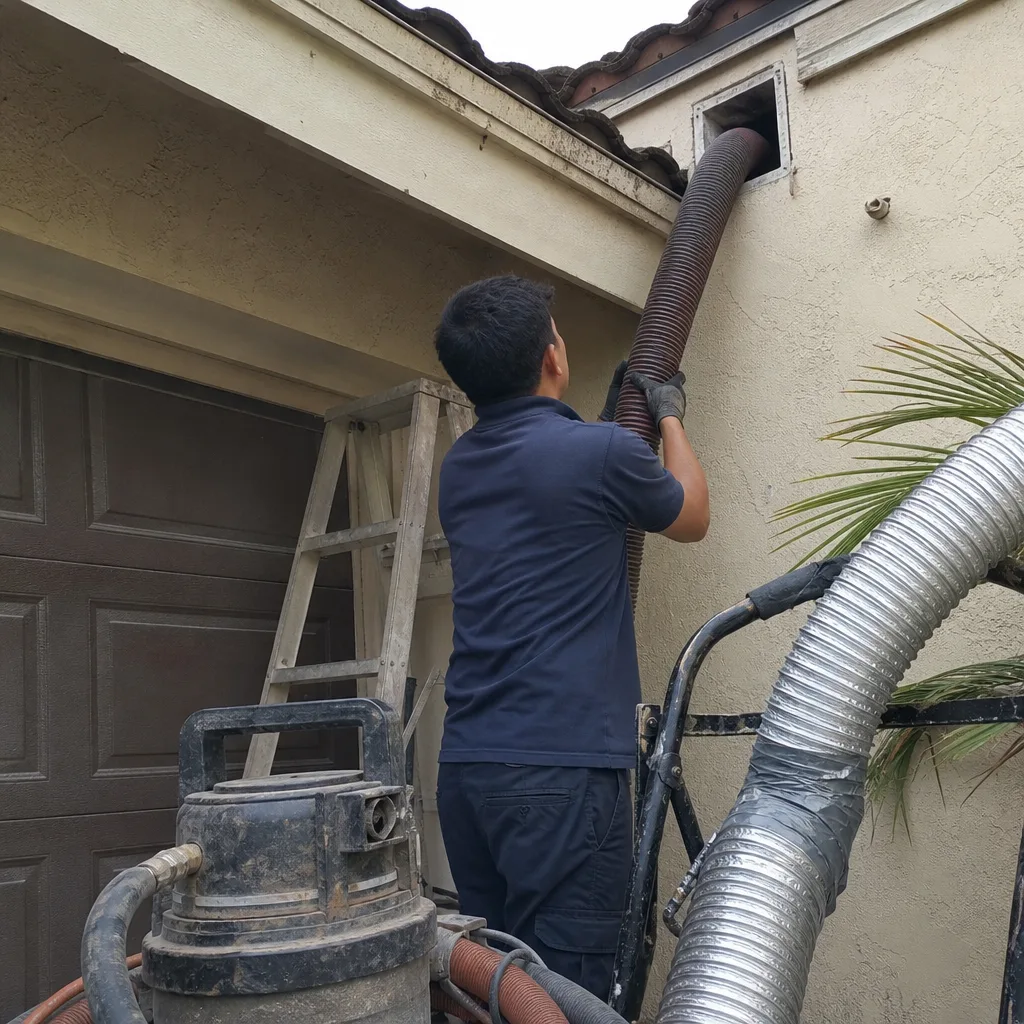 Before
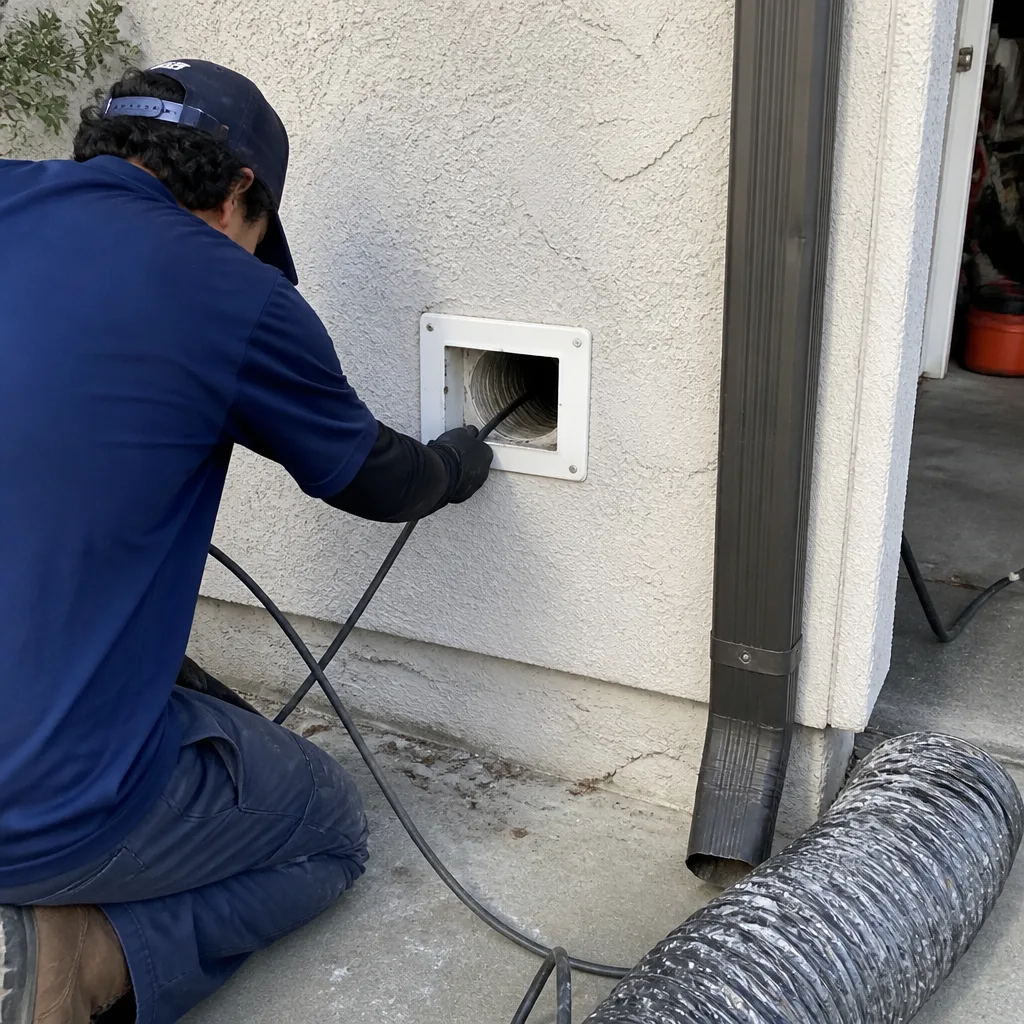 After
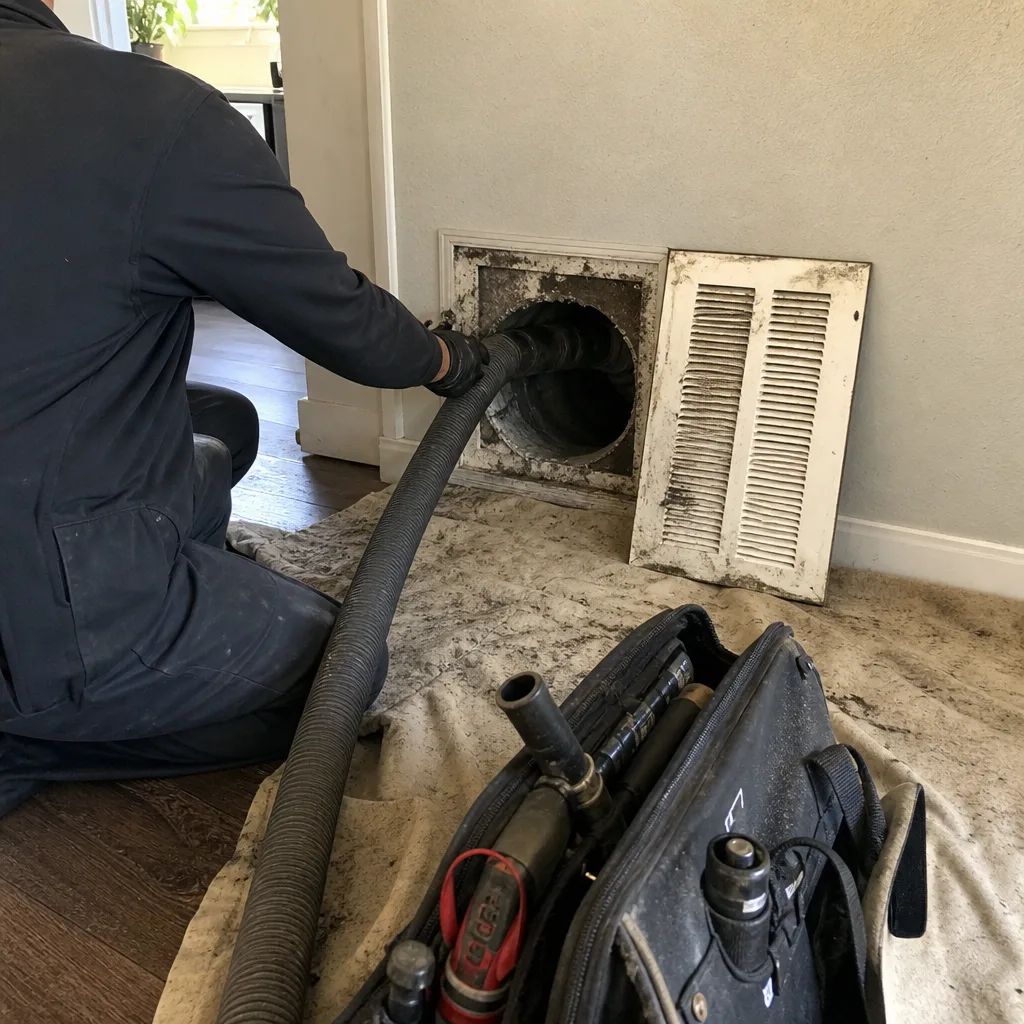 Before
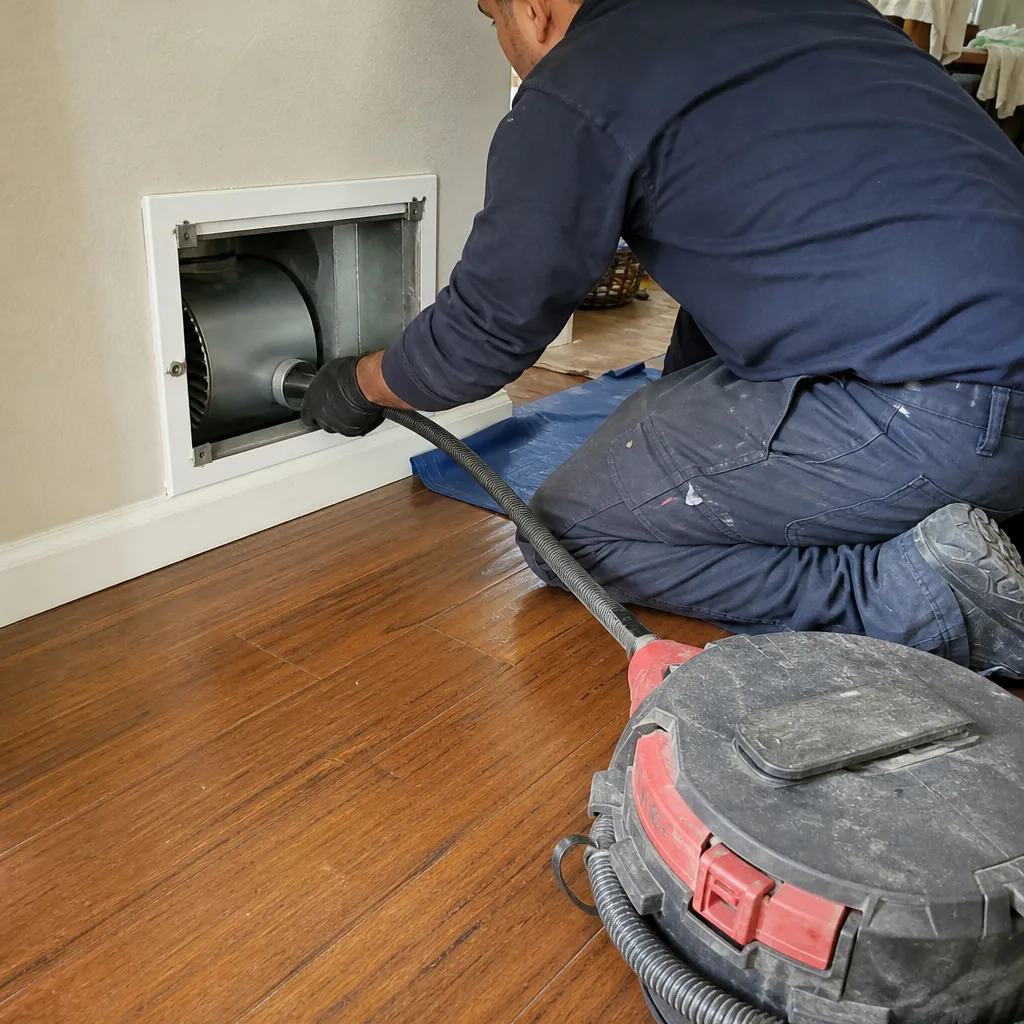 After
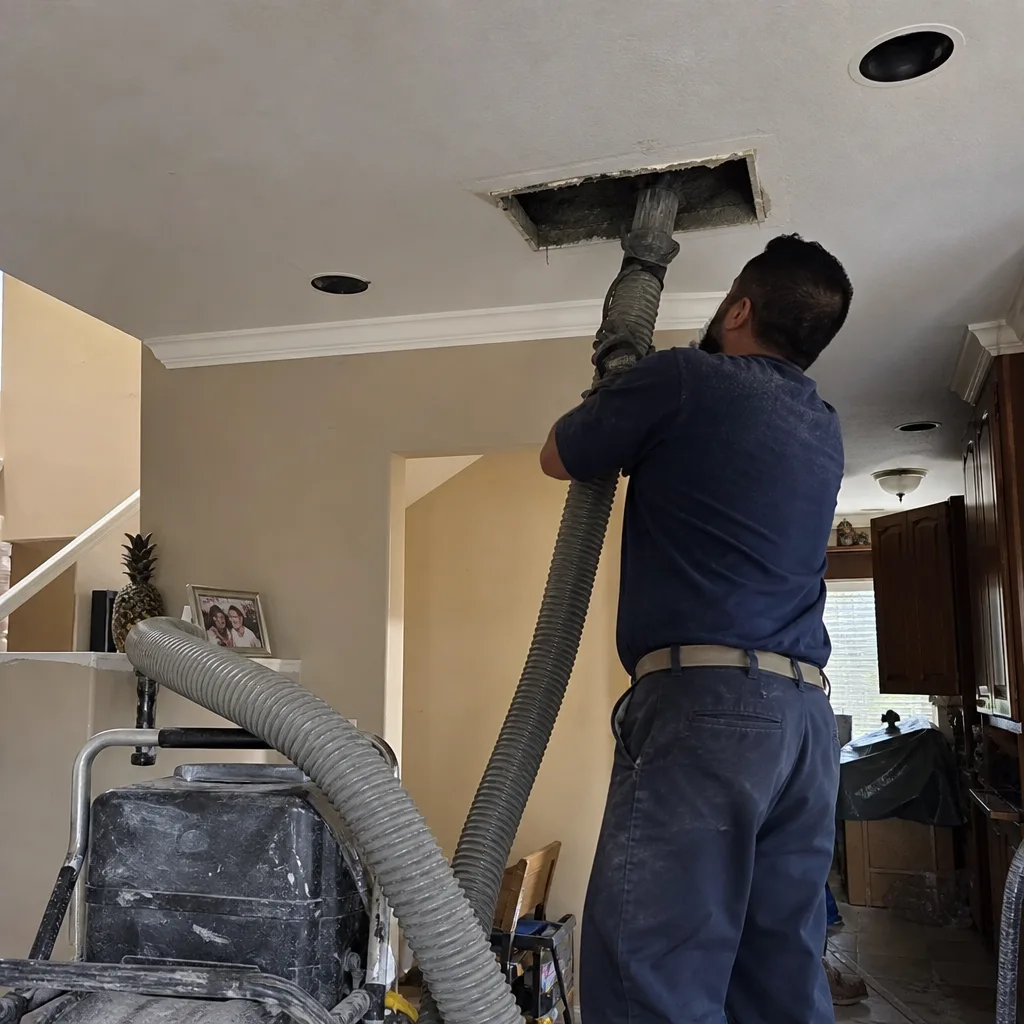 Before
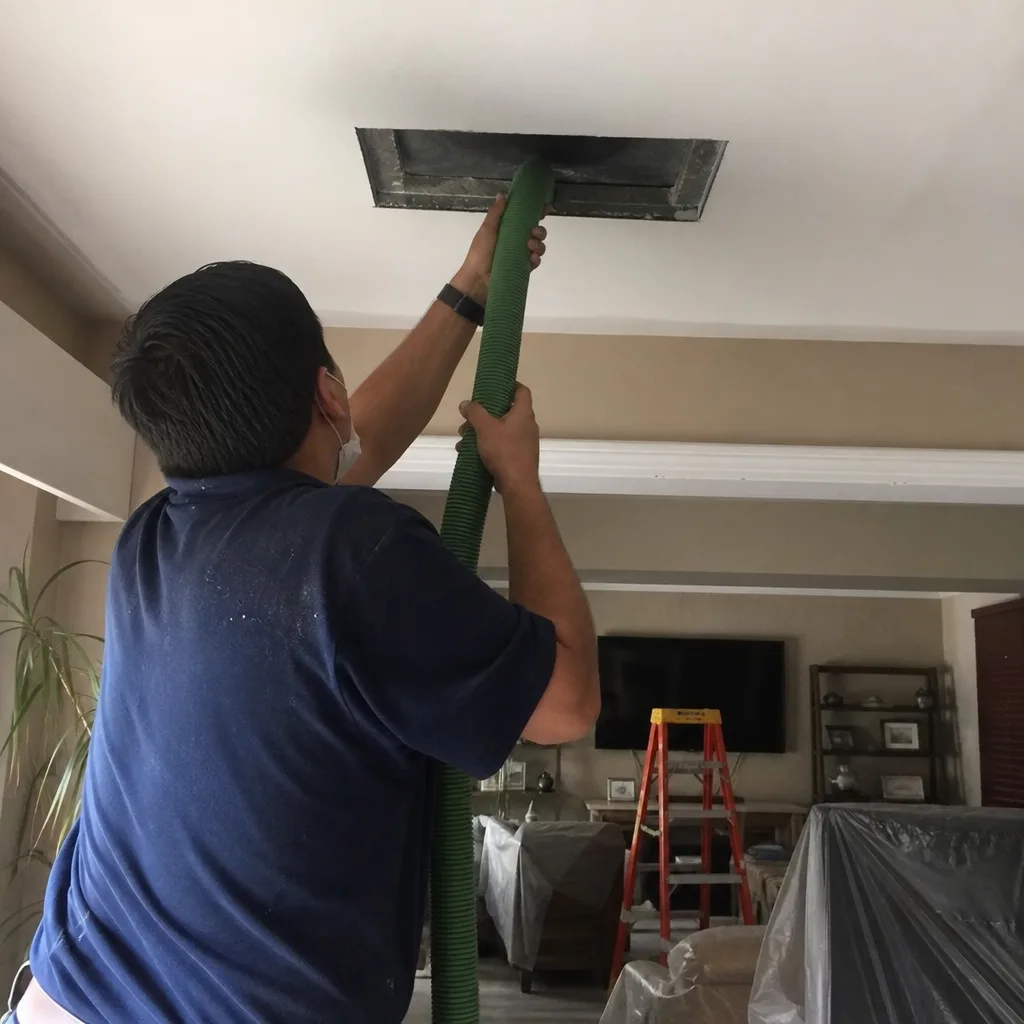 After
When to Call a Professional
Some duct problems are maintenance. Others are beyond what a careful homeowner should attempt. Call a professional when you see black or green growth inside a register, when rodent evidence is visible, when the attic inspection reveals a collapsed or disconnected duct, or when musty odors persist despite changing filters and checking for visible moisture. These are the scenarios where professional air duct cleaning with the right equipment and a trained eye matters. We’ve seen what happens when well-meaning homeowners disturb contaminated ducts and spread material through the living space. Don’t. Duct Cleaning Mission Viejo offers free estimates in Mission Viejo – call (833) 593-4407 and we’ll inspect the system, show you what we find, and give you a flat-price recommendation before any work begins.
Frequently Asked Questions
Whole-system air duct cleaning in Mission Viejo typically runs between $400 and $900 for a standard single-family home, depending on system size, number of returns, and contamination level. That’s a whole-system flat price, not a per-vent price with add-ons. Homes with heavy construction debris, biological growth, or damaged ducts that require repair will be at the upper end or beyond. Anyone quoting significantly less is almost certainly not cleaning the entire system. Call (833) 593-4407 for a free, specific estimate – the number you get over the phone is the number you pay, no on-site surprises.
Cheap duct cleaning quotes come from companies using portable or rental-grade vacuums that cannot generate the negative air pressure required to pull debris from deep inside duct runs. They rely on low per-vent prices, then add charges for “extra” services once on site. The result is almost always a system that looks superficially cleaner at the registers but remains loaded deeper in the trunk lines and branches. Professional cleaning with Rotobrush or Nikro platforms is a higher upfront cost but a complete job. Call (833) 593-4407 to talk through what a real whole-system quote includes.
Ask for before-and-after photos of your own register interiors, taken by the technician on site. If the company can’t or won’t provide them, that’s a signal. After the cleaning, shine a flashlight into the same registers you inspected before and compare. The metal should be visible again, and the thick dust layer should be gone. A professional company will document the work as a standard part of the service.
Most Mission Viejo homes benefit from professional duct cleaning every 3 to 5 years. Homes with pets, recent renovation history, allergy-sensitive occupants, or visible dust accumulation at registers may need it more frequently. If you’ve never had it done and the home is 20-plus years old, the first cleaning is very likely overdue. After that baseline cleaning, the interval depends on how well the system is sealed and how quickly new contamination accumulates.
Yes. Ducts recirculate the air in your home multiple times per day, and whatever is settled inside them – dust mites, pollen fragments, pet dander, microbial spores – gets re-suspended into the airstream every time the system kicks on. For Mission Viejo residents with seasonal allergies, a loaded duct system means the allergen exposure never ends, even when windows are closed. Cleaning removes the reservoir. Upgrading filtration with products from Aprilaire or Honeywell then keeps new particulate from re-accumulating as fast.
Yes. Dryer vent cleaning is a distinct service we offer, and it’s the one most connected to home safety. Lint accumulation in a dryer vent is a leading cause of residential fires in Orange County, and the vent that runs through a Mission Viejo attic or wall gets hotter and longer than most. We treat dryer vents with the same professional-grade approach as air ducts, because the stakes are higher and the buildup is more flammable. Dryer Vent Cleaning in San Juan Capistrano and throughout the Mission Viejo service area is available as a standalone service or alongside duct cleaning.
The Bottom Line
Your duct system talks before it fails, but only if someone is listening. The air filter keeps a record. The rooms tell you where air isn’t reaching. The attic shows you damage before it becomes a health issue. And the registers reveal what’s been accumulating inside. The difference between a homeowner who catches a duct problem early and one who deals with it late comes down to one habit: paying attention to the signals before they become symptoms. When the signals point to cleaning, choose a specialist who does this one trade deeply. Better air starts inside the ducts. For more guides & resources, or if you’re not sure what you’re looking at, call us – we’ll look with you.
Written by the team at Duct Cleaning Mission Viejo, serving Mission Viejo since 2017.