
Last updated November 2, 2026
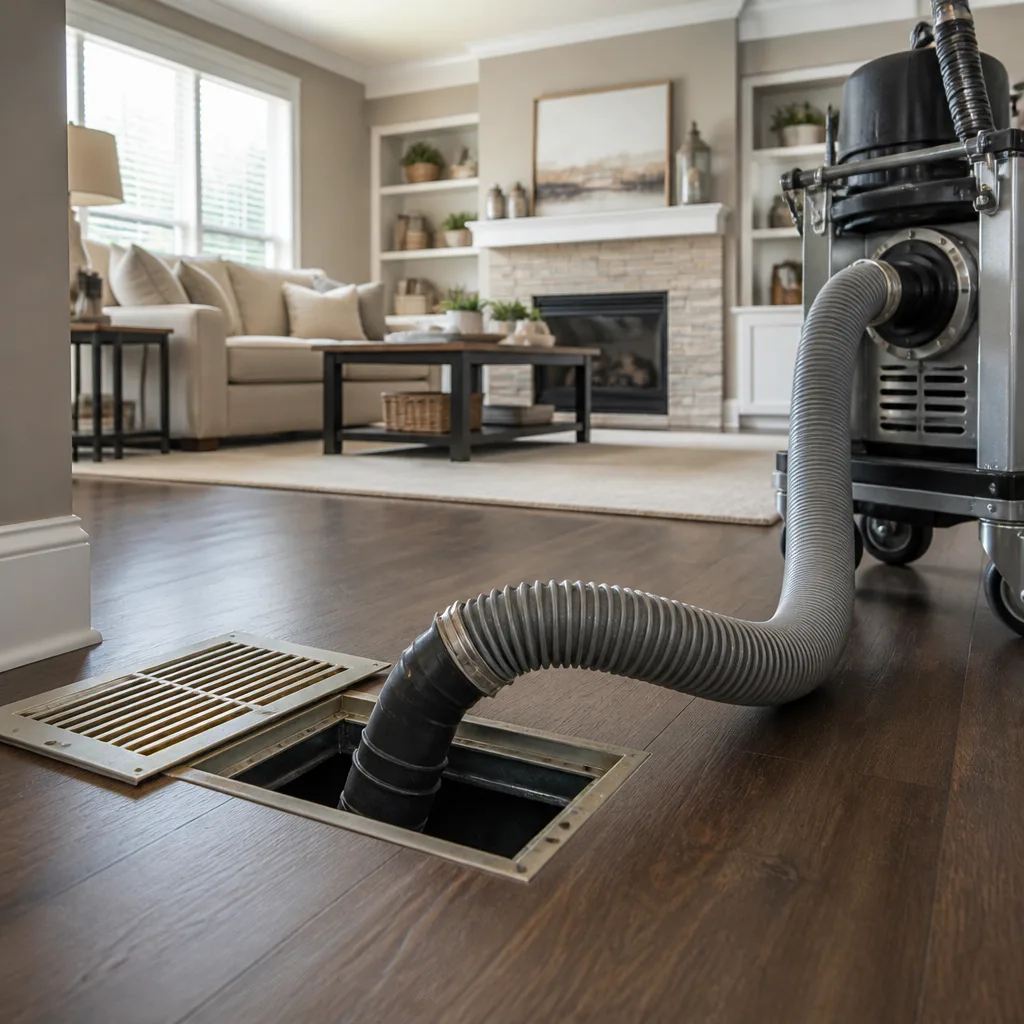 Whole-home duct cleaning
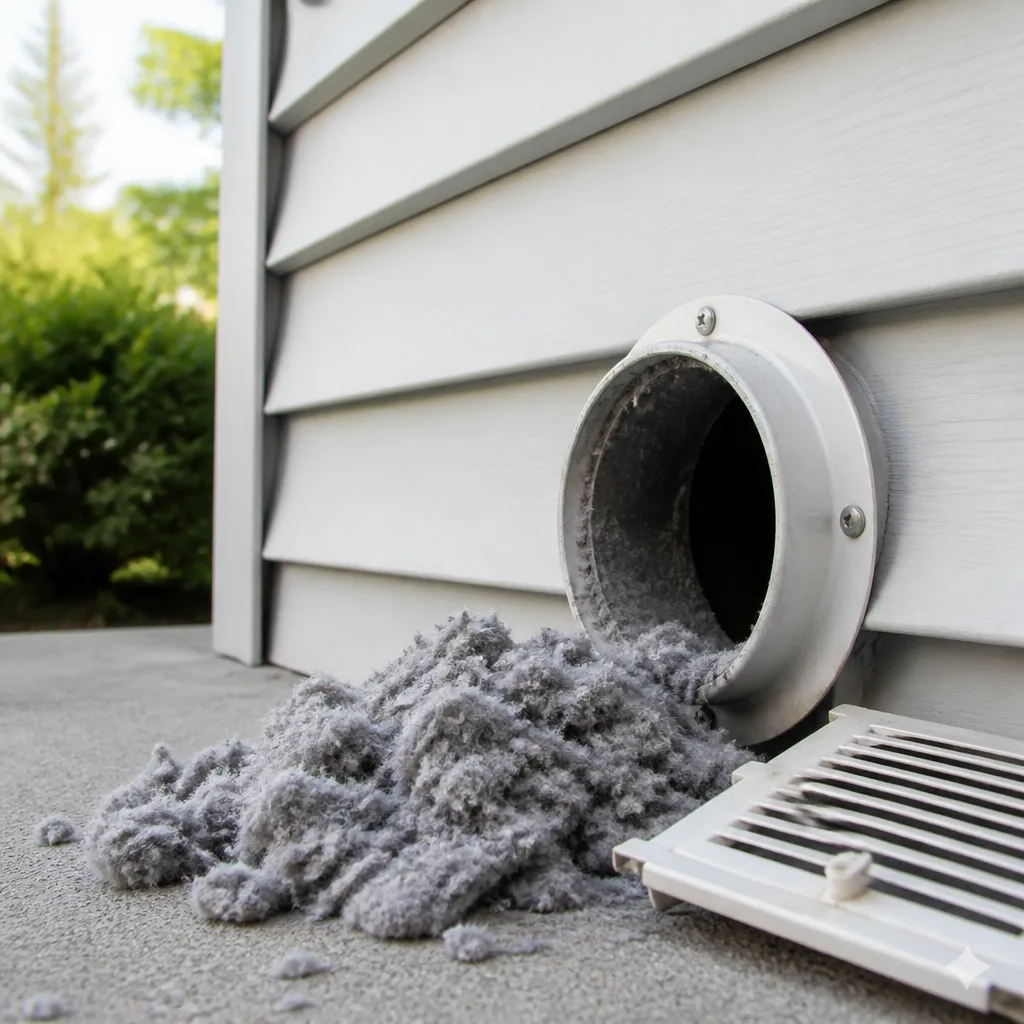 Dryer vent cleaning
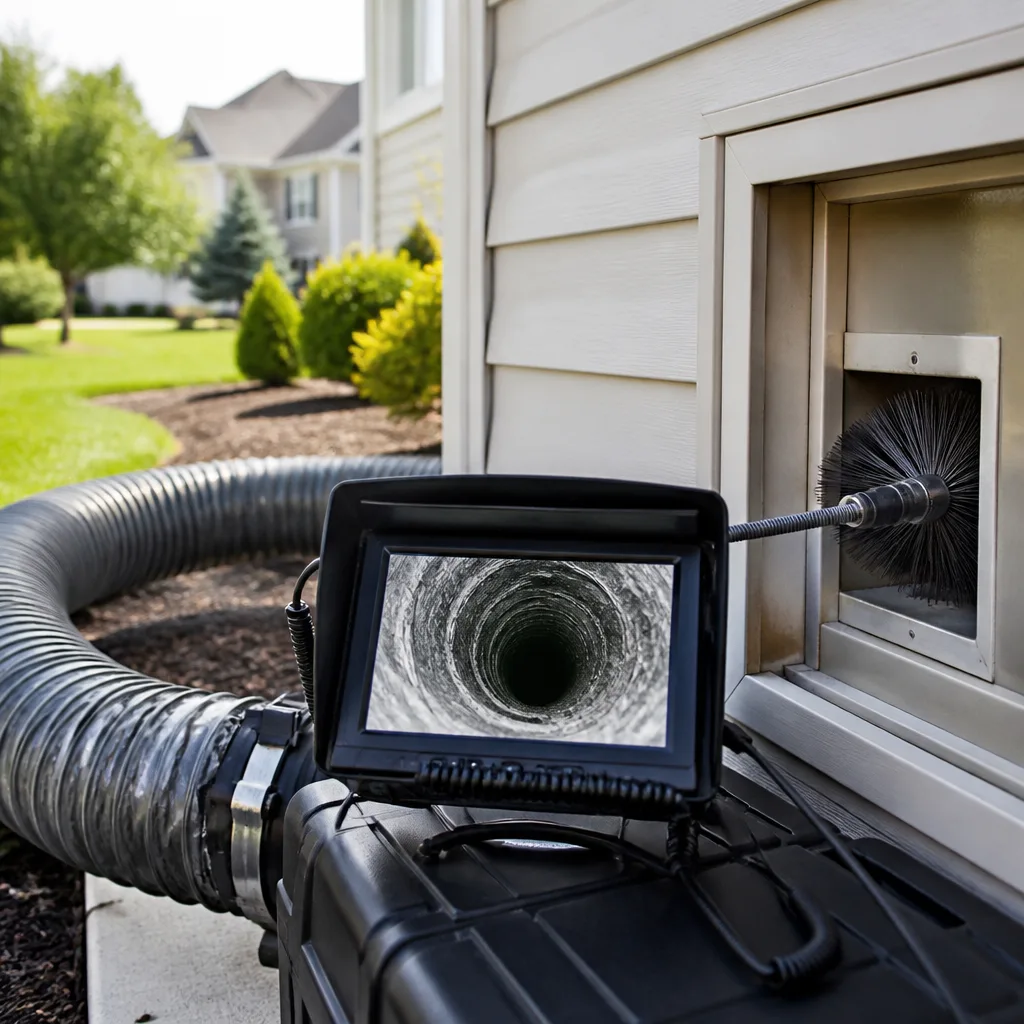 Camera inspection
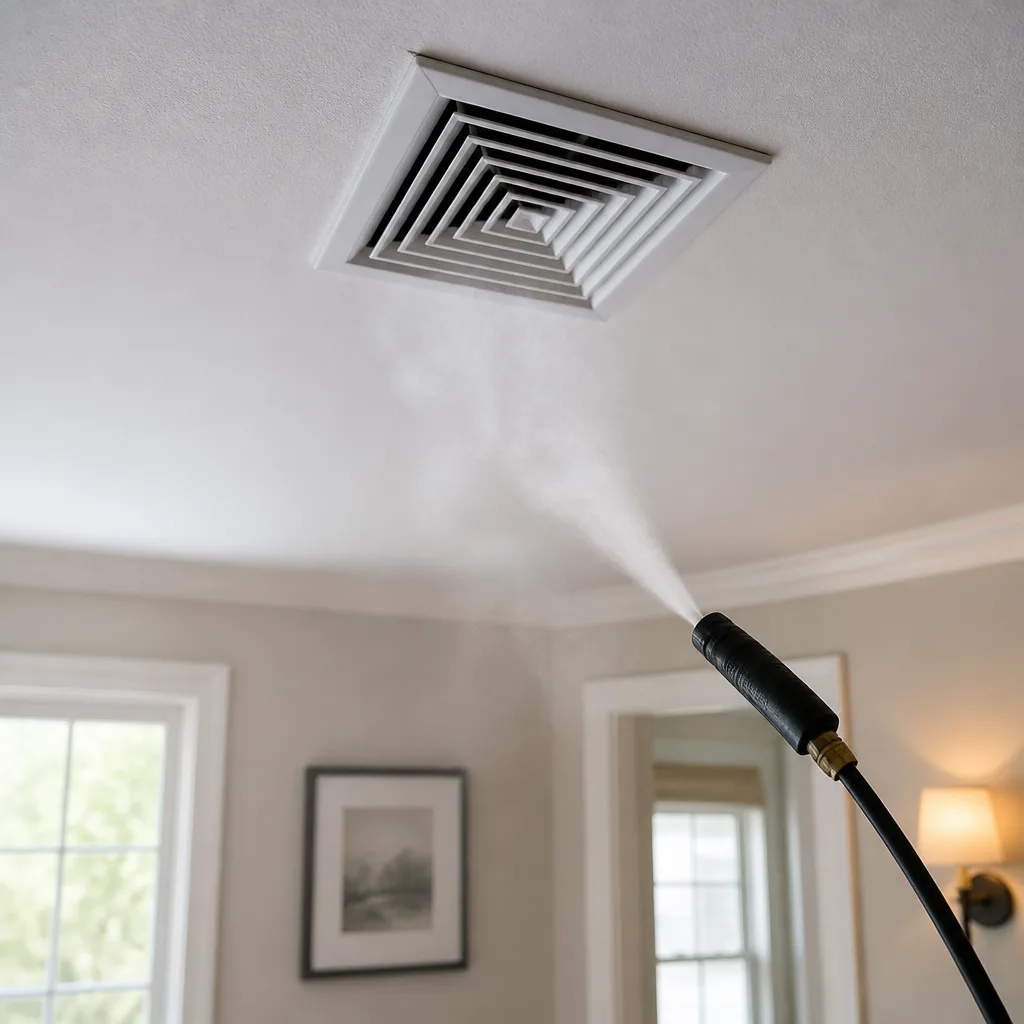 Sanitizing & deodorizing
Whole-system duct and dryer vent check with before-and-after photos - you see exactly what came out of your vents
That "$99 whole-house special" is a bait ad - the real number appears once they are in your hallway, or the "clean" is a shop-vac at the register. We photograph the inside of your ducts before and after instead.
Air Duct Cleaning Maintenance Checklist for Mission Viejo Homeowners
Changing your filter every 90 days sounds reasonable until a Santa Ana event dumps particulate load equivalent to six months of normal use into your return system in 72 hours. A calendar-based checklist will never catch that. What follows is a maintenance framework built around what actually degrades duct systems in Mission Viejo: wind-driven dust events, marine layer humidity cycles, wildfire smoke days, and the long cooling seasons that keep air handlers running from May through October. You’ll learn how to inspect your own returns, measure airflow degradation with tools that cost under $35, and know precisely when scheduled duct cleaning makes sense and when it’s premature.
Quick Answer
An effective air duct maintenance checklist for Mission Viejo homes pairs calendar reminders with event-based triggers: inspect return grilles after every Santa Ana wind advisory or wildfire smoke event, replace filters more frequently during those periods, measure room-by-room airflow with an anemometer every spring, and schedule professional duct cleaning when visible dust accumulation inside the return plenum exceeds 1/16 inch, when register airflow varies more than 20% between rooms, or every 5 to 7 years under normal Mission Viejo conditions.
Styles & brands we work with
- Whole-home duct cleaning
- Dryer vent cleaning
- Camera inspection
- Sanitizing & deodorizing
Table of Contents
- Event-Based Triggers That Beat Calendar Dates
- The Return-Grille Inspection: What Your Ducts Are Telling You
- Filter Load Monitoring for Mission Viejo’s Climate
- Static Pressure Checks With a Smartphone Manometer
- Measuring Register Airflow Balance With an Anemometer
- Room-by-Room Maintenance Walkthrough
- When Professional Duct Cleaning Is Actually Warranted
Event-Based Triggers That Beat Calendar Dates
The standard advice to change your filter every 90 days assumes a stable outdoor environment. Mission Viejo does not have a stable outdoor environment. We sit at the base of the Santa Ana Mountains, and when those northeast winds kick up in September and October, they carry fine dust from the inland valleys straight through Mission Viejo neighborhoods. The same holds for marine layer months from May through July, when coastal moisture keeps dust suspended and pushes humidity into duct interiors where it binds particulate to duct walls.
Here is the trigger list we recommend Mission Viejo homeowners keep taped inside a cabinet door:
- Santa Ana wind advisory issued: Mark the date. Inspect the return grille 48 hours after winds subside. If visible dust accumulation is present, replace the filter regardless of age and note the interval.
- Wildfire smoke within 50 miles: Replace the filter immediately after the smoke clears. Smoke particles penetrate standard fiberglass filters quickly and coat duct interiors with a film that ordinary airflow will not remove.
- Marine layer streak longer than seven days: Check return grilles and bath exhaust vents for dust adhesion. High humidity makes duct dust sticky, which accelerates buildup at the return plenum.
- Any interior renovation: Drywall sanding, flooring removal, or cabinet work generates dust that bypasses room drop cloths and enters the return system. Schedule a professional cleaning after renovation wrap-up, not before.
- New pet or increased pet shedding season: Mission Viejo’s warm climate keeps pets indoors during summer heat, which means more dander entering the duct system during exactly the months the AC runs hardest.
These triggers matter because they represent sudden particulate loading events that a calendar cannot predict. A homeowner who follows a strict 90-day filter schedule through a Santa Ana October will run their system for weeks with a loaded filter and reduced airflow, which raises energy costs and strains the air handler. If you want a deeper look at how this plays out in neighboring communities, read our guide on Air Duct Cleaning in San Juan Capistrano, where the same wind patterns affect homes closer to the coast.
The Return-Grille Inspection: What Your Ducts Are Telling You
A five-minute visual inspection of your return grilles tells you more about duct interior condition than any calendar-based maintenance schedule. Mission Viejo homes typically have one or two central return grilles, often located in a hallway ceiling or high on a wall. Here is the step-by-step inspection process we teach homeowners during service calls:
- Turn off the HVAC system at the thermostat. You want still air so dust does not move while you inspect.
- Remove the return grille cover. Most unscrew by hand or require a simple screwdriver. Set the screws aside in a small dish so they do not disappear into carpet.
- Shine a flashlight into the return plenum. Look past the filter slot into the duct cavity itself. If you see dust clinging to the plenum walls beyond the filter, that dust entered when the filter was missing, improperly seated, or overloaded. This is the most reliable indicator of duct interior contamination.
- Run a clean white paper towel along the interior surface of the plenum, just inside the filter slot. If the towel picks up dark or greasy residue, your ducts have accumulated enough particulate to warrant professional attention.
- Check the grille vanes themselves. Dust on the outward-facing vane surfaces is normal and cleans up with a damp cloth. Dust on the inward-facing surfaces, the side you cannot see from the floor, is the meaningful observation.
- Replace the grille and restore power.
Here is what your results mean:
- Clean plenum, clean filter, no residue: Your system is in good shape. Continue normal maintenance and re-inspect every 6 months.
- Light dust in plenum, white-towel residue visible: The duct interior needs professional cleaning. This is the stage where a Rotobrush or Nikro system makes quick work of what a shop vac cannot reach. Our company runs both platforms because duct interiors vary by construction era, and one tool does not fit every Mission Viejo home.
- Greasy or black residue on the towel: This indicates either smoke exposure, cooking grease bypassing kitchen ventilation, or microbial growth in the presence of moisture. Schedule an inspection soon and consider the air-quality implications for occupants with allergies or respiratory conditions.
- Visible debris in the plenum: drywall chunks, insulation fibers, construction scraps: These are remnants of original construction or past renovations that have sat in the system since installation. They should be removed professionally, as they both restrict airflow and shed particulate continuously. If the ductwork shows damage along with the debris, note that Air Duct Repair in San Juan Capistrano is another service we handle in-house, not something we refer out.
Filter Load Monitoring for Mission Viejo’s Climate
The filter is the first line of defense, but only if its replacement schedule reflects actual load. Mission Viejo’s climate creates two distinct filter-loading seasons. From November through April, when systems run less and outdoor air is cleaner following winter rains, a MERV 8 filter may last the full 90 days without significant loading. From May through October, with daily AC runtime, marine layer humidity, and potential Santa Ana events, that same filter can load in 30 to 45 days.
A practical monitoring approach that costs nothing extra:
- Date-stamp every filter in permanent marker before installation, including the installation date and the recommended replacement date based on the season.
- Check the filter monthly during summer by holding it up to a bright light. If you cannot see light through the filter media clearly, replace it regardless of age.
- Use a MERV 8 filter as your baseline. Higher MERV ratings filter more but load faster and restrict airflow on systems not designed for them. Mission Viejo homes with older air handlers often cannot handle MERV 13 without measurable static pressure rise.
- Upgrade filtration at the system level, not the filter slot. This is where products from Honeywell and Aprilaire come in. A properly sized media cabinet or electronic air cleaner delivers better filtration with less airflow restriction than cramming a high-MERV filter into a 1-inch slot. We supply and install both brands, and for Mission Viejo homeowners dealing with persistent dust or allergy symptoms, the upgrade often delivers more relief than cleaning alone.
Filter monitoring is not glamorous, but it is the single highest-leverage maintenance habit a homeowner can adopt. A loaded filter is the most common cause of reduced register airflow we find during service calls in Mission Viejo, and the fix costs ten dollars.
Static Pressure Checks With a Smartphone Manometer
Static pressure is the resistance your air handler works against to move air through the duct system. High static pressure means the system is straining, which shows up as higher energy bills, noisy operation, and premature air handler wear. Low static pressure in a system that once ran normally can indicate duct leakage. Both are measurable by a homeowner with a smartphone and a $15 manometer app, though the measurement requires a bit of setup.
Here is the practical version of the procedure:
- Download a manometer app that uses the phone’s internal pressure sensor. Several are available; look for one with static pressure conversion built in.
- Locate the access panel on the air handler or furnace cabinet. In most Mission Viejo homes, this is in the garage or an exterior closet.
- With the system running, hold the phone’s microphone port against the return plenum access point or a drilled test port if one exists. The app will display pressure in inches of water column.
- Compare your reading to the baseline range. A typical residential system should run between 0.5 and 0.8 inches of water column on the return side. Readings above 1.0 indicate significant airflow resistance, often from a loaded filter, closed supply registers, or ductwork that is undersized or partially collapsed.
- Repeat the measurement on the supply side if accessible. The combined total should stay under 1.0 inches for most systems.
- Record your readings. A rising trend over months points to progressive duct loading or a developing restriction. A sudden jump points to a filter or a damper issue.
This measurement is directional, not diagnostic-grade. A professional static pressure test uses calibrated instruments and measures across specific points in the system. But as a trend-tracking tool, a smartphone manometer gives Mission Viejo homeowners early warning of duct restrictions before comfort or energy costs suffer. When we run professional diagnostics on a Mission Viejo home, the Rotobrush and Nikro equipment we operate includes camera inspection capability that shows exactly where restrictions live and what they consist of.
Measuring Register Airflow Balance With an Anemometer
A $30 handheld anemometer measures air velocity at any supply register, and the comparison between rooms tells you whether your duct system is delivering air as designed or degrading silently. Mission Viejo homes built in the 1970s and 1980s, which represent a large share of the housing stock, often have sheet metal duct systems with aging seals. A room that used to cool adequately and now struggles is usually a duct problem, not an equipment problem.
The room-by-room airflow measurement procedure:
- Buy an inexpensive vane anemometer. Digital models with a remote probe work best for ceiling registers. The device measures air speed in feet per minute (FPM).
- Close all exterior doors and windows. Interior doors should be open so the system operates under normal conditions.
- Turn the HVAC system fan to ON at the thermostat so it runs continuously during measurement. No heating or cooling, just the fan.
- Measure each supply register individually. Place the anemometer probe directly against the register grille, covering as much of the opening as the probe allows. Record the FPM reading for each room.
- Measure every room in sequence. Do not skip closets or bathrooms with registers; they matter for balance.
- Compare readings across rooms. Rooms on the same floor should fall within 15 to 20 percent of each other. A room reading less than 60 percent of the highest reading has a duct problem, not a damper setting issue.
What the comparison reveals:
- Consistently low airflow in one room: The duct serving that room is restricted, disconnected, or crushed. This may be visible in an attic inspection if the duct runs through unconditioned space.
- Low airflow in multiple rooms on one side of the house: A main trunk line restriction or a collapsed section. This pattern often appears after roof work or pest intrusion.
- High airflow in some rooms and low in others: Dampers out of adjustment or duct leakage in the low-flow rooms. The air that should go to the bedroom is escaping into the attic through failed seals.
- Uniformly low airflow everywhere: Air handler issue or filter restriction, not a duct problem. Start with the filter.
Airflow imbalance is invisible to the naked eye but measurable with a tool cheaper than a dinner for two. Mission Viejo homeowners who track these readings seasonally will spot duct degradation years before it becomes a comfort complaint.
Room-by-Room Maintenance Walkthrough
Duct maintenance is not only an attic activity. What happens in each room of your Mission Viejo home affects what ends up in the duct system. This walkthrough covers the room-level tasks that keep duct contamination from starting in the first place.
Kitchen
- Run the range hood any time you cook with oil or high heat. Cooking aerosol is a major contributor to duct grease loading, especially in Mission Viejo homes with open floor plans where the kitchen shares air space with the family room return.
- Clean the range hood filters monthly during heavy cooking seasons. A saturated hood filter sends grease downstream into the shared air column.
- Check the kitchen return grille if one exists. Grease-laden dust on a kitchen return is a signal that hood capture is inadequate and duct cleaning intervals should shorten.
Laundry Room
- Do not vent the dryer into the garage or attic. Moisture and lint from indoor dryer venting enter the home’s air and get pulled into return ducts. The fire risk is also well documented. Our Dryer Vent Cleaning in San Juan Capistrano service handles this as a distinct line, because the safety stakes are different from duct cleaning.
- Inspect the dryer duct exterior termination every spring. Mission Viejo’s warm climate means dryers run year-round, and lint accumulates at the flap or screen.
Bedrooms
- Keep supply registers open in all rooms during cooling season. Closing registers to save energy raises static pressure and forces air through unintended pathways, worsening imbalance.
- Vacuum register grilles monthly during summer. Dust on register vanes gets redistributed into the room every time the system cycles.
- Keep furniture at least 12 inches from return grilles. Blocking a return starves the system for air and pulls it from wall cavities and attics instead.
Attic and Garage
- Inspect accessible duct runs quarterly. Look for sagging flex duct, disconnected sections, and rodent droppings. Mission Viejo’s warm climate means attics reach temperatures that degrade flex duct outer jackets faster than coastal homes.
- Check the air handler cabinet seal annually. A leaking cabinet pulls attic air into the supply side, bypassing the filter entirely.
- Keep the area around the air handler clear. Storage boxes against the cabinet restrict service access and create the kind of clutter that hides developing problems.
These room-level tasks take 30 minutes per quarter and prevent most of the contamination we find during professional cleanings in Mission Viejo. The pattern is always the same: duct contamination starts as room-level neglect, then migrates into the system where it compounds.
When Professional Duct Cleaning Is Actually Warranted
The duct cleaning industry has earned its skepticism through years of aggressive telemarketing and $49 room specials that turn into $2,900 invoices. That does not mean professional cleaning lacks legitimate value. It means the decision to schedule should be based on observed conditions, not a sales pitch or an arbitrary “every 3 to 5 years” rule. Here is what actually warrants professional duct cleaning in a Mission Viejo home:
- Visible dust accumulation inside the return plenum beyond the filter slot, confirmed by the white-towel test described above.
- Measurable airflow imbalance where one or more rooms read below 60 percent of the highest room on an anemometer, and the filter is clean.
- Post-renovation dust confirmed by debris in the plenum or visible dust on supply register vanes within weeks of construction wrap-up.
- Allergy symptoms that track with HVAC runtime, especially if occupants report worse symptoms in specific rooms that also show airflow imbalance.
- Musty odor from supply registers when the fan runs, suggesting moisture-related contamination in the duct interior.
- No record of prior cleaning in a home older than 10 years. Homes of this age in Mission Viejo have typically never had ducts cleaned unless a prior owner was unusually thorough.
When we clean ducts in Mission Viejo, the work is done with Rotobrush and Nikro systems, both of which are purpose-built for interior duct surface agitation and debris extraction. These are not rental-grade tools or shop-vac improvisations. The distinction matters because the interior surface of a duct system is essentially inaccessible to anything less than a powered agitation brush with simultaneous vacuum extraction. For homes with contamination concerns such as mold, post-construction debris, or significant allergen loading, we run Abatement Technologies equipment, which provides the containment and filtration performance those situations demand. If the cleaning reveals damaged duct sections, which happens more often in Mission Viejo’s older homes than owners expect, we handle Air Duct Repair in San Juan Capistrano as part of the same service call, not as a referral to another company.
Common Mistakes to Avoid
- Treating the 90-day filter rule as fixed. Mission Viejo’s Santa Ana and wildfire smoke events load filters in days, not months. A fixed calendar schedule guarantees periods of restricted airflow every fall.
- Closing supply registers in unused rooms. This raises static pressure, forces air through leaks, and accelerates degradation of the ducts you are trying to protect. Leave registers open and address imbalance at the source.
- Using the highest-MERV filter that fits. A MERV 13 filter in a 1-inch slot on an older Mission Viejo air handler will raise static pressure significantly. If you want better filtration, install a proper media cabinet from Honeywell or Aprilaire rather than overloading the filter slot.
- Cleaning the ducts to solve a problem that is actually elsewhere. Persistent dust in a home with clean ducts and a good filter usually has another source: leaky return ducts pulling attic air, unsealed can lights, or failed weatherstripping. Find the source before cleaning the symptom.
- Scheduling duct cleaning on a timer. If the plenum is clean, the airflow is balanced, and the filter is doing its job, the ducts do not need cleaning. A professional cleaning of clean ducts is money spent on nothing.
- Ignoring the dryer vent while maintaining the ducts. The dryer vent is a separate system with different failure modes primarily fire risk from lint accumulation. It deserves its own maintenance attention. Our Dryer Vent Cleaning in San Juan Capistrano service exists because the two systems are often confused and both neglected.
- Waiting until a comfort complaint to start measuring. By the time a bedroom is noticeably warmer than the living room, the underlying duct problem has usually been developing for years. Baseline measurements taken when the system works well are what make later comparisons meaningful.
See the difference
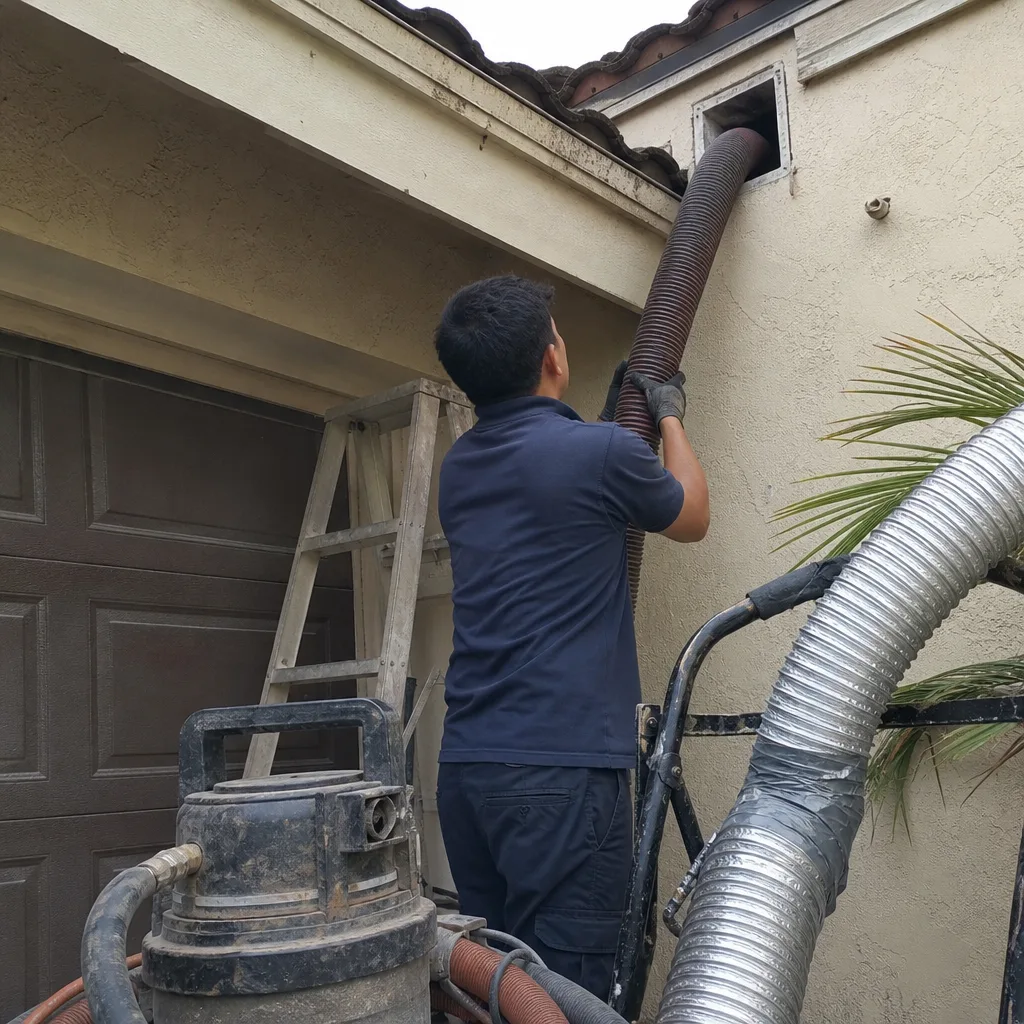 Before
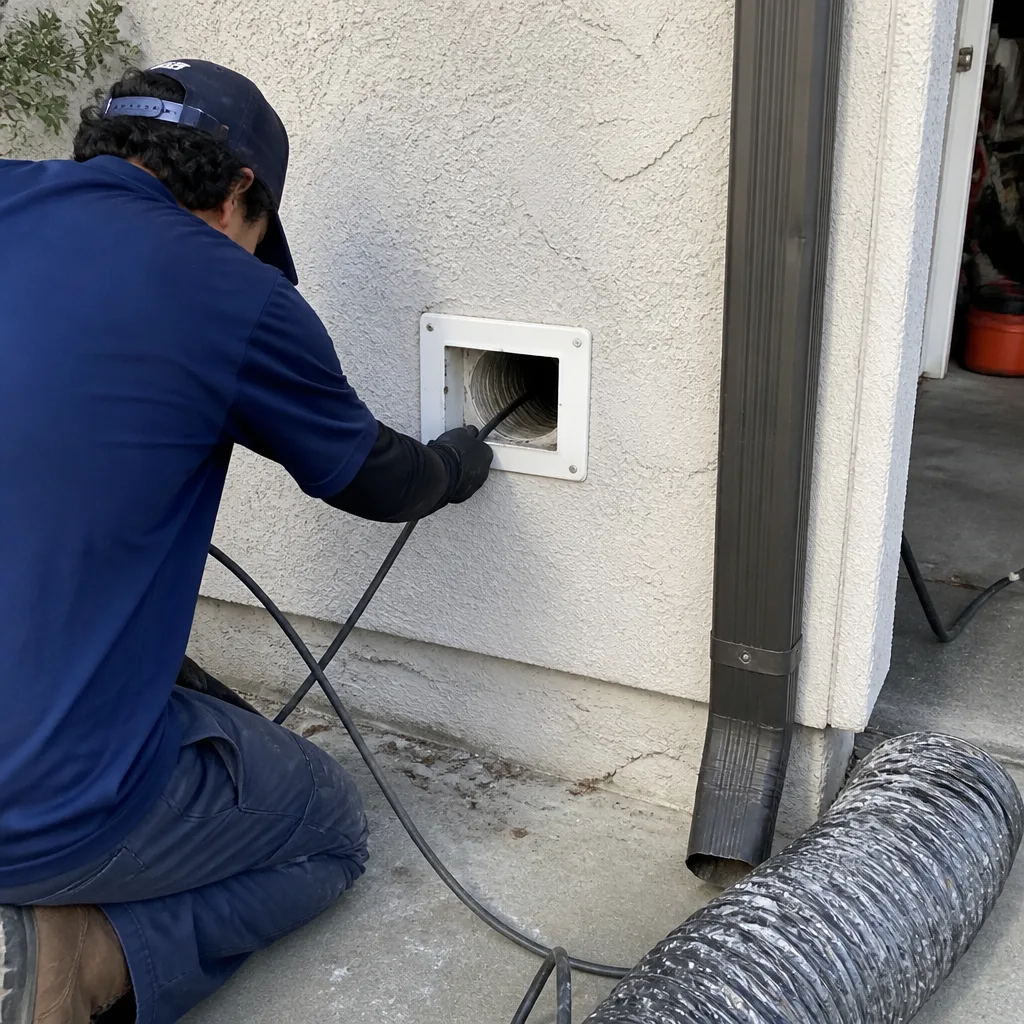 After
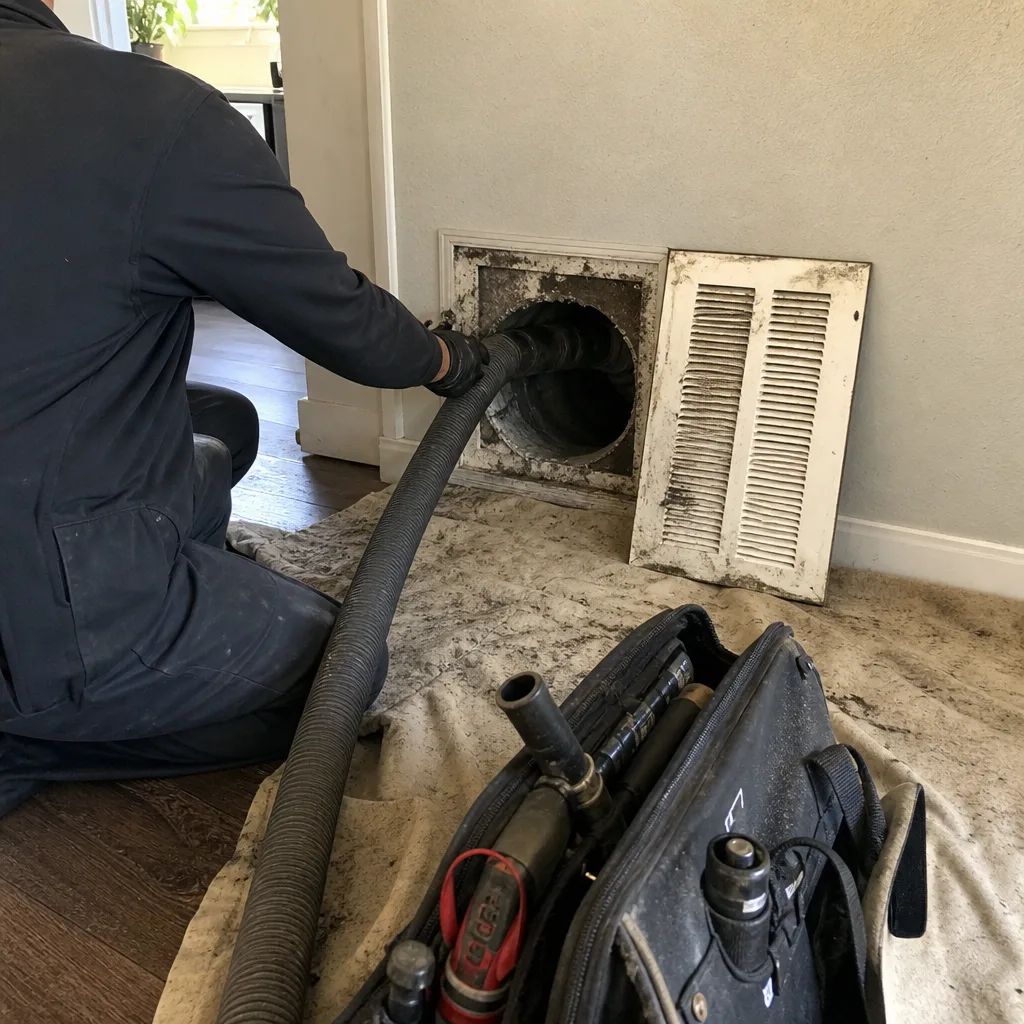 Before
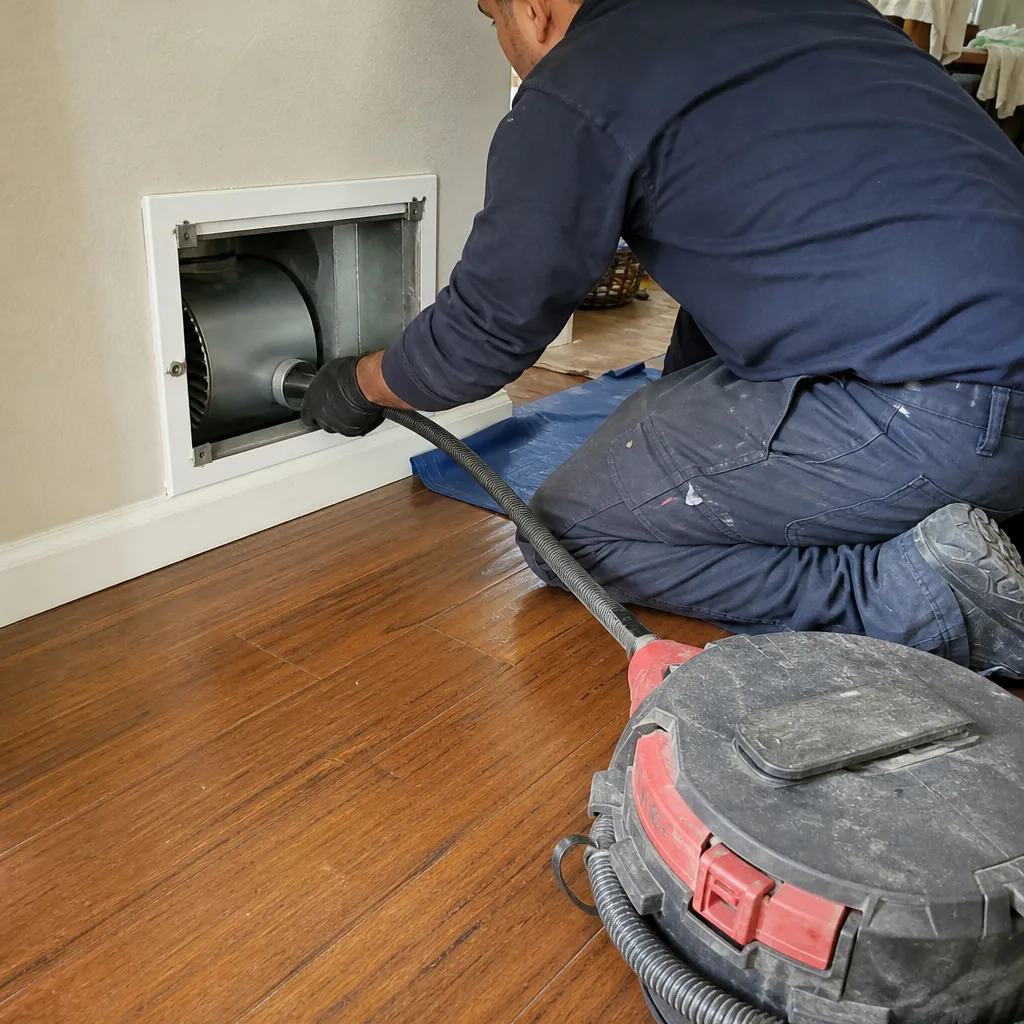 After
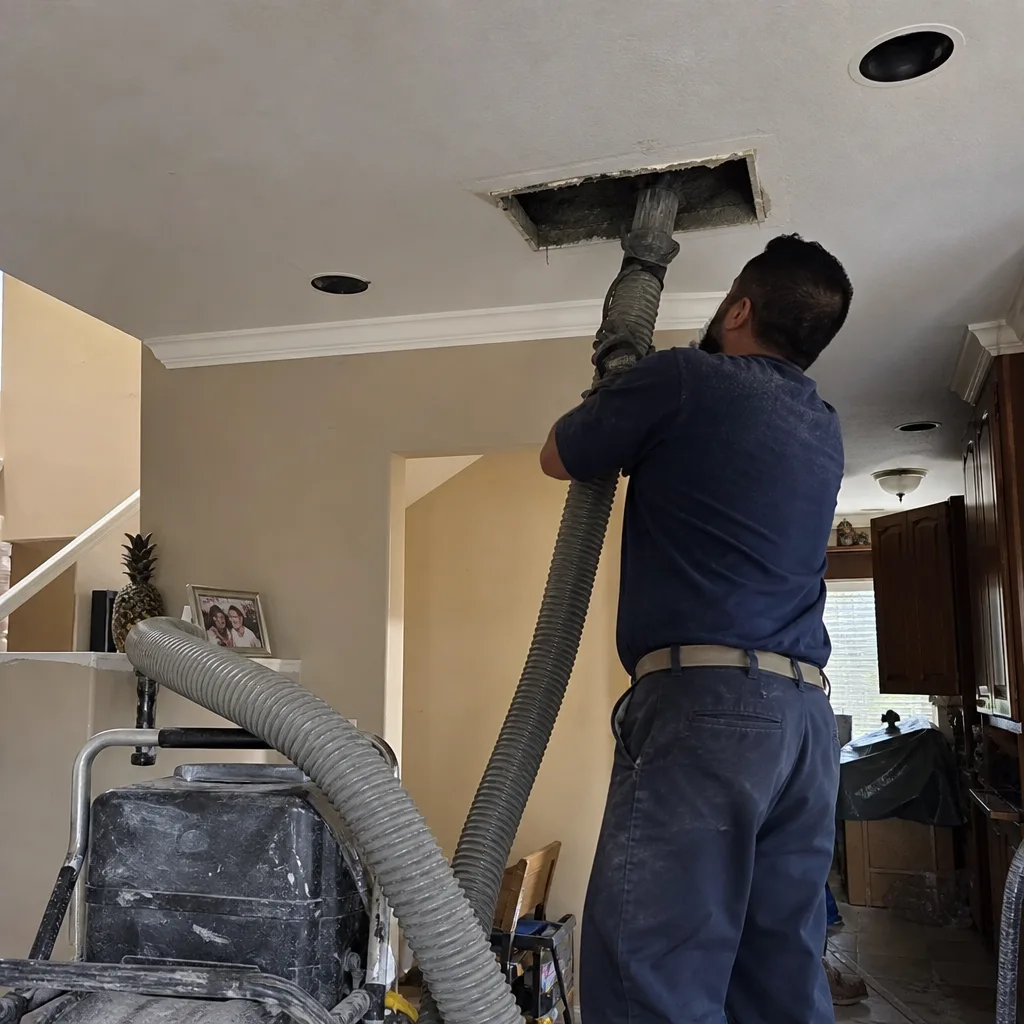 Before
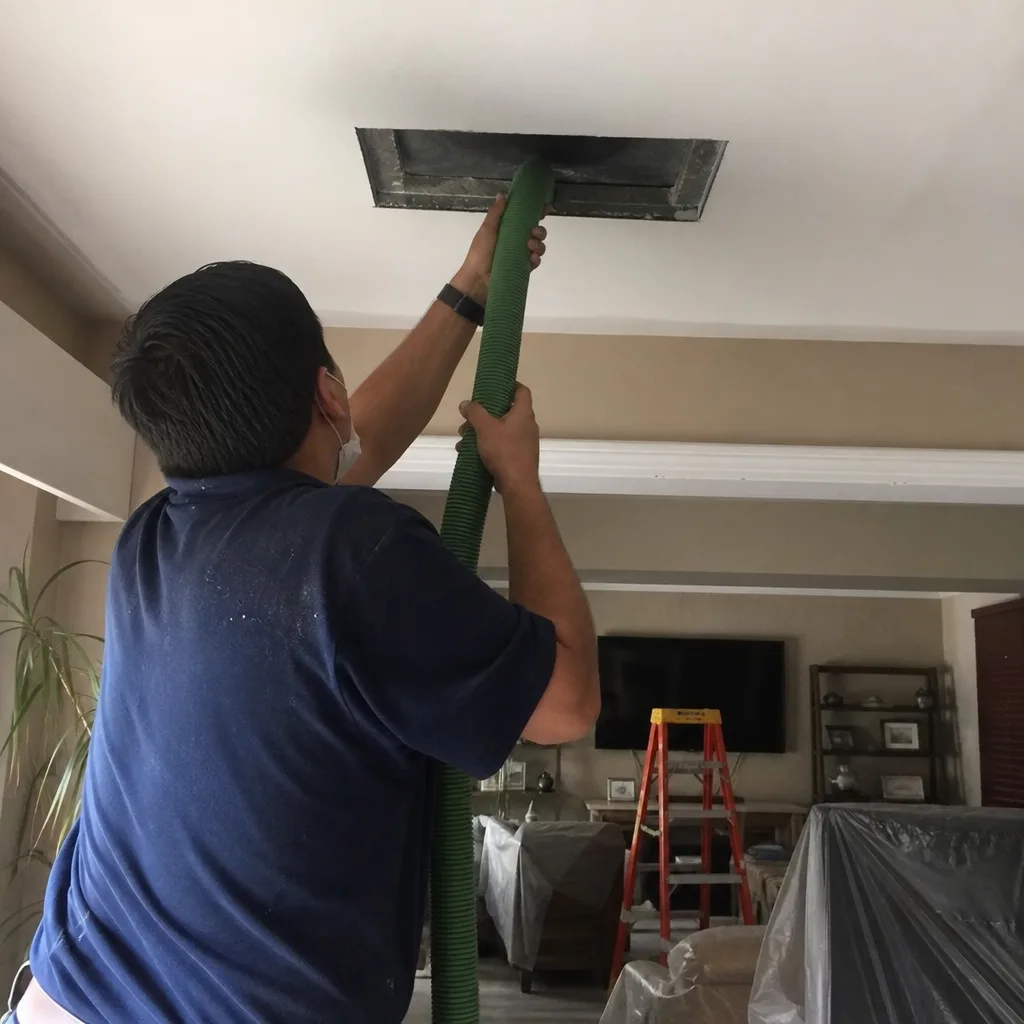 After
When to Call a Professional
A homeowner who follows the inspection and measurement steps above will catch most duct issues early. Some situations demand professional equipment and training. If your white-towel test shows greasy or black residue in the return plenum, call for an inspection. If anemometer readings show a room below 60 percent of the house average with a clean filter in place, the restriction needs to be located and addressed. If you can see visible mold growth or smell persistent must from registers, do not attempt remediation with household products. If renovation debris sits in your plenum, it will not work its way out. In any of these cases, Duct Cleaning Mission Viejo home service covers the full scope: cleaning, repair, and air-quality upgrades with Aprilaire and Honeywell products installed in the same visit. For a free estimate in Mission Viejo, call (833) 593-4407.
Frequently Asked Questions
Under typical Mission Viejo conditions with a well-maintained filter schedule, professional duct cleaning is warranted every 5 to 7 years. Homes with pets, residents who smoke, recent renovation history, or proximity to wildfire-prone areas may need cleaning every 3 to 5 years. The trigger should be observed contamination in the return plenum or measured airflow imbalance, not a calendar interval. Call (833) 593-4407 if you want an honest assessment of whether cleaning is warranted in your home.
Professional whole-system duct cleaning in Mission Viejo typically runs between $450 and $1,200 depending on home size, number of supply and return runs, and contamination level. Homes with severe debris, mold, or post-construction dust fall at the higher end. Be wary of quotes below $200, which usually mean a superficial “blow and go” job that does not agitate the duct walls. Get a flat price per system agreed before work starts. Call (833) 593-4407 for an exact quote, as the free estimate is based on a real inspection of your home.
Cheap quotes almost always mean insufficient equipment and abbreviated process. A proper cleaning agitates the entire interior duct surface with powered brushes while simultaneously extracting dislodged debris under negative pressure. Equipment like Rotobrush and Nikro systems costs real money to buy, maintain, and operate. Companies quoting $99 or $49 per vent are usually running a shop vac with a long hose and spending 20 minutes on the job. The result looks clean at the register and remains dirty inside the duct. Ask what equipment the company uses and whether they provide before-and-after photos of the interior duct surface.
Request before-and-after photos of the interior duct surfaces from the company’s inspection camera. Any professional using Rotobrush or Nikro systems has camera capability and should provide photographic proof. Watch for the debris removed: a proper cleaning of a genuinely dirty system fills a significant portion of the collection bag. Be present during the cleaning if possible, and ask to see the return plenum and main trunk line after the work. A clean white-towel test on the plenum walls is your confirmation.
Duct cleaning removes the reservoir of dust, pet dander, pollen, and particulate that sits in the duct system and gets redistributed into rooms during every HVAC cycle. For allergy sufferers, the benefit is real but varies by individual sensitivity and the actual contamination level in the ducts. Cleaning is most effective when paired with better filtration from a Honeywell or Aprilaire media system, which captures the allergens that would otherwise re-enter the duct system from the living space. A clean duct system with an inadequate filter gets dirty again quickly.
No. The interior of a residential duct system is not accessible to household tools. A shop vac with a long hose cannot reach more than a few feet into a supply run, and it lacks the powered agitation needed to dislodge dust bonded to the duct walls. The job requires powered brush systems with simultaneous vacuum extraction, equipment that costs tens of thousands of dollars and requires training to operate without damaging the ductwork. This is a case where professional equipment produces a fundamentally different result than DIY effort.
The Bottom Line
A maintenance checklist for Mission Viejo ducts is only as good as its triggers. The homeowners who stay ahead of duct problems are the ones who track filter loading against Santa Ana events, inspect return plenums with a flashlight and a paper towel, measure register airflow with an anemometer every spring, and call for professional cleaning when observations say so. If your inspection turns up dust, debris, or imbalance, the work is worth doing properly with equipment designed for it. Duct Cleaning Mission Viejo home service covers cleaning, repair, and air-quality upgrades under one roof. Call (833) 593-4407 for a free estimate and an honest read on whether your ducts need attention.
Written by the team at Duct Cleaning Mission Viejo, serving Mission Viejo since 2017.