
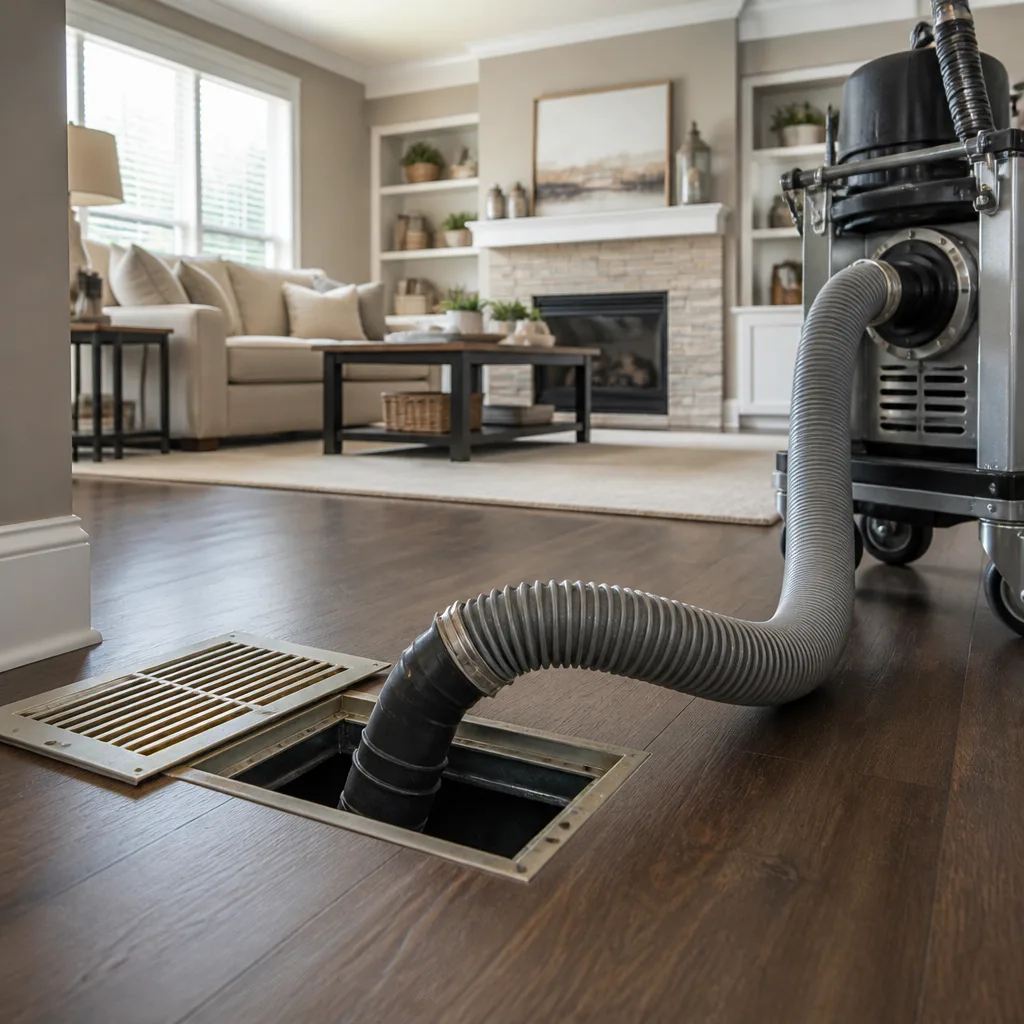
 Whole-home duct cleaning
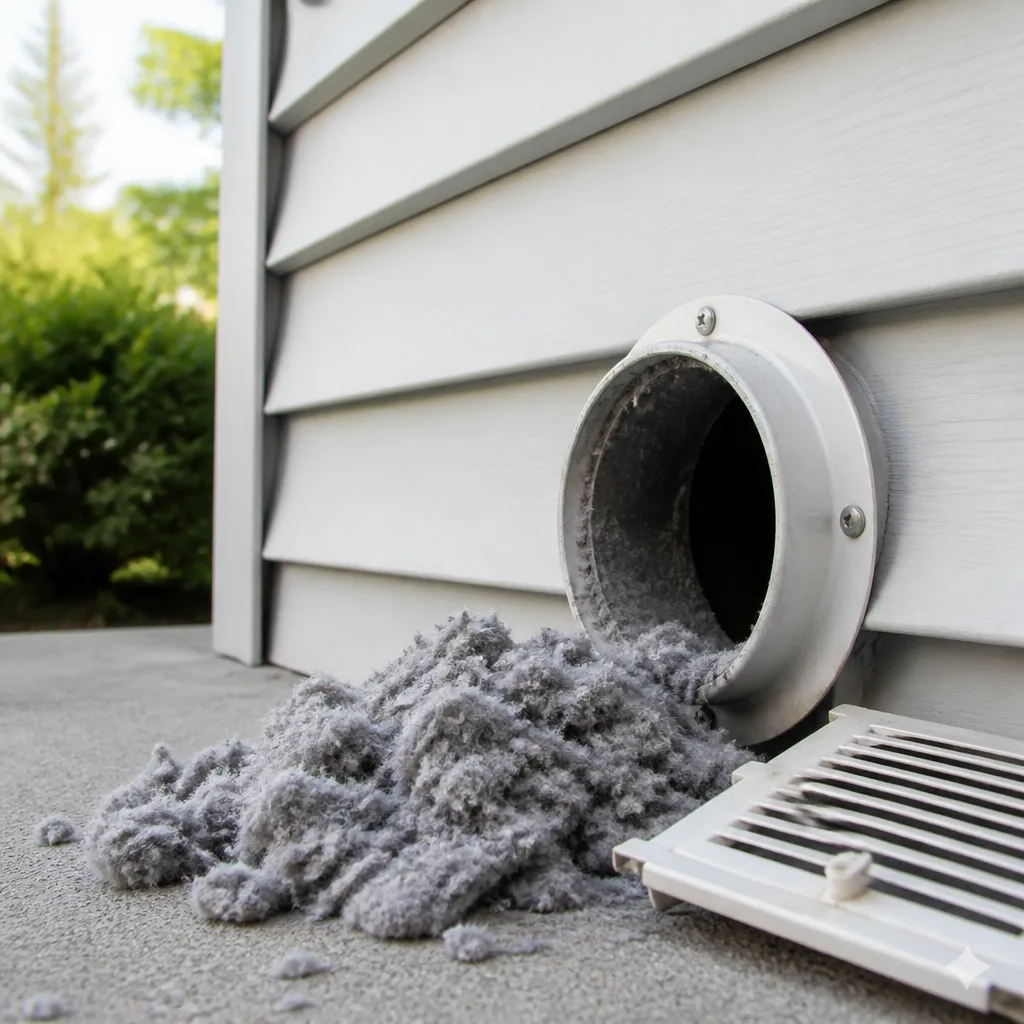 Dryer vent cleaning
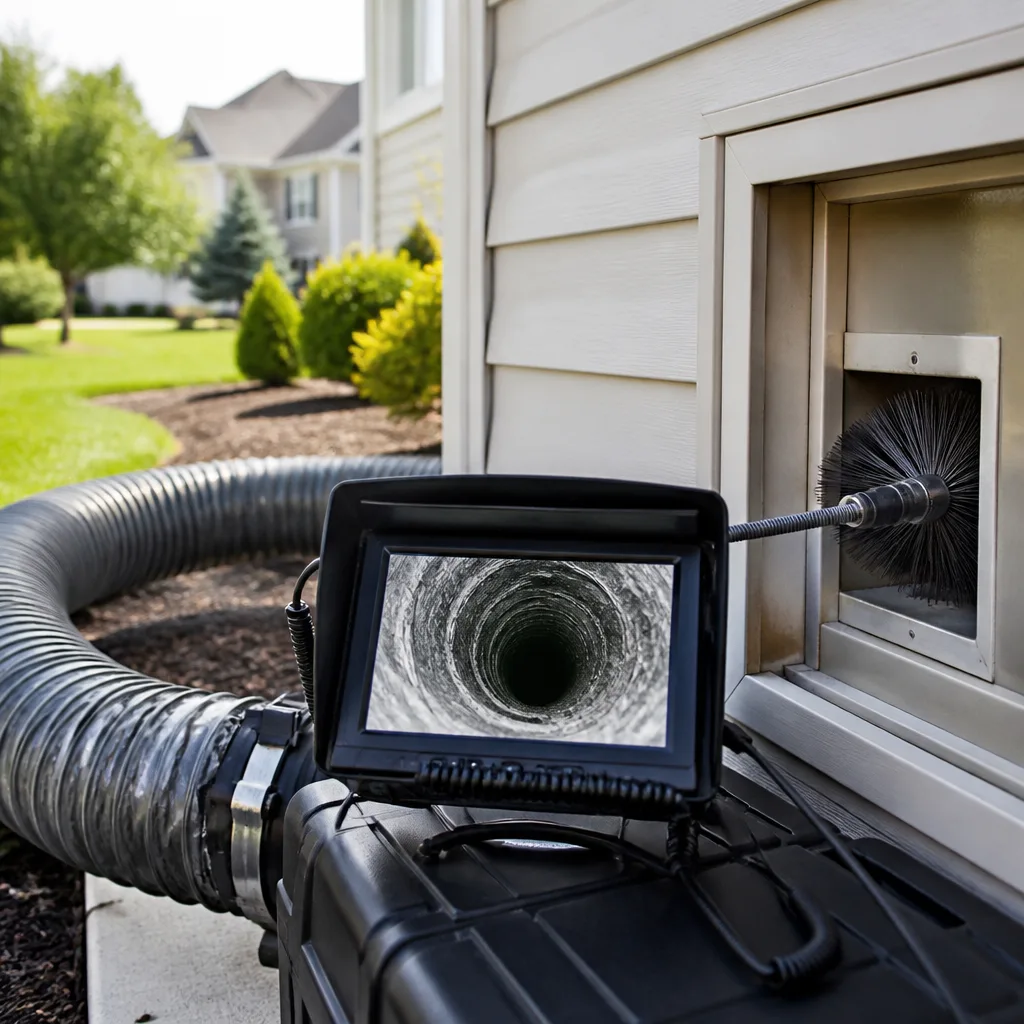 Camera inspection
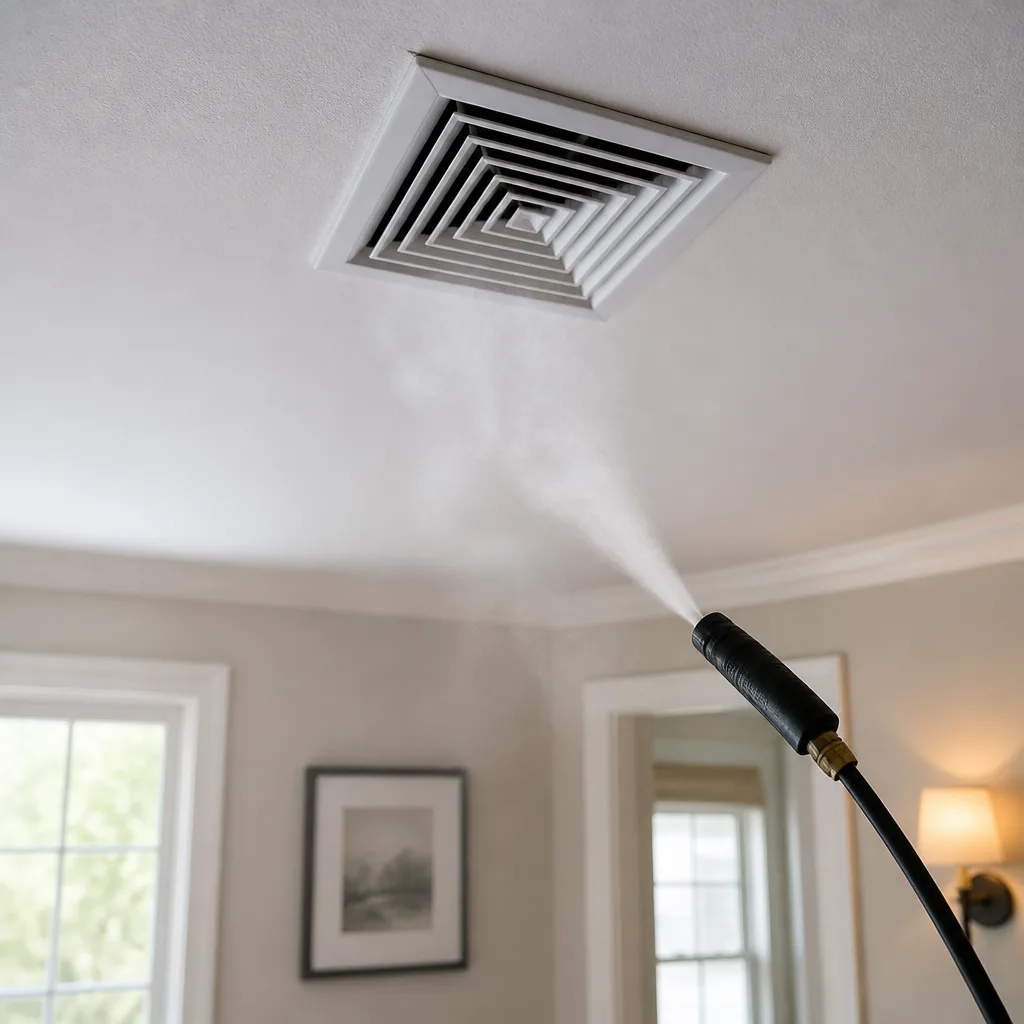 Sanitizing & deodorizing
Whole-system duct and dryer vent check with before-and-after photos - you see exactly what came out of your vents
That "$99 whole-house special" is a bait ad - the real number appears once they are in your hallway, or the "clean" is a shop-vac at the register. We photograph the inside of your ducts before and after instead.
Why Mission Viejo Homeowners Choose Trane Air Duct Cleaning
We clean and seal air duct systems on Trane equipment throughout Mission Viejo as an independent provider, not a Trane-authorized dealer. What sets our Trane work apart is that we target the specific failure points these systems develop in our city’s housing stock: leaking cabinet knockouts, baked-dry mastic at the plenum, and return-side flex runs crushed behind garage platforms. Most Trane owners in Mission Viejo don’t have dirty ducts in the conventional sense. They have 40-year-old galvanized ductwork attached to well-built Trane air handlers, and the joints between the two are where the problems live. Call (833) 593-4407 to schedule an inspection of your Trane system’s ductwork.
Trane builds equipment with tighter cabinets and better filtration than most brands, but every air handler depends on the duct system around it. In Mission Viejo, where homes were built primarily between 1966 and 1985 by the Mission Viejo Company, the original rigid galvanized ducts are now decades old. The Trane equipment may have been replaced once or twice. The ducts rarely have been. That mismatch is exactly what we address.
Why Trust Duct Cleaning Mission Viejo for Your Trane Air Duct Cleaning?
We’re specialists, not a general HVAC shop that treats duct cleaning as an add-on. Alan Dreyfus, our owner, grew up near Trabuco Hills and went through the HVAC/R program at Saddleback College here in Mission Viejo. That training matters when we’re working on Trane equipment because the airflow diagnostics are the hard part. Any technician can run a vacuum hose through a duct. Knowing where a Trane air handler loses pressure, why a cased coil loads up with matted dust, and what static pressure readings should look like before and after the work: that’s the actual job.
Alan started this company after diagnosing the air quality problem in his sister’s home. It wasn’t the Trane furnace. It was a heavily contaminated return plenum feeding it. That experience shaped how we work. We check static pressure, we photograph duct interiors before and after, and we don’t call a cleaning finished until the airflow numbers prove it. If the airflow numbers don’t improve after the cleaning, the cleaning wasn’t finished.
We use Rotobrush and Nikro systems for the cleaning itself. These are professional-grade platforms, not rental-grade tools. For Trane service in Ladera Ranch and Mission Viejo homes with Trane equipment, that means we can reach the full length of rigid galvanized runs without tearing open walls, and we can actually remove the degraded liner material and debris rather than loosening it and walking away.
Styles & brands we work with
- Whole-home duct cleaning
- Dryer vent cleaning
- Camera inspection
- Sanitizing & deodorizing
Common Trane Air Duct Cleaning Problems We Fix in Mission Viejo
- Leaking cabinet knockouts and plenum seams on Trane air handlers. Trane factory knockouts and mastic seams dry out and crack under Mission Viejo attic heat, which routinely exceeds 140°F in summer. When those seals fail, the return side pulls unfiltered attic air directly into the system. We find this on Trane XV variable-speed air handlers and TAM/TEM series units all over Madrid, Casta del Sol, and Pinecrest. The fix is mastic and foam board gaskets cut to Trane cabinet dimensions, applied after the cleaning is complete.
- Dirty Trane cased evaporator coils cutting airflow. Trane cased coils are dense and finned tightly. When matted dust and lint accumulate on them, static pressure climbs and the system works harder to move the same air. On variable-speed Trane XV systems, this often shows up as the blower ramping up noticeably and a hum or whistle at the return. We wash these coils with a process that protects the fins, not a stiff brush that bends them.
- Single-return choke points on Trane installs. Many Mission Viejo Trane systems run with a 20×25 filter grille as the only return. When that media loads up, bypass happens around the frame, and the system pulls dust straight into the cabinet. We routinely find filter frames sagging after years of heat exposure, creating gaps that let unfiltered air slip around the media. Cleaning helps, but sealing the frame and verifying the return path is what actually solves the dust problem.
- Crushed or torn flex duct behind garage platforms. Trane air handlers sitting on platforms in hot garages are common here. The flex runs behind those platforms get crushed during installations or pulled loose over time. We find this with a manometer and a camera. A crushed return flex on a Trane XV can mimic a dirty coil, and if we only cleaned the ducts without fixing the flex, the homeowner would still have the same pressure and airflow complaints.
- Degraded fiberglass liner flaking off inside old ducts. Mission Viejo’s uninsulated attics bake the internal lining of old ducts. We’ve opened supply runs where the liner was flaking off in sheets, coating registers and the Trane coil with fiberglass particles. On these systems, the cleaning isn’t a cosmetic touch-up. It’s removing degraded material that shouldn’t be circulating through the house at all.
Trane Parts & Our Repair-vs-Replace Approach
We use OEM-equivalent filters, flex, mastic, and foam board gaskets that match Trane cabinet dimensions. When a specific fit matters, we use OEM-grade replacement parts. No brand authorization is implied, and we’re clear about that. We stock common Trane-compatible materials locally so we can seal and repair during the same visit as the cleaning.
Our repair-vs-replace stance is straightforward. If a Trane coil is corroded or a heat exchanger is compromised, we’ll tell you plainly and quote repair versus replacement. We’ll never sell a cleaning on a system that has a mechanical failure a cleaning can’t fix. That’s the difference between duct cleaning done as a service and duct cleaning done as a sales tactic. Call (833) 593-4407 and we’ll give you an honest assessment.
Our Trane Service Process – Step by Step
- 1
System walkthrough and static pressure baseline. We start with a visual inspection of the Trane cabinet, the return path, the filter frame, and accessible flex runs. We take static pressure readings before any cleaning begins. On a Trane XV variable-speed system, we’ll also note the blower speed and any abnormal sound patterns, because those tell us where the restriction is likely to be.
- 2
Camera inspection and leak identification. A video camera goes through the supply and return runs. We’re looking for the specific failure modes we described above: cracked mastic, torn flex, crushed runs behind platforms, degraded liner. We photograph what we find. Homeowners see their own ducts on the screen, not a generic stock photo.
- 3
Full system cleaning. We run the Rotobrush or Nikro system through every accessible run, followed by negative-pressure vacuuming that captures debris at the point of removal. We clean the Trane cased coil carefully, protecting the fins. If the liner is degraded, we remove loose material and document what remains.
- 4
Sealing and repair. This is where most duct cleaning companies stop. We don’t. We mastic-seal cabinet knockouts and plenum seams, refit filter frames that are bypassing air, and repair or replace crushed flex runs. Any damaged sections of the duct system get addressed during the same visit.
- 5
Post-service verification. We take static pressure readings again and compare them to baseline. We photograph the finished work. If the numbers haven’t improved meaningfully, the job isn’t done, and we keep working until it is.
See the difference
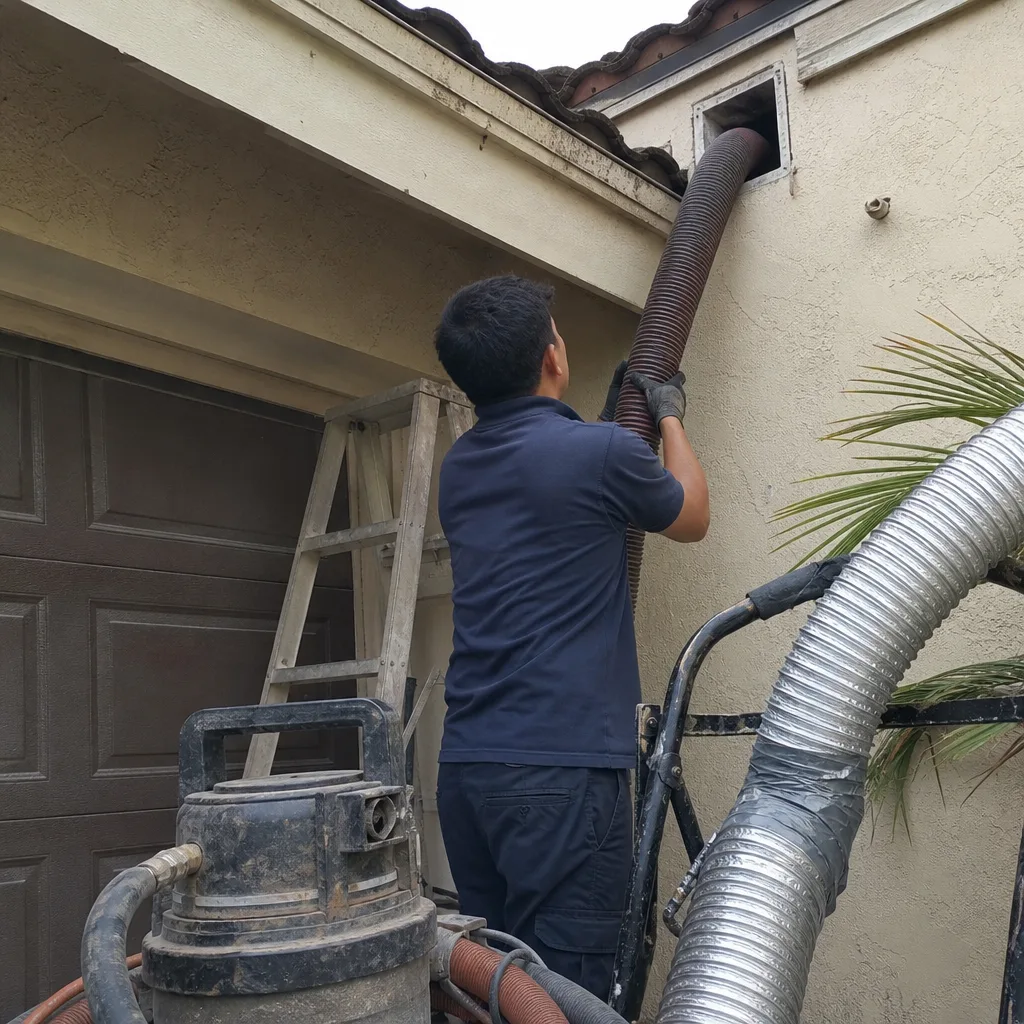 Before
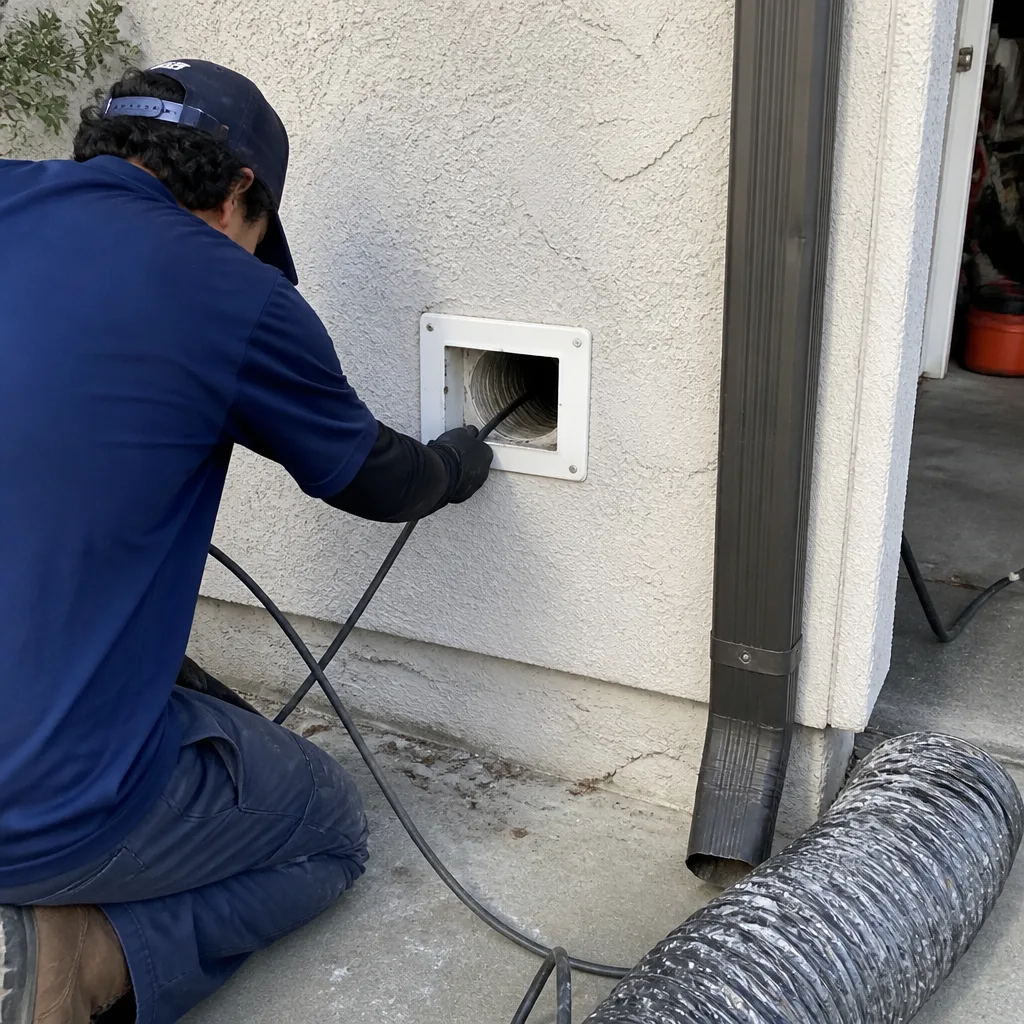 After
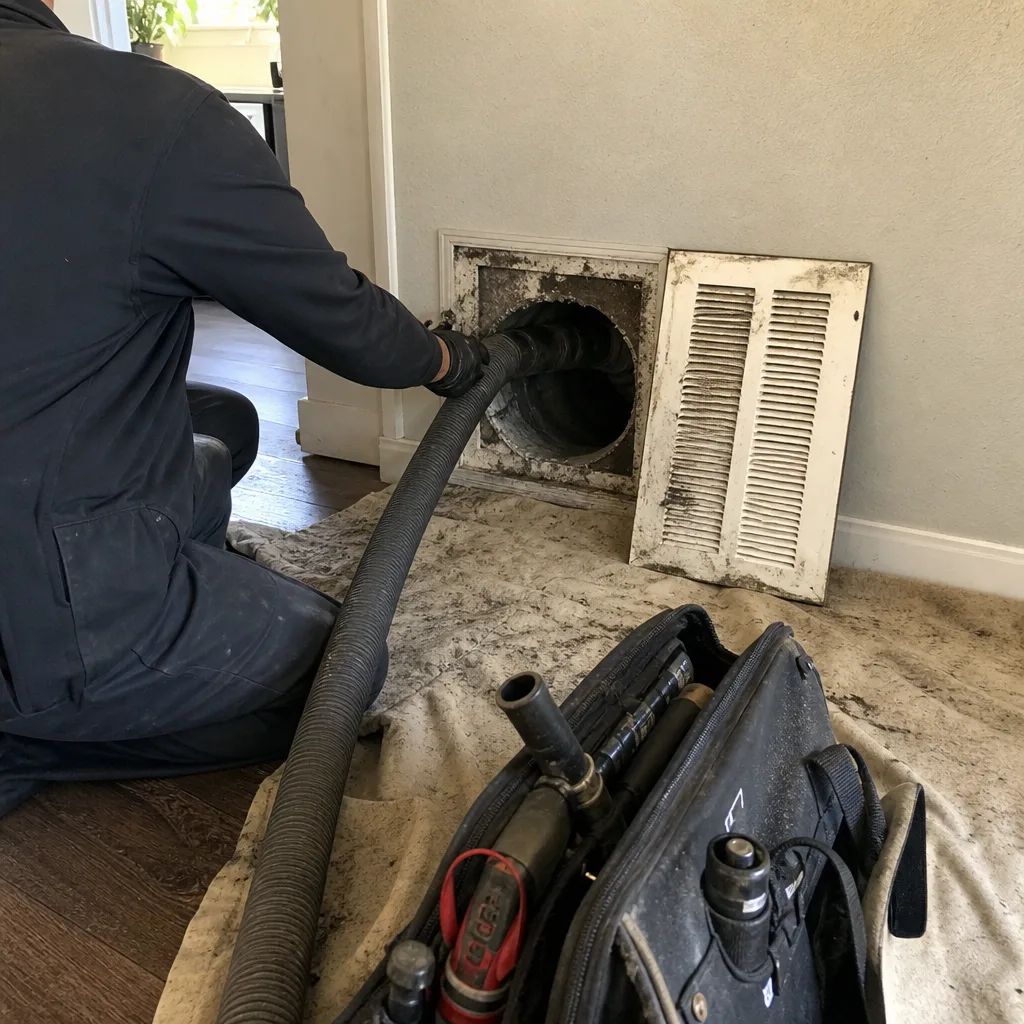 Before
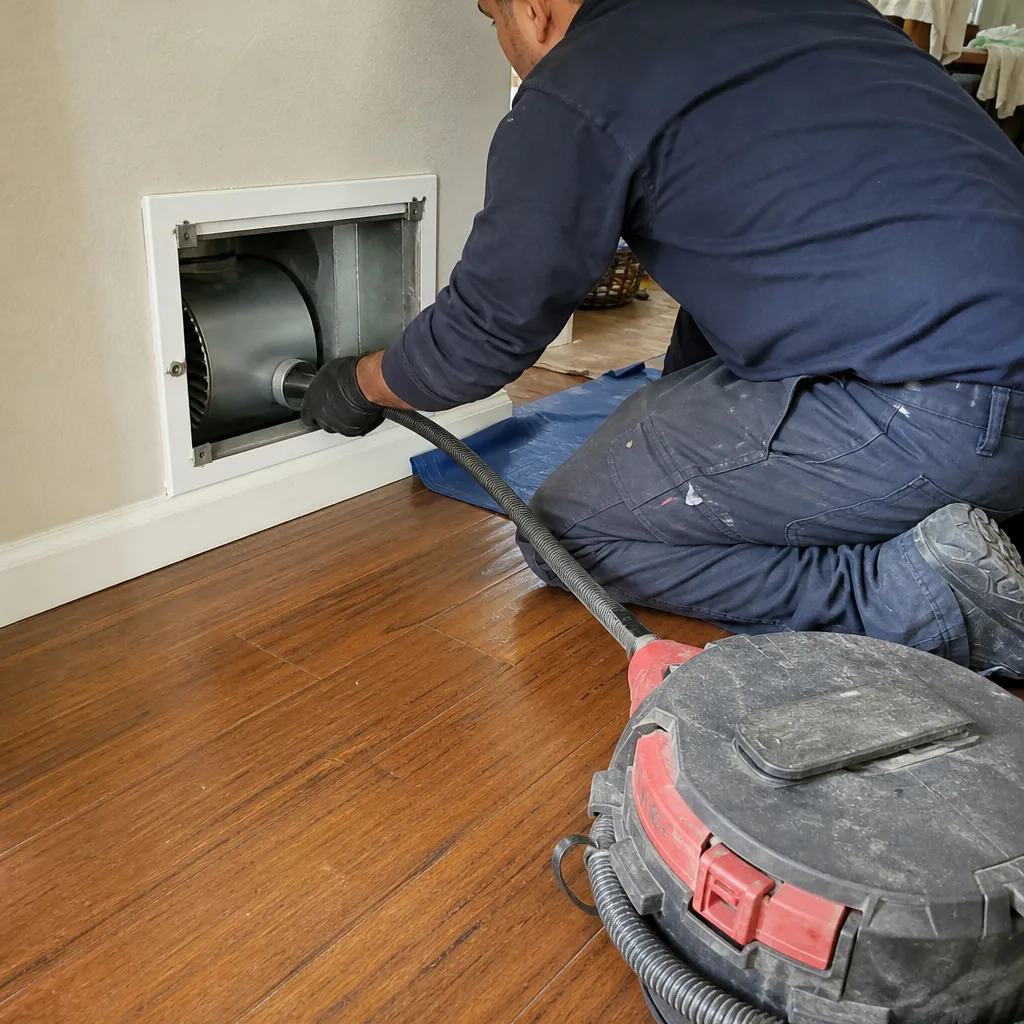 After
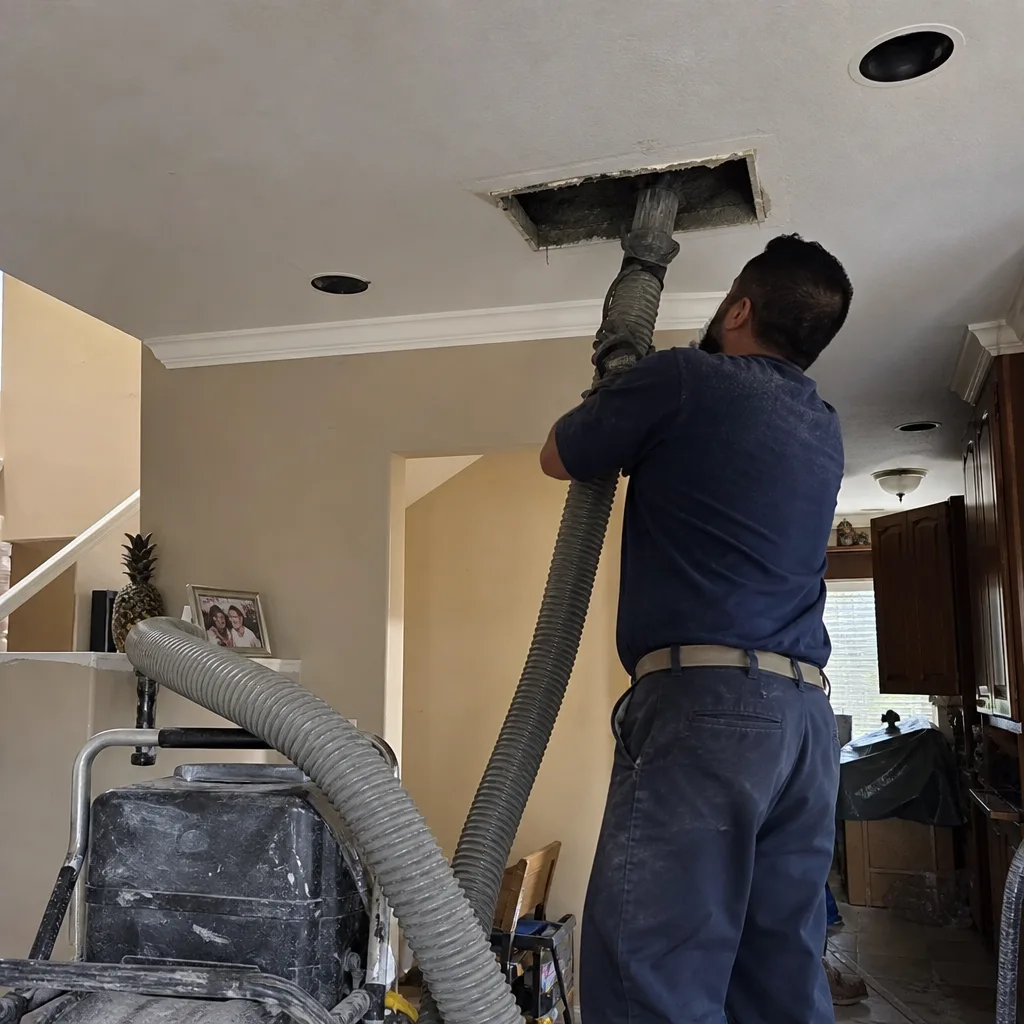 Before
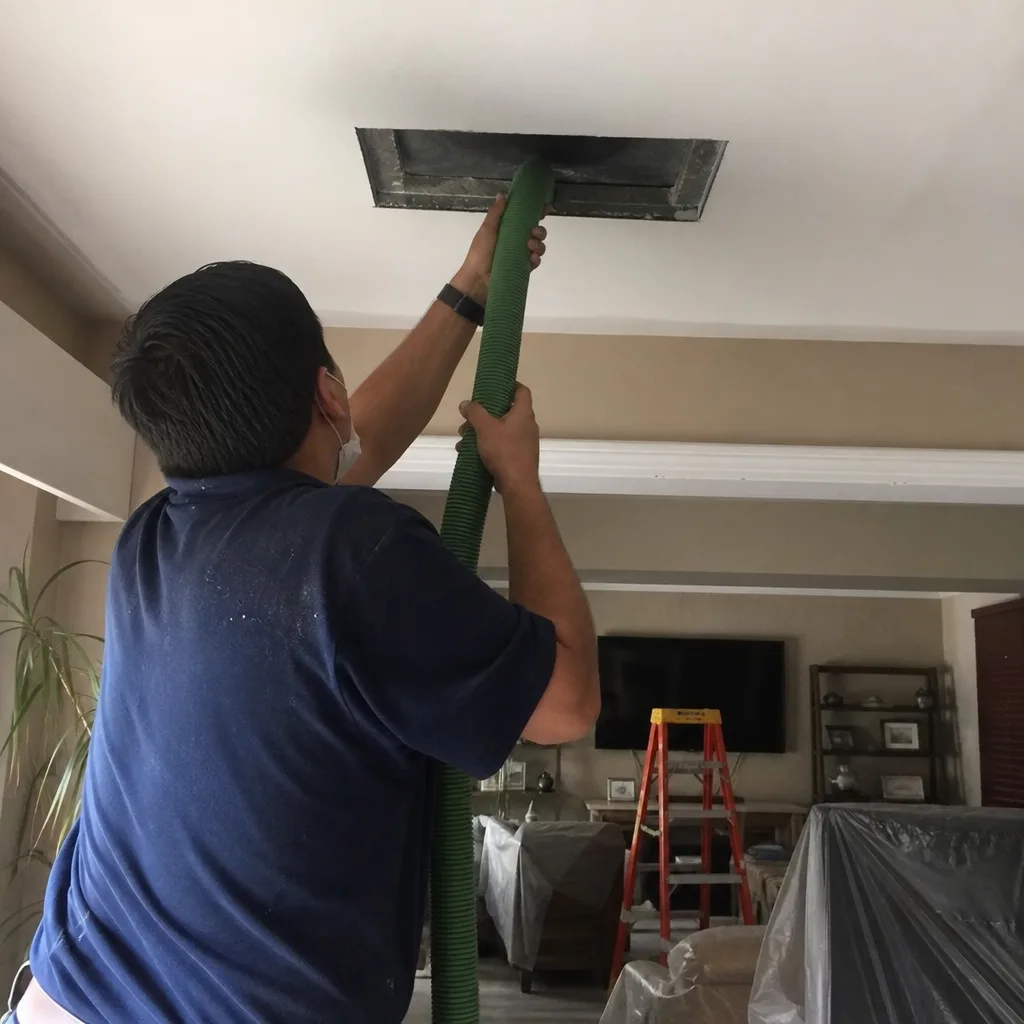 After
Trane Products We Service & Install in Mission Viejo
We work on Trane in Lake Forest and Mission Viejo, including XV variable-speed air handlers such as the TAM and TEM series, Trane XR and XB split systems with matched coils, ComfortLink II communicating systems, and S9 and S8 series gas furnaces with cased coils. Our core services on this equipment cover the full duct system: Full System Cleaning, Evaporator Coil Cleaning, and Duct Sealing. We also carry and install Aprilaire and Honeywell air-quality products, which means we can clean the ducts and upgrade the filtration system in the same visit. Abatement Technologies equipment gives us contamination-control capability when we’re dealing with mold, heavy allergens, or post-construction debris.
We Also Service These Brands
While we know Trane systems well, we’re not dependent on any single manufacturer. We clean and seal duct systems on Lennox and Carrier equipment with the same diagnostic approach. The brand on the cabinet matters less than the condition of the ducts and coil attached to it. If your Mission Viejo home runs a different system, we’ll treat it with the same care.
FAQs – Trane Air Duct Cleaning Service in Mission Viejo
Yes, but only if it’s paired with sealing. A single 20×25 return on a Trane system in a Mission Viejo garage works hard, and when the media loads up, air bypasses around the frame and pulls dust straight into the cabinet. Cleaning the ducts removes what’s already accumulated, but if we don’t seal the filter frame and verify the return path, you’ll be back in the same spot within months. We do both during one visit. Call (833) 593-4407 for a Trane return-path inspection.
We use a low-pressure wash with cleaning agents designed for aluminum fins, applied from the correct direction so debris is pushed out rather than driven deeper into the coil. We never use stiff brushes or high-pressure spray on a Trane cased coil because the fin density makes them easy to bend. A bent fin coil moves less air than a dirty one.
No. The communicating controls on a ComfortLink II system don’t change the physical cleaning process. The ducts, coil, and cabinet are all mechanically the same as non-communicating Trane systems. What matters is that we don’t interfere with the control wiring or sensors, and we’re careful around them. The cleaning itself is identical.
We use mastic and proper mechanical fastening, but the repair approach depends on the damage. Crushed flex often needs replacement rather than sealing, because the internal diameter has been collapsed and airflow won’t recover. Torn flex at the transition can sometimes be re-masticed and re-secured. We inspect, show you the damage on camera, and recommend the fix that actually restores airflow.
No. We are an independent Trane service provider, not authorized, sponsored, or warranty-endorsed by Trane. That means our recommendations are based on what we find inside your ducts and cabinet, not on what a manufacturer program requires us to sell. We use OEM-equivalent materials and OEM-grade parts where fit matters, but we don’t represent ourselves as a Trane dealer.
Whole-system Trane in Laguna Hills and Mission Viejo air duct cleaning typically runs $450 to $900 depending on the size of the home, the number of runs, and how long the system has gone without service. Homes with a single return and a garage-mounted air handler tend to fall toward the higher end because we include sealing and return-path correction. Coil cleaning and flex repair are quoted separately after inspection. Call (833) 593-4407 for an exact quote based on your home’s layout and duct condition.
Book Your Trane Service in Mission Viejo, CA
If your Trane system is moving less air than it should, or you’re seeing dust return within days of cleaning, we’ll find out why. Call (833) 593-4407 for a free estimate. We inspect, we photograph, we seal, and we verify.
Written by Alan Dreyfus, Owner at Duct Cleaning Mission Viejo, serving Mission Viejo homeowners with Trane-specific duct cleaning, sealing, and repair.