
Last updated November 2, 2026
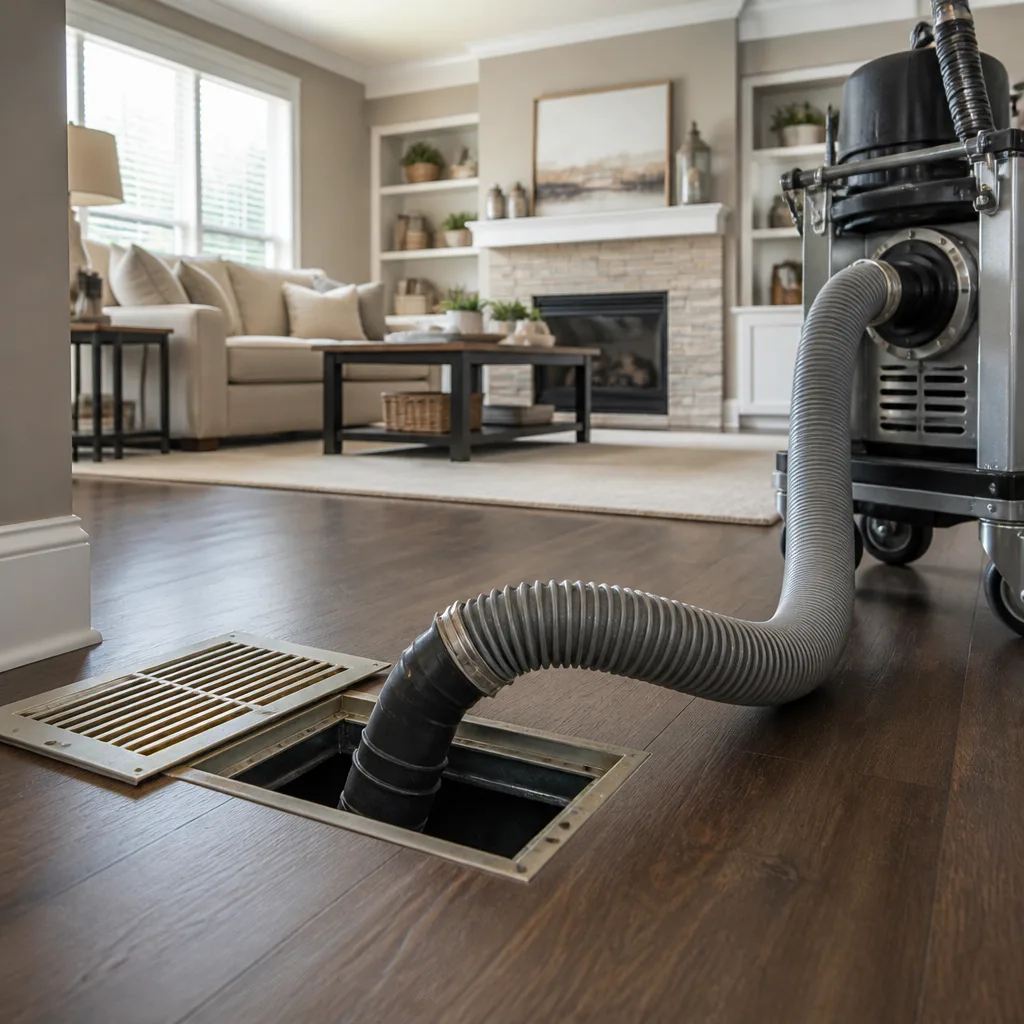 Whole-home duct cleaning
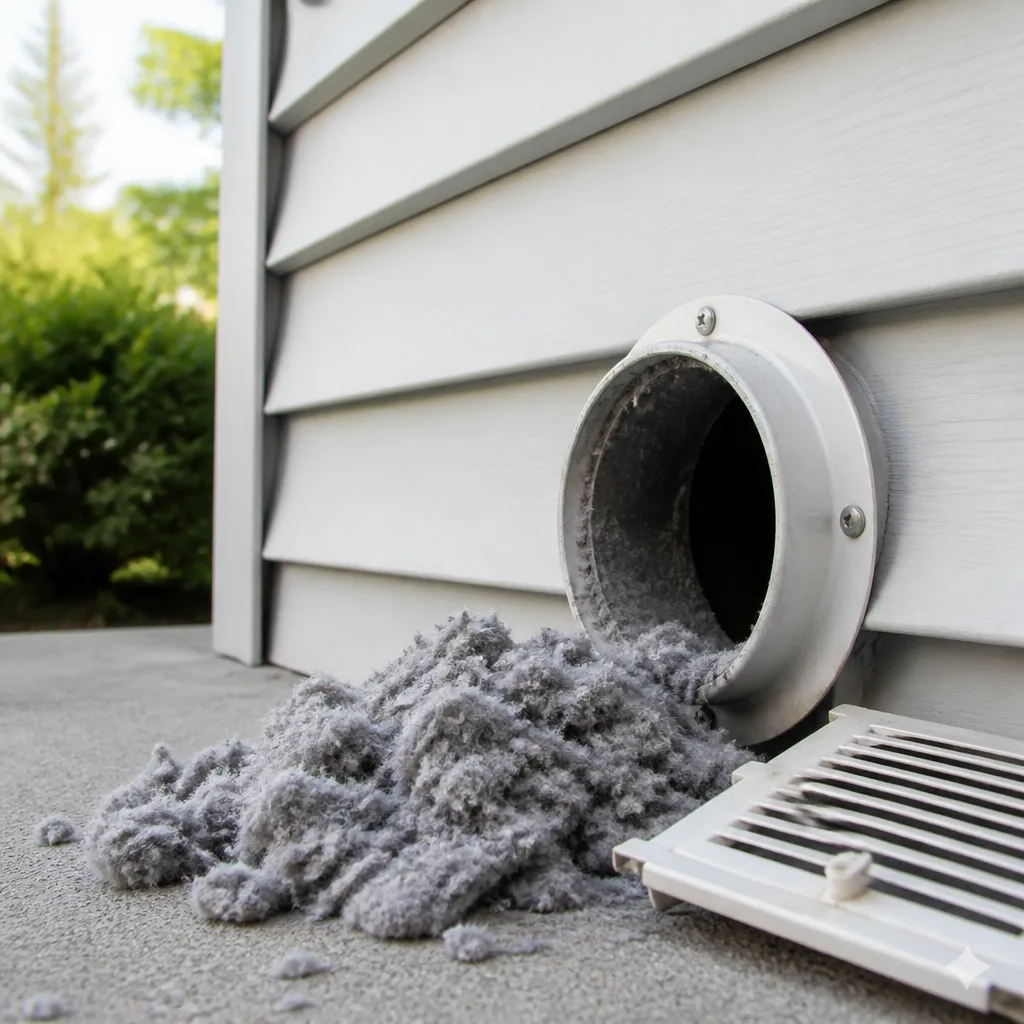 Dryer vent cleaning
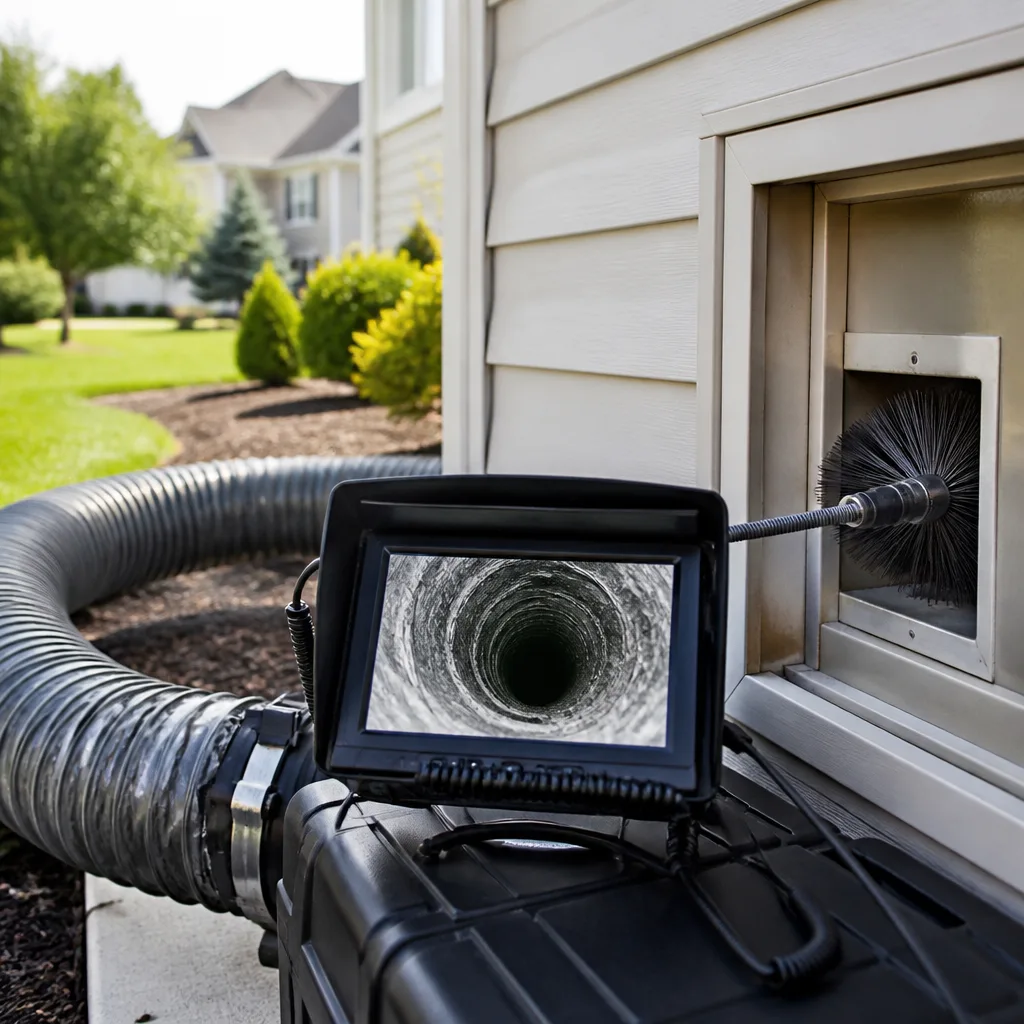 Camera inspection
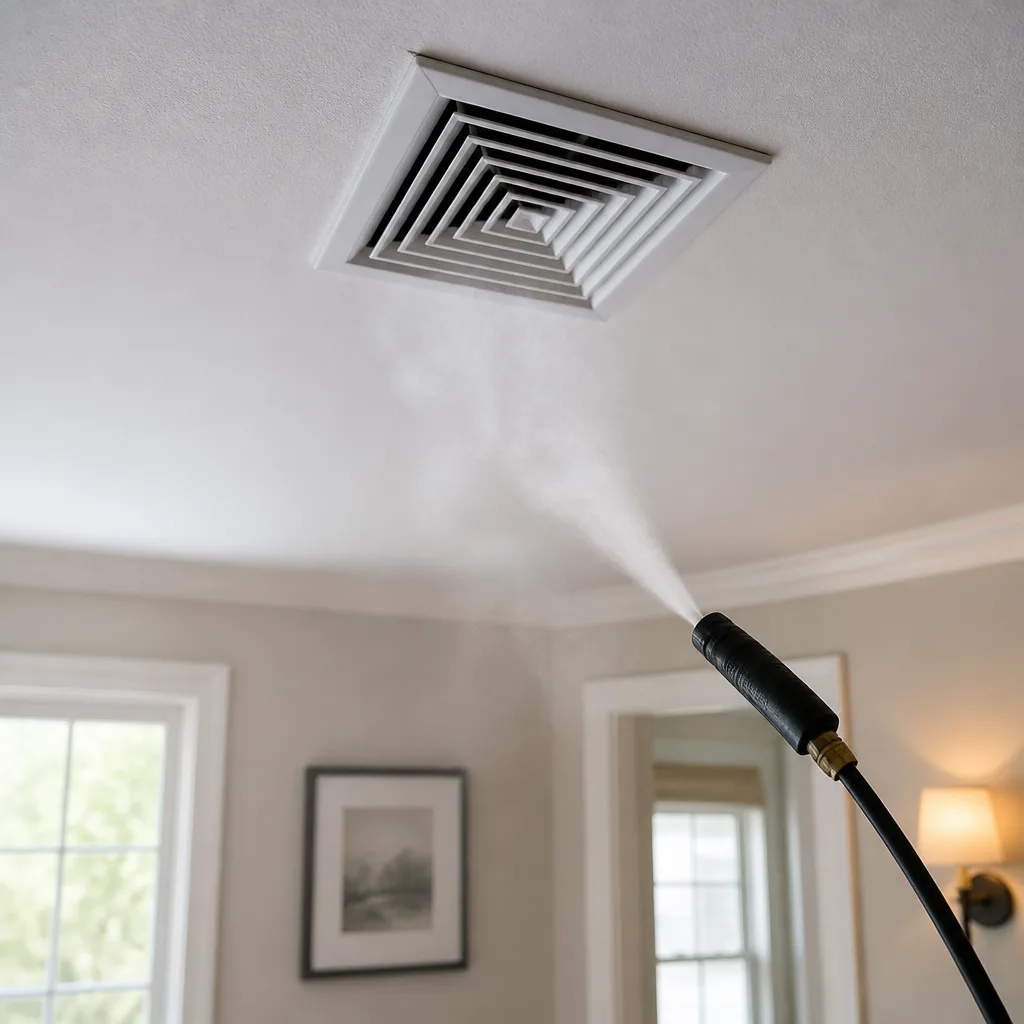 Sanitizing & deodorizing
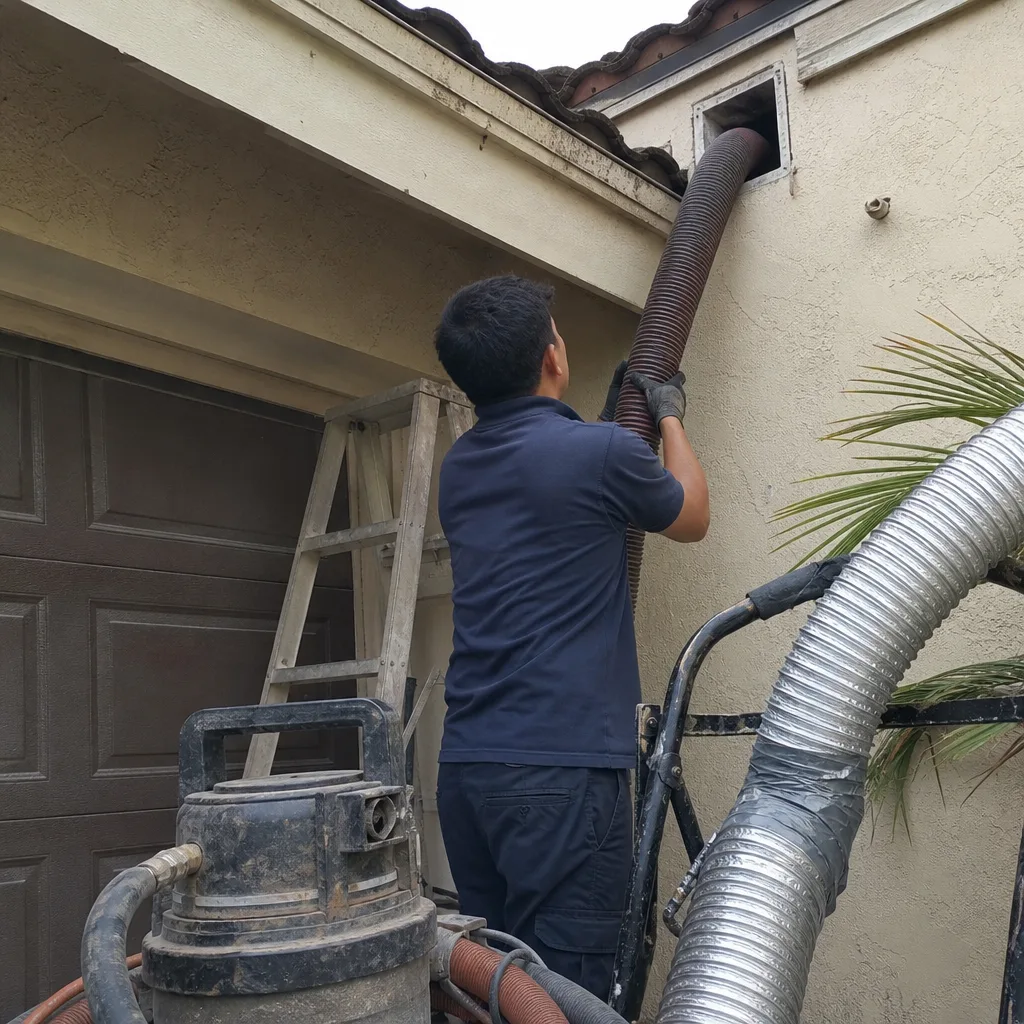
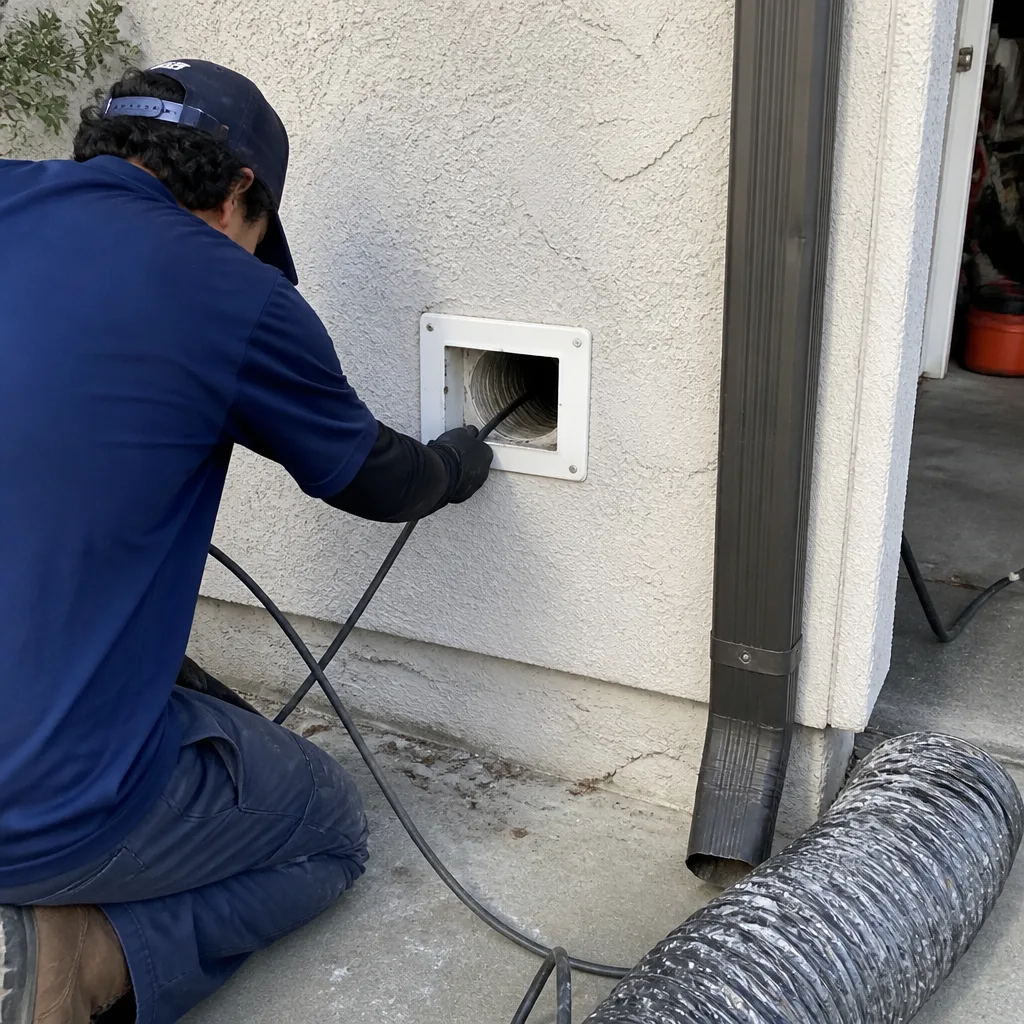
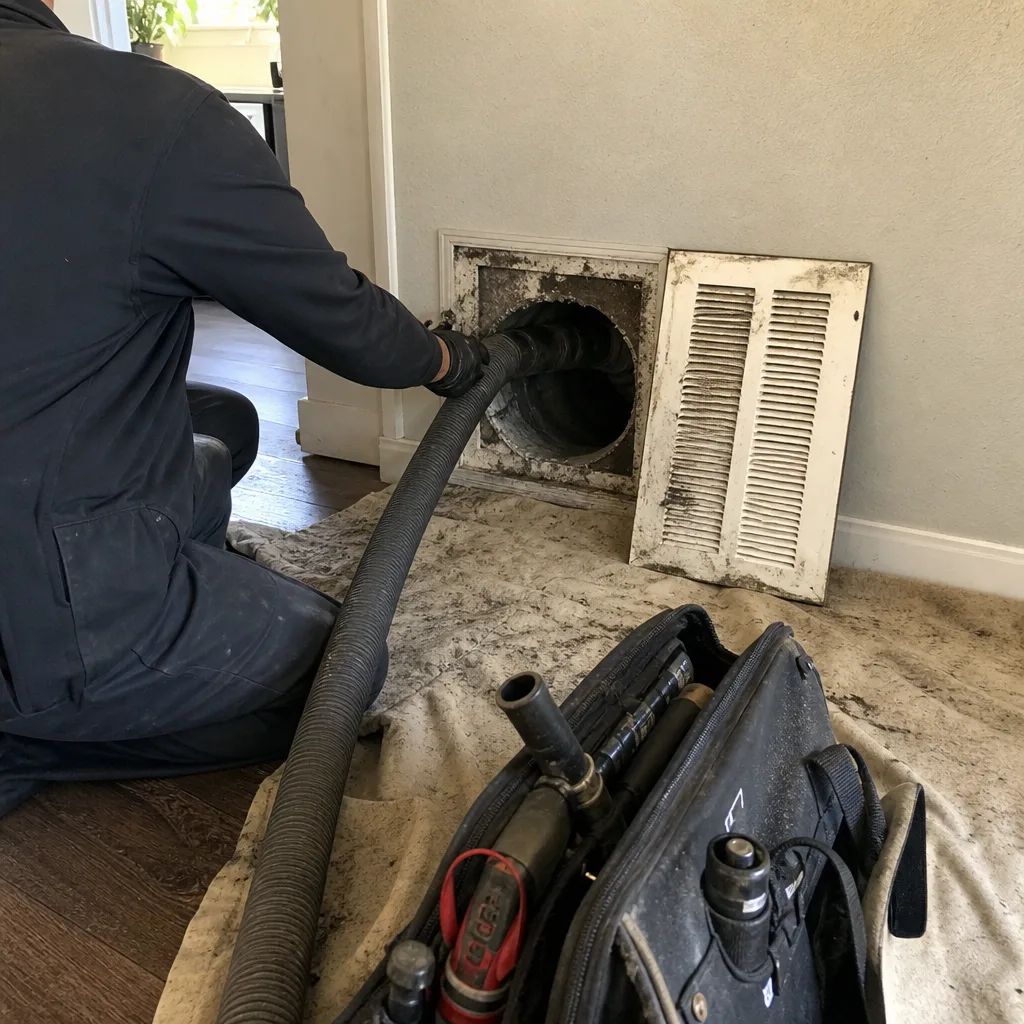
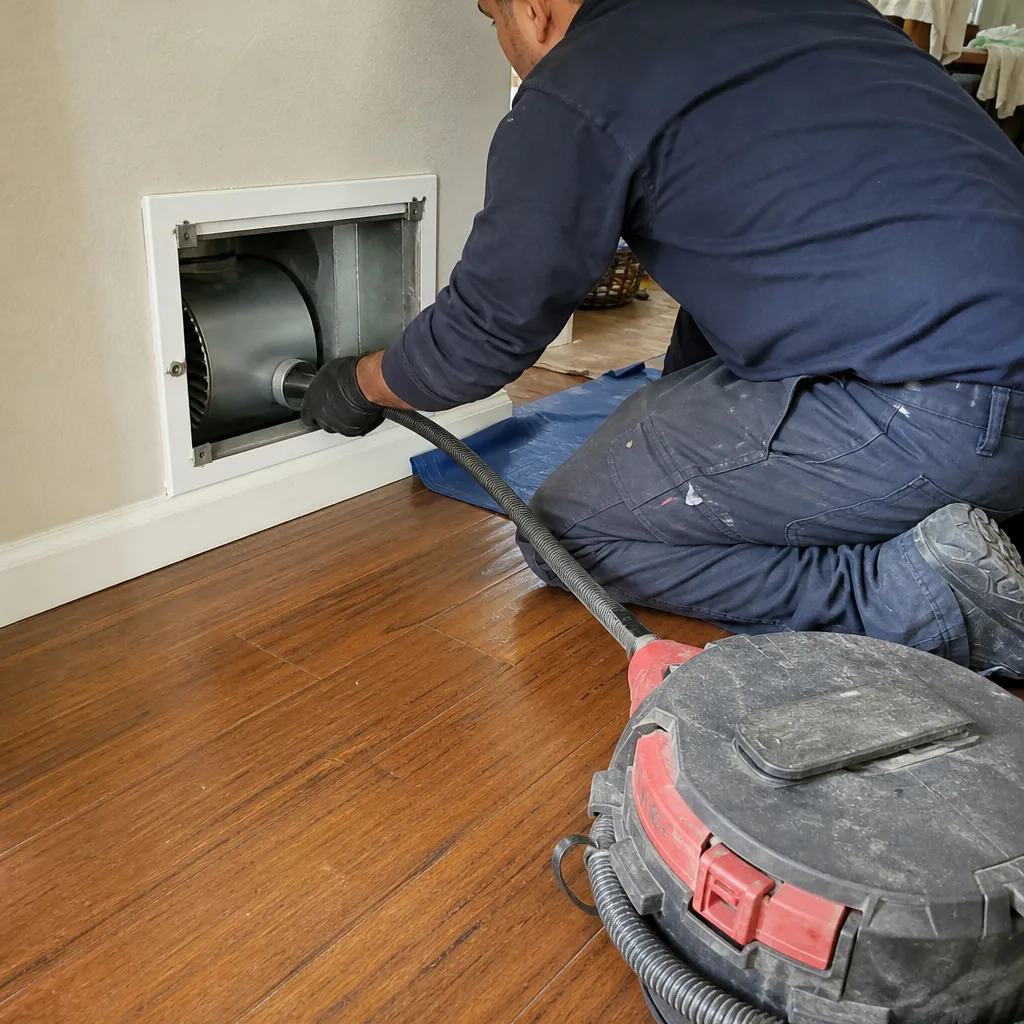
Whole-system duct and dryer vent check with before-and-after photos - you see exactly what came out of your vents
That "$99 whole-house special" is a bait ad - the real number appears once they are in your hallway, or the "clean" is a shop-vac at the register. We photograph the inside of your ducts before and after instead.
Air Duct Cleaning Emergency Preparedness Guide for Mission Viejo Homes
During the 2020 Silverado Fire, air quality monitors within 10 miles of Mission Viejo recorded PM2.5 levels above 500 µg/m³ for over 48 hours. Any HVAC system running in recirculation mode during that window pulled that particulate through its filter, and whatever passed through is still in the duct system. Homeowners in Mission Viejo plan for earthquakes and wildfires with impressive detail, stocking supplies and mapping evacuation routes. Almost none of that planning accounts for what happens inside the ductwork when those events hit. This guide covers the duct-specific actions to take before, during, and after local emergencies so your HVAC system doesn’t become a lingering source of contamination for months after the visible crisis ends.
Quick Answer
Air duct cleaning emergency preparedness in Mission Viejo means having a shutdown protocol for smoke and ash events, knowing how to inspect ducts after earthquakes, documenting system condition for insurance claims, and understanding how quickly mold colonizes water-damaged flex duct. Pre-planning saves thousands in remediation and keeps your indoor air from circulating wildfire particulate or post-earthquake debris long after the event itself is over. For a complete maintenance overview, see our Air Duct Cleaning Maintenance Checklist for Mission Viejo Homeowners. For duct systems exposed to heavy smoke, ash, or moisture in Mission Viejo, professional inspection and cleaning should happen within 30 days of the event.
Styles & brands we work with
- Whole-home duct cleaning
- Dryer vent cleaning
- Camera inspection
- Sanitizing & deodorizing
Table of Contents
- Pre-Event Protocol: Preparing Your Duct System for Wildfire Smoke and Ash
- HVAC Shutdown Procedure During Active Smoke Events
- Post-Wildfire Smoke Assessment: Filter Replacement vs. Duct Cleaning
- Post-Earthquake Duct Inspection for Mission Viejo Slab-on-Grade Homes
- Documenting Duct Condition for Insurance Claims
- Water Intrusion and Flex Duct: The Mold Colonization Timeline
- Common Mistakes to Avoid
- When to Call a Professional
Pre-Event Protocol: Preparing Your Duct System for Wildfire Smoke and Ash
Wildfire season in Southern California has shifted from a seasonal concern to a nearly year-round consideration. For Mission Viejo homeowners, that changes how we think about duct maintenance. A system that sits dusty for two years and then runs continuously during a smoke event is a different problem than a clean system facing the same conditions. Smoke particulate adheres to existing dust and debris inside ductwork far more readily than it binds to clean metal and flex surfaces. This is why pre-season duct cleaning matters: it removes the substrate that wildfire smoke would otherwise cling to.
Here’s a step-by-step pre-event protocol we recommend for Mission Viejo homes:
- Replace filters before fire season peaks. Southern California’s highest-risk window generally runs August through November, but the Silverado Fire started October 26, 2020, and the Holy Fire in August 2018. Install a fresh high-MERV filter rated for your system, typically MERV 11-13 for homes with standard residential HVAC units. Confirm your blower can handle the added static pressure; some older systems struggle with MERV 13.
- Have registers and return-air grilles inspected for seal integrity. Gaps around register boots allow smoke to bypass filters entirely and enter unconditioned wall and ceiling cavities. Those cavities connect to your living space through the same openings.
- Verify your HVAC system’s fresh-air intake location. Many Mission Viejo homes have a fresh-air intake on the exterior wall or roof. Know where it is, because this determines how much outside air your system pulls during a smoke event versus how much it recirculates.
- Document your baseline duct condition. Take photos of accessible duct interiors using your phone camera through a removed register. These baseline images become evidence for insurance claims if a later event contaminates the system.
- Keep a HVAC shutdown checklist accessible. Post it near the thermostat or in the garage. During a fire event, you won’t have time to search for instructions.
This is not theoretical preparation. Homes in the La Paz corridor and along Oso Parkway see different smoke exposure patterns than neighborhoods near the 5, but every home with an HVAC system faces the same core vulnerability: the system is designed to move air, and during a fire event, the air moving into it is dangerous.
HVAC Shutdown Procedure During Active Smoke Events
When an active wildfire pushes smoke toward Mission Viejo, the single most important duct-related action is to shut down the HVAC system immediately. Running the fan, even with a fresh filter, pulls smoke particulate into the return-air plenum and distributes it throughout the duct network. The filter catches some of it. The rest deposits on duct walls, blower fan blades, the evaporator coil, and inside flex duct runs. Once deposited, it stays until physically removed.
Here is the shutdown sequence we recommend for Mission Viejo homeowners:
- Turn the thermostat to OFF, not just a higher temperature. The fan setting must also be set to AUTO or OFF, never ON. Many homeowners set the fan to ON for continuous circulation without realizing this means the system will draw and distribute smoke-contaminated air during the entire event.
- Close all exterior windows and doors. This seems obvious, but even a bathroom exhaust fan running during a bathroom renovation or a kitchen range hood in use creates negative pressure that pulls outside air through gaps around the building envelope.
- Seal return-air grilles temporarily if the fire is within 5 miles. Use plastic sheeting and painter’s tape to cover return openings during the peak smoke window. This prevents smoke from entering the duct system through the return path even if the blower is off. Remove the covering within 24 hours once air quality improves, to avoid condensation buildup inside the ducts.
- Know that shutting down is temporary. If you cannot run your HVAC system at all during a multi-day smoke event, indoor temperatures rise and humidity climbs. This is unpleasant but protective. The alternative, running the system continuously through dense smoke, can leave you with a cleanup problem that costs far more than a few hot days.
- Do not rely on the filter alone. A MERV 13 filter captures a meaningful percentage of smoke particulate, but it does not capture everything, and the filter only protects the air cleaner, not the downstream ducting that has already been exposed.
We’ve inspected duct systems in Mission Viejo after smoke events where the blower compartment showed visible ash accumulation even though the homeowner had replaced the filter mid-event. The filter did its job on the return side, but ash that bypassed the filter frame or entered through gaps settled throughout the supply side. The shutdown procedure matters because it’s the only way to prevent particulate from entering the system in the first place.
For a deeper look at how our cleaning process addresses smoke and ash contamination, see Duct Cleaning Mission Viejo home for the equipment and approach we use.
Post-Wildfire Smoke Assessment: Filter Replacement vs. Duct Cleaning
After the smoke clears and outdoor air quality returns to something resembling normal, Mission Viejo homeowners face a judgment call: is a filter swap enough, or do the ducts themselves require professional cleaning? Before scheduling, review Air Duct Cleaning Permits, Codes & Inspections in CA: What You Need to Know. The answer depends on three factors: how long the system ran during the event, whether it ran during the highest-concentration hours, and how much visible residue accumulates on accessible surfaces.
Here’s a practical assessment framework:
Filter replacement alone may be sufficient when:
- The HVAC system was shut down before smoke reached your neighborhood and stayed off for the duration of the event.
- The system ran for under 4 hours total during elevated smoke conditions, and outdoor PM2.5 did not exceed 150 µg/m³ where you live.
- A visual inspection of the blower compartment, return-air plenum, and first few feet of supply duct shows no visible ash or dust discoloration.
- The filter itself shows discoloration but not heavy black soot buildup, and the filter frame seal is intact with no visible bypass around the edges.
Professional duct cleaning is warranted when:
- The system ran for more than 8 cumulative hours while outdoor PM2.5 exceeded 300 µg/m³, which was the case across most of Mission Viejo during the Silverado Fire’s worst days.
- The filter shows heavy black soot accumulation, or you find soot streaks on the wall around return grilles.
- You smell smoke when the system runs, even weeks after the event. That odor lives in the duct lining and blower surfaces, not in the filter.
- Family members with asthma or allergies report symptoms that flare when the HVAC cycles on. This is a meaningful signal that particulate remains in the air stream.
- The evaporator coil shows visible darkening or the blower fan blades are coated. Both are deep-system contamination that filter replacement cannot address.
One distinction matters here: smoke odor that dissipates within a day or two of the event is surface-level. Smoke odor that persists for weeks and intensifies when the system runs is in the ductwork. We run Rotobrush and Nikro professional-grade systems, not rental-grade tools, and the difference shows up most clearly in homes where smoke penetrated deep into the return side. A discount service with a small portable vacuum cannot reach the recovery lengths involved in a two-story Mission Viejo home’s duct network.
Post-Earthquake Duct Inspection for Mission Viejo Slab-on-Grade Homes
Mission Viejo sits in a seismically active zone, and most of the city’s housing stock was built on slab foundations. That’s relevant to your duct system in ways most homeowners never connect. When the ground shakes, a slab-on-grade home transfers that motion directly to the structural frame, and the duct system, which runs through walls, attics, and between floors, absorbs some of that movement. Flex duct connections are the weak point.
After any earthquake strong enough to knock items off shelves, check these four areas of your duct system:
- Flex duct connections at register boots. The plastic zip ties or metal clamps that hold flex duct to register boots and plenum takeoffs can slip or snap under lateral movement. A loose connection here creates a gap that pulls attic air into the conditioned airstream. Attic air in a Mission Viejo summer is 120-140°F and packed with blown-in insulation dust.
- Plenum seals at the air handler or furnace. The large metal box connecting to your air handler is sealed with mastic or foil tape. Ground movement can crack rigid mastic joints. Check for visible gaps or new dust streaks around these joints. A leak here means you’re conditioning the garage or attic instead of the living space.
- Air handler mounting and vibration isolation. Most Mission Viejo homes have the air handler in a garage closet or attic platform. After a quake, check that the unit hasn’t shifted off its vibration pads. A shifted unit stresses the duct connections and can create a rattling noise during operation that wasn’t there before.
- Duct hangers and strapping in attic runs. Mission Viejo attics are hot, cramped spaces where duct runs are suspended by strapping. Movement can detach hangers, letting ducts sag and kink. A kinked flex duct reduces airflow and can eventually fail at the fold point.
If you find damage, don’t wait. A separated duct connection in the attic actively pulls unfiltered air into your living space every time the system runs. That’s an immediate indoor air quality problem, and it’s also an energy problem. The fix is straightforward for a professional: reconnect, re-seal with proper mastic, and re-secure. We clean it, and if it’s damaged, we fix it. That’s the one-stop advantage of a company that does Air Duct Repair in San Juan Capistrano and the surrounding area, rather than referring you elsewhere.
Documenting Duct Condition for Insurance Claims
Insurance claims after a wildfire or earthquake in Mission Viejo depend on documentation. The more evidence you have of pre-event condition, the harder it is for an adjuster to deny a claim by arguing the damage predated the event. This applies to duct systems just as much as to roofs and windows.
Here’s the documentation protocol we recommend to Mission Viejo homeowners:
- Take pre-event baseline photos. Remove a supply register and a return grille, stick your phone into the opening, and photograph the duct interior. Do this twice a year or after any professional cleaning. Store the photos in a cloud folder labeled with the date.
- Record filter change dates and filter type. A log showing consistent filter maintenance undermines any argument that the contamination resulted from neglect. A simple note in your phone or a spreadsheet works.
- Capture air quality readings if you have a monitor. Consumer PM2.5 monitors are now common and reasonably accurate for relative measurements. Record indoor readings during a smoke event while the system is off, and again after the event with the system running. A significant difference between the two readings indicates the system is distributing contamination.
- Photograph visible soot, ash, or debris on registers and surrounding drywall after an event. These are the most obvious signs of intrusion and the easiest for an adjuster to understand.
- Request a professional assessment report. When you bring in a duct cleaning or repair professional, ask for a written report of what was found, with photos. This report carries weight in an insurance claim because it comes from a third party with professional equipment and experience. We provide this documentation as part of our service in Mission Viejo.
The goal is to establish a clear timeline: system was clean on this date, event occurred on this date, contamination was documented on this date. Without that chain, you’re negotiating from a weaker position. With it, the insurance conversation becomes about scope of work rather than whether work is covered at all.
Water Intrusion and Flex Duct: The Mold Colonization Timeline
Water enters duct systems in Mission Viejo homes from three main sources: roof damage during wind events, sprinkler activation (rare in single-family homes but possible in attached-housing scenarios), and plumbing leaks that migrate into wall cavities where ducts run. What happens next depends on whether your home uses rigid sheet metal ducts or the more common insulated flex duct.
Insulated flex duct is a plastic inner liner, an insulation layer, and a foil or vinyl outer jacket. When water penetrates the outer jacket, it saturates the insulation. The plastic inner liner keeps the water out of the air stream initially, but the wet insulation is now in contact with the liner, and it’s inside your home’s conditioned envelope. The insulation does not dry quickly in a Mission Viejo attic, where temperatures are high but humidity from the leak keeps moisture trapped.
The mold colonization timeline is shorter than most homeowners expect:
- 24-48 hours: Mold spores present in the insulation layer find adequate moisture and begin germinating.
- 3-7 days: Visible mold growth can be established within saturated insulation.
- 7-14 days: The inner plastic liner may develop microbial growth on surfaces where condensation forms from the wet insulation against the cooler air stream.
- 14+ days: The duct may produce a distinct musty odor when the system runs, and spore release into the air stream becomes a real possibility through pin-hole tears or end connections.
- Running the HVAC fan continuously during a smoke event to “filter the air.” This is the single most damaging mistake we see in Mission Viejo. The filter captures a fraction of what enters. The rest deposits throughout the duct system, and that system is not designed to be cleaned by a filter. If you want to run a standalone air purifier in a single room with the doors closed, that’s a different story. Do not run the whole-house fan.
- Replacing the filter only and calling it done after a fire event. The filter sits upstream of the blower. Everything after it, including the blower fan, evaporator coil, supply plenum, and every foot of supply duct, has been exposed to whatever got through. If you see soot on the filter, assume soot on the downstream surfaces too.
- Ignoring musty odors from supply registers after roof repairs. A water event that damaged the roof didn’t necessarily stop at the ceiling. Flex duct in the attic path can absorb water that never shows up as a ceiling stain. If the system smells musty after a roof repair, inspect the ducts in the repair area specifically.
- Not taking before photos. Every week in Mission Viejo, someone files a smoke or water damage claim with no pre-event documentation, and the adjuster’s first position is always the same: the problem existed before the event. Baseline duct photos cost you five minutes and can shift an entire claim.
- Hiring the cheapest duct-cleaning option after a smoke event. A $99 whole-house duct cleaning from a coupon mailer used a small portable vacuum that cannot reach the full length of your duct runs. Smoke residue on the interior walls of a 30-foot flex run requires professional-grade negative air machines with sufficient CFM. The brands behind the work matter here. Rotobrush and Nikro equipment exists precisely because the problem requires it.
- Waiting weeks after a water event to address saturated ducts. The mold timeline is 24-48 hours for germination. Every day after that increases the likelihood of needing full replacement rather than targeted repair. If you suspect water in your ducts after roof damage or a plumbing leak in Mission Viejo, get an inspection within days, not weeks.
This is why the guidance from organizations like the EPA is to dry or remove water-damaged materials within 24-48 hours. Insulated flex duct cannot be effectively dried and re-used after saturation. It must be replaced. What we can do is assess whether the wet section is isolated or widespread, remove and replace compromised runs, and clean the connecting components so the repaired system doesn’t just push residual spores through your home.
Abatement Technologies equipment matters here. For homes that have experienced mold, allergen, or post-construction contamination issues, the equipment used for remediation and prevention isn’t interchangeable with standard cleaning gear. We use contamination-control-capable equipment for exactly these scenarios, not because every Mission Viejo home needs it, but because when you do need it, the alternative is worse.
Common Mistakes to Avoid
See the difference
 Before
 After
 Before
 After
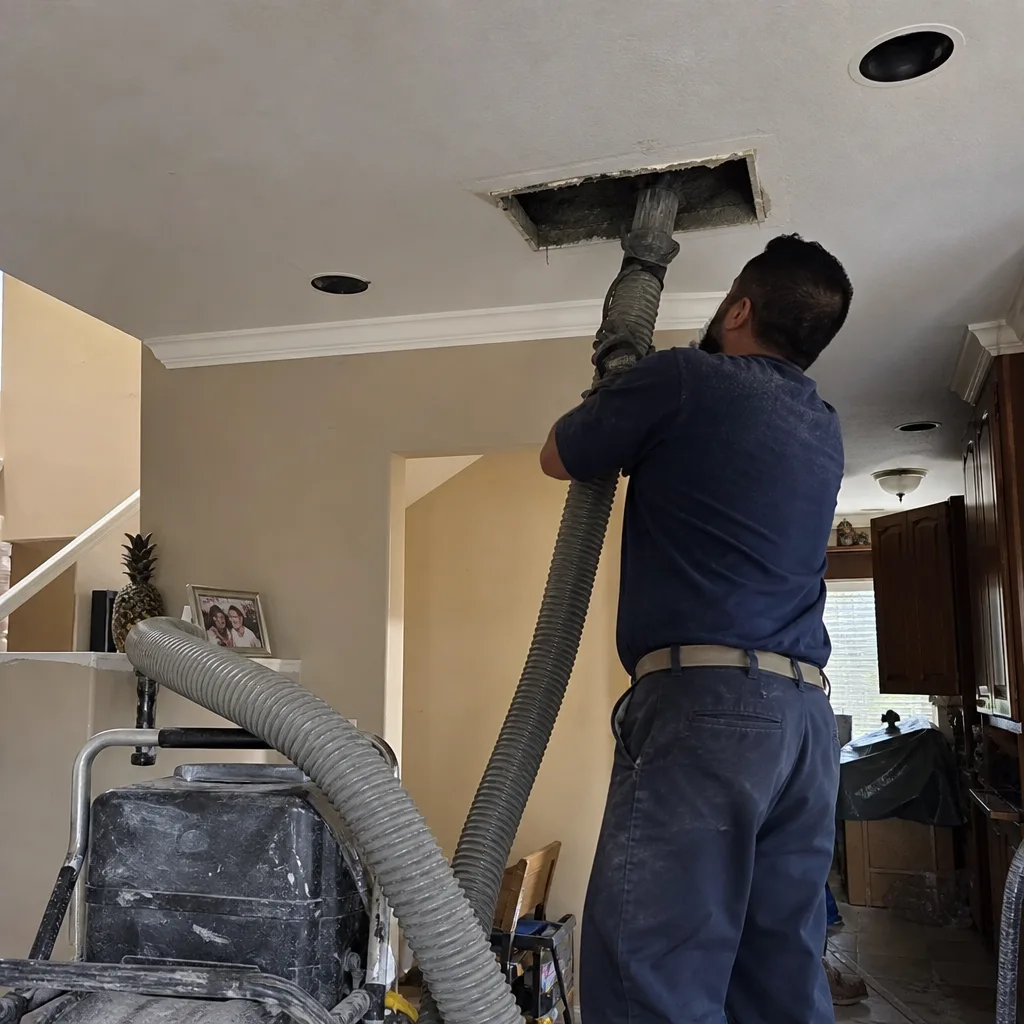 Before
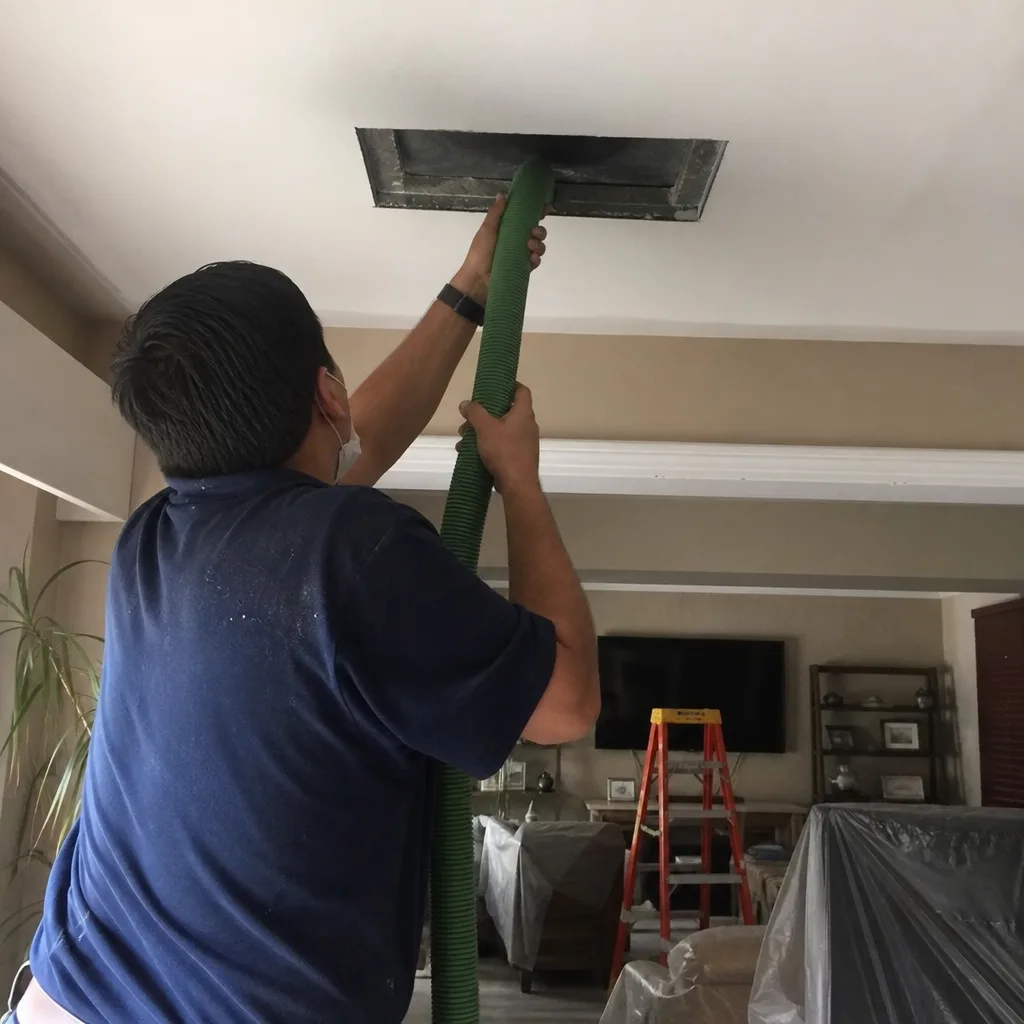 After
Frequently Asked Questions
Smoke odor can persist in duct systems for months after a wildfire if the system was running during the event. The odor molecules bond to dust and debris on duct surfaces, and the duct liner itself can absorb volatile organic compounds released by the smoke. Replacing the filter only addresses new air entering the system, not the contaminated surfaces already inside it. Professional Air Duct Cleaning with agitation-based equipment, not just vacuuming, is required to remove smoke residue from duct walls. Call (833) 593-4407 for an assessment if your Mission Viejo home still smells like smoke when the AC runs.
For most Mission Viejo homes, every 3-5 years is a reasonable interval, but that depends on factors most national guides don’t account for. Homes near the 5 freeway see more fine-particle dust from brake and tire wear. Homes where wildfire smoke events occur during high-run seasons accelerate contamination. Homes with pets, recent remodel work, or family members with respiratory conditions should consider every 2-3 years. The honest answer is that if you can see dust accumulation on register surfaces or you smell dust when the system starts, it’s time regardless of the calendar. Better air starts inside the ducts, not from a floor purifier doing triage.
No, not effectively. A shop vac reaches perhaps 3-5 feet into a duct run. Mission Viejo homes commonly have supply runs of 20-40 feet from the plenum to the farthest register. The interior of those runs collects dust, pet dander, and in the case of smoke events, fine particulate that casual agitation spreads more than removes. Professional cleaning uses negative-pressure machines sized for whole-house systems, with agitation tools that reach the full run length. This is not a job where rental-grade equipment gets you to the same place.
Yes, with a caveat. Cleaning removes the reservoir of particulate that would otherwise be re-suspended in your indoor air when the system runs. If your ducts hold pollen, dust, and older smoke residue, every HVAC cycle releases a portion of that back into your living space. A clean system means the filter is doing more of the work and the ducts are doing less harm. The caveat: duct cleaning is not an air purifier substitute. Homes near smoke events benefit from both a clean duct system and appropriate filtration, which is why we supply and install Aprilaire and Honeywell air-quality products alongside our cleaning services. The combination addresses both the source and the ongoing air stream.
For a typical single-family Mission Viejo home, professional air duct cleaning generally runs $400-$800 depending on system size, number of returns and registers, accessibility, and contamination level. Smaller single-story homes with one return may come in below that range. Larger two-story homes with multiple zones can exceed it. You should get one flat price for your specific system before work begins, not a per-vent quote that balloons once the technician arrives. Estimates should be free. Call (833) 593-4407 for an exact quote for your home in Mission Viejo, and ask about adding dryer vent cleaning to the same visit.
Aprilaire is known for whole-home filtration, dehumidification, and fresh-air ventilation systems that integrate with your existing HVAC. Honeywell produces a range of air-quality products including media filters, electronic air cleaners, and whole-home humidifiers and dehumidifiers. We’re authorized to supply and install both brands, meaning the same visit that cleans your ducts can also upgrade your filtration to something meaningfully better than a standard 1-inch filter. For homes in Mission Viejo where a family member has respiratory sensitivities or where HOA landscaping generates constant dust, this upgrade is often as impactful as the cleaning itself.
When to Call a Professional
Call a professional after any event that exposed your duct system to heavy smoke, ash, or water, even if you shut the system down promptly. Call one if you smell dust, smoke, or musty odor when the system starts, because that odor lives in the duct interior and won’t resolve with a filter swap. Call one after any earthquake that left visible cracks in drywall or shifted furniture, since flex duct connections in the attic and walls received the same forces. Finally, call before you file an insurance claim related to smoke or water damage, so the assessment report becomes part of your documentation package from the start. Duct Cleaning Mission Viejo offers free estimates throughout Mission Viejo. For related guidance, explore our more guides & resources. Call (833) 593-4407 to schedule an assessment.
The Bottom Line
Emergency preparedness in Mission Viejo should include your duct system, not just your evacuation kit. Know where your fresh-air intake is, how to shut the system down quickly, and what signs tell you whether a filter swap or a professional cleaning is the right response. Document everything before and after an event. Understand that water-damaged flex duct has a colonization timeline measured in days, not weeks. And when contamination is visible, choose professional-grade equipment and a specialist who can both clean and repair what’s found. The homes we serve in Mission Viejo face fire season, quake risk, and summer dust in a way few other climates combine.
Written by the team at Duct Cleaning Mission Viejo, serving Mission Viejo since 2017. We specialize exclusively in air duct cleaning, dryer vent cleaning, and air duct repair, using Rotobrush, Nikro, and Abatement Technologies systems. We also supply and install Aprilaire, Honeywell, and Guardsman air-quality products. Air Duct Cleaning in San Juan Capistrano and Dryer Vent Cleaning in San Juan Capistrano are available for homes throughout south Orange County. Call (833) 593-4407 for a free estimate.